

Human expertise in the spotlight
The "capability paradox" highlighted by PA Consulting serves as a powerful reminder that while the technology is groundbreaking, the human element remains the decisive factor in its success. AI skills development has become a central theme for enterprises over the last three years, with business leaders worldwide scrambling to bolster workforce capabilities. However, the nature of these "skills" is shifting.
The PA Consulting report suggests that the rise of AI is actually making traditional human expertise more valuable than ever. The ability to provide context, exercise ethical judgment, and apply critical thinking is what separates a generic AI output from a high-quality professional deliverable. "The technology that promises to put expertise within everyone’s reach may ultimately make human expertise more valuable than ever," the report concluded.
This sentiment is echoed by other major industry studies. Research from Multiverse last year found that "soft skills" have become a primary focus for business leaders looking to integrate AI. Rather than focusing solely on technical proficiency or coding, enterprises are increasingly adopting a "blended" approach that combines AI literacy with broader development programs in communication, leadership, and problem-solving.
Furthermore, recent analysis from Kyndryl’s third annual Readiness Report underlined the urgency of this mission. Kyndryl warned that many firms are currently failing to invest sufficiently in skills development, a failure that is actively harming AI adoption rates. Without a workforce that feels confident and competent using these tools, the massive investments companies are making in AI infrastructure may fail to yield a return.
The challenge for modern organizations is to create a culture where AI is used to enhance learning rather than replace it. This involves encouraging experimentation among junior staff and providing them with the "safety net" needed to fail and learn in an AI-augmented environment. By boosting AI competency early on, firms can ensure that their future leaders are not just passive users of technology, but master practitioners who can direct it with confidence.
Ultimately, the PA Consulting study suggests that the "capability paradox" is a hurdle, not a permanent barrier. By recognizing that AI’s effectiveness is tied to human experience, businesses can pivot their training strategies to focus on the junior and mid-level managers who will eventually steer the ship. In doing so, they can ensure that the productivity gains currently enjoyed by those at the top are eventually shared across the entire enterprise, securing both current efficiency and future leadership.
 Helpdesk & IT Service Management (ITSM)
UK Businesses Racing to Deploy AI Ahead of Crucial Governance Frameworks, IBM Research Reveals
The rapid acceleration of artificial intelligence adoption within the United Kingdom has...
 Helpdesk & IT Service Management (ITSM)
Keeper Security Hits Major Milestone with 100,000 Enterprise Customers Amid Rapid Growth in Identity Security Market
In a significant validation of the growing demand for unified identity and...
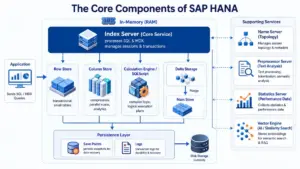 Helpdesk & IT Service Management (ITSM)
Decoding the Architecture of SAP HANA: A Deep Dive Into the Engine of Modern Enterprise Data
In the rapidly evolving landscape of enterprise resource planning and data management,...







