
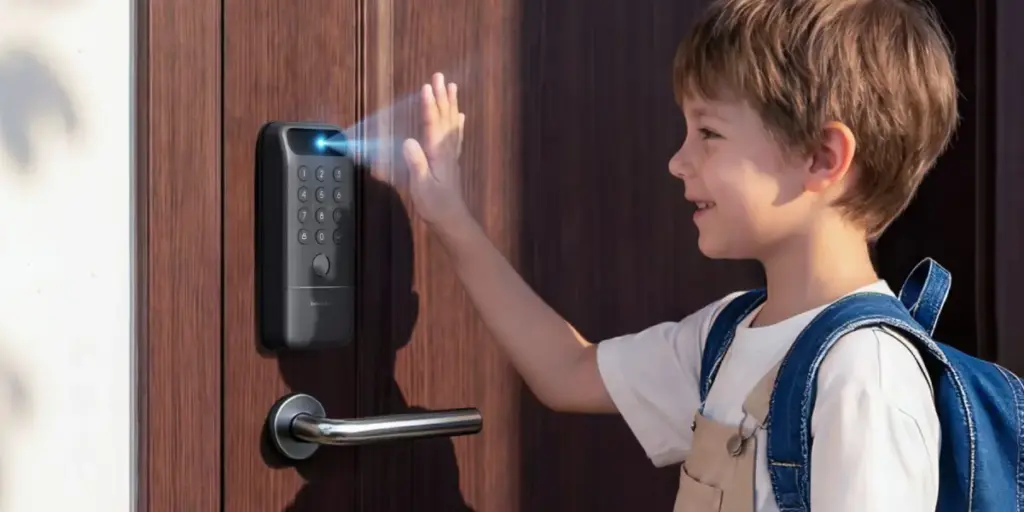
In a significant expansion of its smart home security portfolio, SwitchBot has officially announced the global launch of the SwitchBot Lock Vision and the SwitchBot Lock Vision Pro. These new entries represent a major technological leap for the company, integrating sophisticated 3D facial recognition and Matter-over-Wi-Fi support directly into the hardware. By addressing common pain points such as hub dependency and battery anxiety, SwitchBot is positioning the Lock Vision series as a comprehensive solution for modern homeowners seeking to balance high-end security with the convenience of the Apple Home ecosystem.
The announcement comes at a time when the smart lock market is increasingly focused on interoperability and biometric speed. As more consumers transition to the Matter standard, the ability for devices to communicate across different platforms without proprietary bridges has become a primary selling point. SwitchBot’s latest offering leans heavily into this trend, providing a native experience for Apple Home users while incorporating high-level security features typically reserved for enterprise-grade hardware.
Advanced Biometrics and 3D Facial Recognition Technology
The flagship feature of the Lock Vision series is its implementation of 3D facial recognition, a technology designed to replace traditional keys and even standard fingerprint scanners with a hands-free, high-security alternative. Unlike basic camera-based locks that rely on 2D image matching—which can sometimes be fooled by high-resolution photographs or video screens—the SwitchBot Lock Vision utilizes an infrared light projector to map the unique contours of a user’s face.
By projecting over 20,000 individual infrared points, the system creates a precise 3D depth map. This allows the lock to verify the physical presence of a live person, effectively neutralizing "spoofing" attempts. SwitchBot claims that this recognition process is exceptionally fast, capable of identifying an authorized user and unlocking the door in less than one second. The company has also engineered the algorithm to be adaptable to the realities of daily life; the system is designed to recognize users even when they are wearing accessories like glasses, hats, or wigs, or when they are wearing heavy makeup that might otherwise confuse a standard optical sensor.
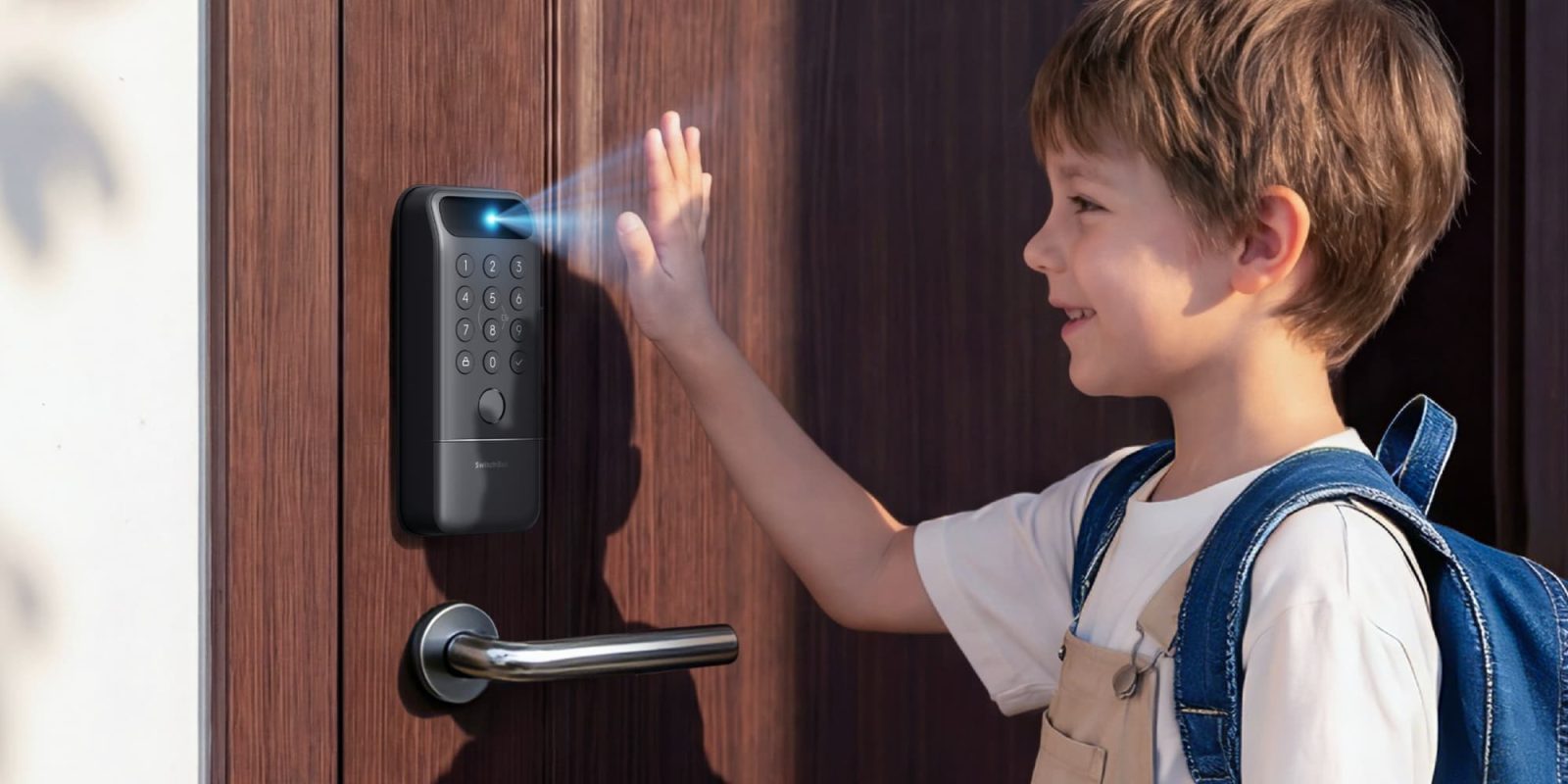
Privacy remains a central concern for consumers integrating cameras and biometric sensors into their homes. To address this, SwitchBot has opted for a localized data architecture. All biometric data, including facial maps and fingerprint patterns, is stored locally on the device’s internal hardware rather than being uploaded to the cloud. This data is further protected by AES-128 encryption, ensuring that even if the hardware were tampered with, the sensitive biological information of the household remains inaccessible.
For users who demand the highest level of versatility, the Lock Vision Pro model introduces two additional biometric layers: a semiconductor fingerprint sensor and a contactless palm vein scanner. The palm vein scanner is particularly notable, as it utilizes near-infrared sensing to read the unique vascular patterns beneath the skin of a user’s hand. Because these patterns are internal and unique to every individual, they are nearly impossible to replicate. This "touchless" method also provides a hygienic alternative for users who may not want to touch a scanner surface, especially in high-traffic households.
Innovative Dual-Battery System and mmWave Radar Efficiency
Smart locks equipped with video cameras and biometric sensors are notoriously power-hungry, often leading to frequent battery swaps that frustrate users. SwitchBot has attempted to solve this through a multi-layered power management strategy. The primary power source for both the Vision and Vision Pro is a high-capacity 10,000mAh rechargeable battery pack. Under typical usage conditions, SwitchBot estimates this pack can power the lock for up to 12 months on a single charge, a figure that leads the industry for video-integrated locks.
To prevent the scenario of being locked out due to a dead battery, the devices feature a "dual power, dual pack" system. Hidden within the internal assembly is a secondary compartment for a CR123A battery. This secondary cell remains dormant while the main rechargeable pack has power. If the primary battery fails or runs out of juice, the CR123A kicks in as an emergency backup, providing enough power for approximately 500 additional unlocks. This ensures that users have an ample window of time to recharge the main unit without losing access to their home. Furthermore, should both internal power sources fail, SwitchBot has included a USB-C port on the exterior of the lock, allowing a user to jump-start the device using a portable power bank.
The longevity of the battery is also supported by the inclusion of mmWave radar technology. Most smart locks use Passive Infrared (PIR) sensors to detect motion, which can often be triggered by environmental factors like swaying trees or passing cars, leading to unnecessary power drain. The mmWave radar in the Lock Vision series is far more precise, capable of detecting the actual physical approach of a person toward the door. This ensures that the high-power biometric sensors and cameras are only activated when a person is standing within the immediate vicinity of the entrance, significantly extending the intervals between charges.
Matter over Wi-Fi and Apple Home Integration
One of the most significant updates for the SwitchBot brand is the inclusion of Matter over Wi-Fi. In previous generations, SwitchBot devices often required a secondary bridge, such as the SwitchBot Hub 2, to gain compatibility with Apple Home (HomeKit). The Lock Vision series removes this barrier by supporting the Matter standard natively over a Wi-Fi connection.
For Apple Home users, this means the lock can be added directly to the Home app without the need for additional SwitchBot-branded hardware. As long as the user has a compatible Matter controller—such as an Apple TV 4K or a HomePod—the lock will integrate seamlessly into their existing smart home setup. This integration allows the lock to participate in complex home automations, such as turning on the entryway lights when the door is unlocked after sunset or triggering a "Goodbye" scene that locks the door and adjusts the thermostat when the last person leaves.
Beyond biometrics and smart home platforms, SwitchBot has maintained a wide array of alternative access methods to ensure the lock remains accessible to all guests and family members. The devices support NFC cards, which are ideal for children or elderly relatives who may not use a smartphone. Traditionalists can still use a physical key, and for temporary access—such as for a dog walker or a contractor—the system supports the generation of temporary or recurring passcodes. Additionally, the lock utilizes geo-fencing technology to enable an "auto-unlock" feature, which can automatically retract the bolt as the user approaches the door with their smartphone in their pocket.
Comparing the Lock Vision and Lock Vision Pro
When evaluating the two models, the core experience remains remarkably consistent. Both the standard Lock Vision and the Lock Vision Pro share the same chassis design, the 10,000mAh dual-battery architecture, the mmWave radar sensor, and the 3D facial recognition camera system. Both are also fully Matter-compatible out of the box.

The distinction lies entirely in the biometric variety offered by the Pro model. While the standard Lock Vision relies on 3D face mapping and digital codes, the Lock Vision Pro adds the semiconductor fingerprint scanner and the near-infrared palm vein scanner. These additions are designed for users who want multiple layers of redundancy or who prefer the tactile or touchless biometric options over facial recognition.
Despite the comprehensive feature set, there is one notable omission for the most dedicated Apple enthusiasts: Apple Home Key support. While the lock integrates perfectly with the Apple Home app via Matter, it does not currently support the NFC-based Home Key feature that allows users to unlock their door by tapping their iPhone or Apple Watch against the lock hardware. However, the inclusion of 3D facial recognition and palm scanning is intended to provide a similarly seamless, "keyless" entry experience that rivals the convenience of Home Key.
Market Positioning and Availability
The SwitchBot Lock Vision is priced at a competitive $169.99, placing it in the mid-range of the smart lock market despite its high-end biometric capabilities. The Lock Vision Pro, with its expanded suite of sensors, retails for $229.99. Both models are officially available for purchase starting today through major retailers, including Amazon.
As the smart home industry continues to move toward the Matter standard, the Lock Vision series represents SwitchBot’s commitment to providing high-spec hardware that doesn’t lock users into a closed ecosystem. By combining advanced 3D mapping, sophisticated power management, and broad platform compatibility, SwitchBot is offering a compelling argument for homeowners looking to upgrade their front door security without the typical compromises of battery life or connectivity.
 Smart Home & IoT Solutions
Apple Set to Unveil "HomeView" Smart Hub with iMac G4-Inspired Design and A18 Chip at Upcoming "Welcome Home" Event
Apple is preparing to make its most significant leap into the smart...
 Smart Home & IoT Solutions
Apple Reimagines the Smart Home with iOS 27: 4K Video Support and Intelligence-Driven Notifications Take Center Stage
As Apple prepares for what is rumored to be one of its...
 Smart Home & IoT Solutions
Apple’s Smart Home Ambitions Expand with LG Partnership and Exclusive ‘Proximity Control’ Features
As the technology industry looks toward Apple’s upcoming "Welcome Home" special event...






