
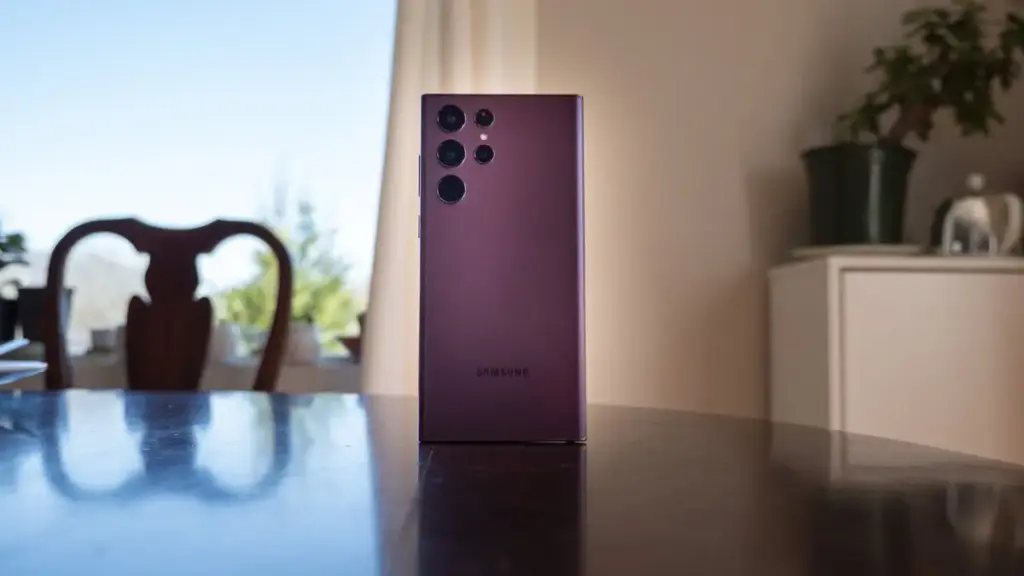
South Korea’s Fair Trade Commission (FTC) has handed down a significant financial penalty to Samsung Electronics, concluding a long-standing investigation into the company’s marketing practices regarding several of its flagship mobile devices. The regulatory body imposed a 20 billion won fine, approximately $15 million USD, following allegations that the tech giant misled consumers regarding the gaming capabilities of the Galaxy S21 and S22 smartphone series, as well as the Galaxy Tab S8 tablet lineup.
The ruling centers on the controversial Game Optimizing Service (GOS), a pre-installed software application that was intended to manage system resources during intensive tasks. According to the FTC, Samsung’s promotional materials promised high-end, uncompromised performance that the hardware ultimately failed to deliver in real-world gaming scenarios due to the restrictive nature of this background service.
In its official statement, the FTC emphasized the importance of transparency in the premium mobile market. The commission noted that gaming performance serves as one of the most critical benchmarks for consumers evaluating high-end smart devices. Rapid screen transitions, high frame rates, and sophisticated graphical effects are often the primary metrics used to showcase the processing power of modern hardware. By failing to disclose that these capabilities were being artificially limited, the FTC argues that Samsung breached consumer trust and violated fair advertising standards.
The Role of GOS and the Throttling Controversy
The core of the dispute involves the Game Optimizing Service, which Samsung initially presented as a sophisticated heat management tool. In theory, GOS was designed to balance performance with thermal efficiency, ensuring that devices did not overheat during extended gaming sessions. However, the FTC’s investigation revealed a much more aggressive implementation than what was suggested to the public.
Rather than acting as a reactive safety measure that only intervened when a device reached high temperatures, the FTC found that GOS would proactively throttle performance the moment a game was launched. This meant that the central processing unit (CPU) and graphics processing unit (GPU) were intentionally slowed down regardless of the device’s actual temperature. For many users, this resulted in a noticeable degradation of the experience, characterized by lower-than-advertised graphical fidelity, sudden frame rate drops, and occasional system freezing or lag.
The discrepancy between the hardware’s theoretical power and its actual performance became a major point of contention within the tech community. While Samsung’s marketing highlighted the raw power of its custom and partner-designed chipsets, the software was effectively preventing that power from being utilized by the very applications that needed it most. The FTC’s ruling reaffirms that companies have a legal and ethical obligation to inform consumers of any internal software limitations that significantly alter the performance of the features being advertised.
Internal Heat Management and Hardware Limitations
The issue of thermal management has been a persistent challenge for Samsung, particularly during the generations covered by the FTC’s fine. The Galaxy S21 and S22 series were launched during a period when mobile processors were pushing the boundaries of performance, often at the cost of high power consumption and significant heat generation.
Samsung’s internal Exynos processors, in particular, faced criticism for their thermal efficiency compared to competitors. The infamous reputation of certain Exynos iterations for "overheating in the blink of an eye" likely necessitated a more aggressive software intervention like GOS to prevent hardware damage or uncomfortable surface temperatures. However, the FTC argues that the solution should have been better hardware engineering or transparent communication, rather than secret performance caps.
While Samsung has since made strides to address these issues in its newer hardware—such as the Galaxy S24 and the upcoming S25 series—the legacy of the GOS controversy continues to haunt the brand’s reputation among enthusiasts. Rumors regarding the development of the Exynos 2600 and 2700 suggest that Samsung is focusing heavily on "cooler heads" and better efficiency to avoid the pitfalls of the past. Nevertheless, the regulatory action in South Korea serves as a reminder that software "optimizations" cannot be used to mask hardware shortcomings without clear disclosure to the buyer.
Samsung’s Defense and Planned Legal Response
Samsung has formally expressed its disagreement with the FTC’s findings and the resulting fine. In a statement provided to local media, the company maintained that the Game Optimizing Service was implemented with the user’s best interests in mind. Samsung argues that the service was a necessary component designed to allow users to enjoy games "stably for extended periods."
The company’s defense hinges on the idea of the "total user experience." From Samsung’s perspective, a device that runs at maximum speed for ten minutes before becoming too hot to hold or shutting down is less desirable than a device that runs at a consistent, albeit lower, speed for an hour. Samsung contends that GOS provided a balance that protected the longevity of the battery and the integrity of the internal components.
Despite these arguments, the company reportedly plans to defend itself through further legal channels. The upcoming legal battle will likely focus on whether the term "optimization" can legally encompass the intentional reduction of performance without explicit user consent or notification. For many consumers, the frustration lies not in the existence of a heat management system, but in the lack of an "off switch" or a clear warning that the $1,200 device they purchased would not perform at its peak capacity during the tasks it was marketed for.
The Broader Impact on the Mobile Gaming Market
The fallout from the GOS controversy has already had a tangible impact on how mobile devices are benchmarked and reviewed. When the story first broke, major benchmarking platforms like Geekbench took the unprecedented step of delisting several Galaxy models from their charts. This was because GOS was found to allow the devices to run at full speed during benchmark tests while throttling them during actual gameplay—a practice often referred to as "benchmark manipulation."
For the mobile gaming industry, this fine marks a turning point in regulatory oversight. As smartphones increasingly position themselves as viable alternatives to handheld consoles, the accuracy of performance claims has become a matter of significant economic importance. High-end titles like Wuthering Waves or Genshin Impact require immense resources, and consumers often make purchasing decisions based on which flagship can maintain a stable 60 frames per second.
The FTC’s move signals to all manufacturers that software-based performance limiting must be handled with extreme care. It suggests that if a "Pro" or "Ultra" device cannot sustain its peak performance without aggressive throttling, the manufacturer must be upfront about those limitations in its marketing.
Looking Toward the Future of Galaxy Gaming
As Samsung prepares for the launch of its next generation of devices, the shadow of the GOS fine looms large. The company has already begun changing its approach, offering more robust cooling solutions in its recent flagship models, such as significantly larger vapor chambers in the Galaxy S24 Ultra. These hardware-level improvements are a direct response to the realization that software throttling is not a sustainable or legally sound substitute for effective thermal engineering.
The upcoming Galaxy S25 Ultra is expected to push gaming performance even further, potentially utilizing new chipsets designed to handle intensive graphical tasks with greater efficiency. However, the lesson from the FTC is clear: no matter how powerful the hardware becomes, the software must remain transparent.
For the consumers who purchased the Galaxy S21, S22, or Tab S8 under the impression they were receiving the pinnacle of mobile gaming performance, the $15 million fine offers a sense of validation. While the fine itself may be a small fraction of Samsung’s annual revenue, the reputational cost and the precedent set by the South Korean regulators will likely influence the company’s engineering and marketing strategies for years to come. The mobile industry is now on notice that "optimization" must mean improvement, not a hidden compromise.
 Mobile Device Management (MDM) & Mobile OS
Instagram Pivots Toward Long-Form Widescreen Content with New ‘Features’ Initiative
In a move that signals a fundamental shift in its product philosophy,...
 Mobile Device Management (MDM) & Mobile OS
The Growing Pains of "Geminification": Pixel Users Express Frustration as Google Assistant Fades Away
The landscape of mobile artificial intelligence underwent a seismic shift this past...
 Mobile Device Management (MDM) & Mobile OS
Google Reportedly Developing Next-Generation TV Streamer with Hands-Free Gemini and Presence-Sensing Technology
In the rapidly evolving landscape of home entertainment, Google appears to be...







