

The landscape of modern data management is undergoing a period of rapid and profound transformation. As organizations grapple with the dual pressures of integrating artificial intelligence and maintaining high-performance legacy systems, the role of the database professional has never been more complex. In response to these shifting industry demands, a new series of educational initiatives has been announced for September, designed to provide database administrators (DBAs), IT operations managers, and platform engineers with the technical insights necessary to navigate this evolving environment.
This month’s lineup of webinars focuses on the intersection of traditional database management and emerging technologies. The curriculum covers a broad spectrum of critical topics, ranging from the internal architecture of large language models (LLMs) to the nuances of monitoring NoSQL environments and optimizing SAP HANA performance. By offering these sessions across multiple time zones and providing on-demand access, the initiative aims to bridge the knowledge gap for global teams working in North America, Europe, the Middle East, and the Asia-Pacific regions.
Internals and Architecture of LLMs for Database Professionals
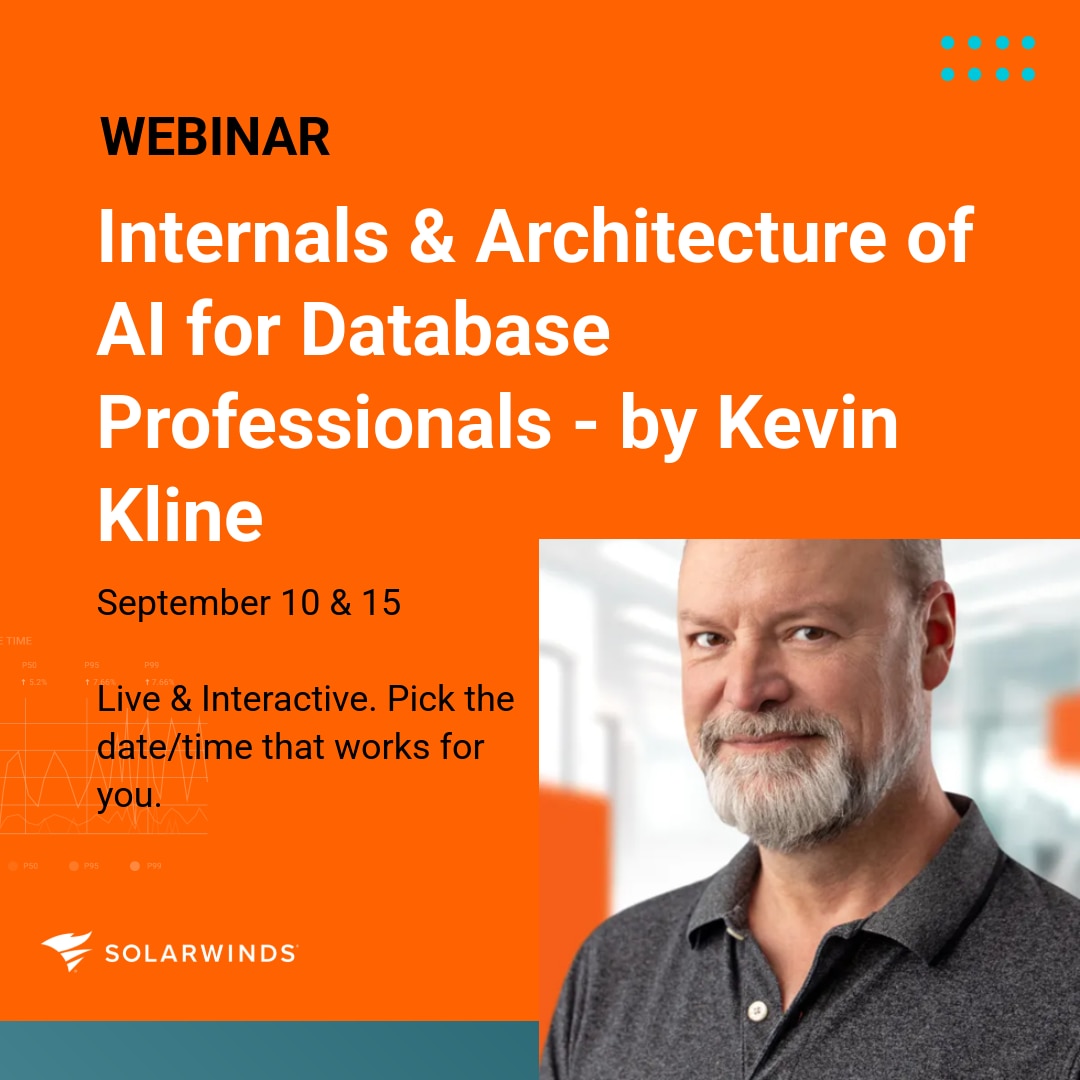
The surge in interest surrounding generative artificial intelligence has placed database teams in a unique position. While much of the public discourse focuses on the front-end capabilities of AI, the underlying reality is that these systems are heavily dependent on sophisticated data architectures. To address this, industry expert Kevin Kline will lead a masterclass on September 10 and 15, specifically tailored for those who manage the data layer.
The rapid advancement of AI technology often leaves DBAs looking for practical context. It is no longer sufficient to view AI as a black box; professionals must understand what is happening "under the hood" to ensure that the infrastructure can support the intensive demands of large language models. Kline’s session is designed to strip away the hype and provide a grounded, technical look at LLM internals.
The masterclass will explore how these models work from a structural perspective and, more importantly, why their architecture matters to the database team. As organizations begin to integrate vector databases and AI-driven search capabilities into their existing stacks, the DBA’s responsibility expands to include the oversight of these high-velocity data movements. The session will also examine the long-term implications of AI growth for database teams, helping them prepare for a future where AI and traditional database management are inextricably linked. These live, interactive sessions are intended to foster a dialogue between experts and practitioners, ensuring that specific technical concerns are addressed in real-time.
The Database Blind Spot: Closing the Gaps in the IT Operations Monitoring Stack
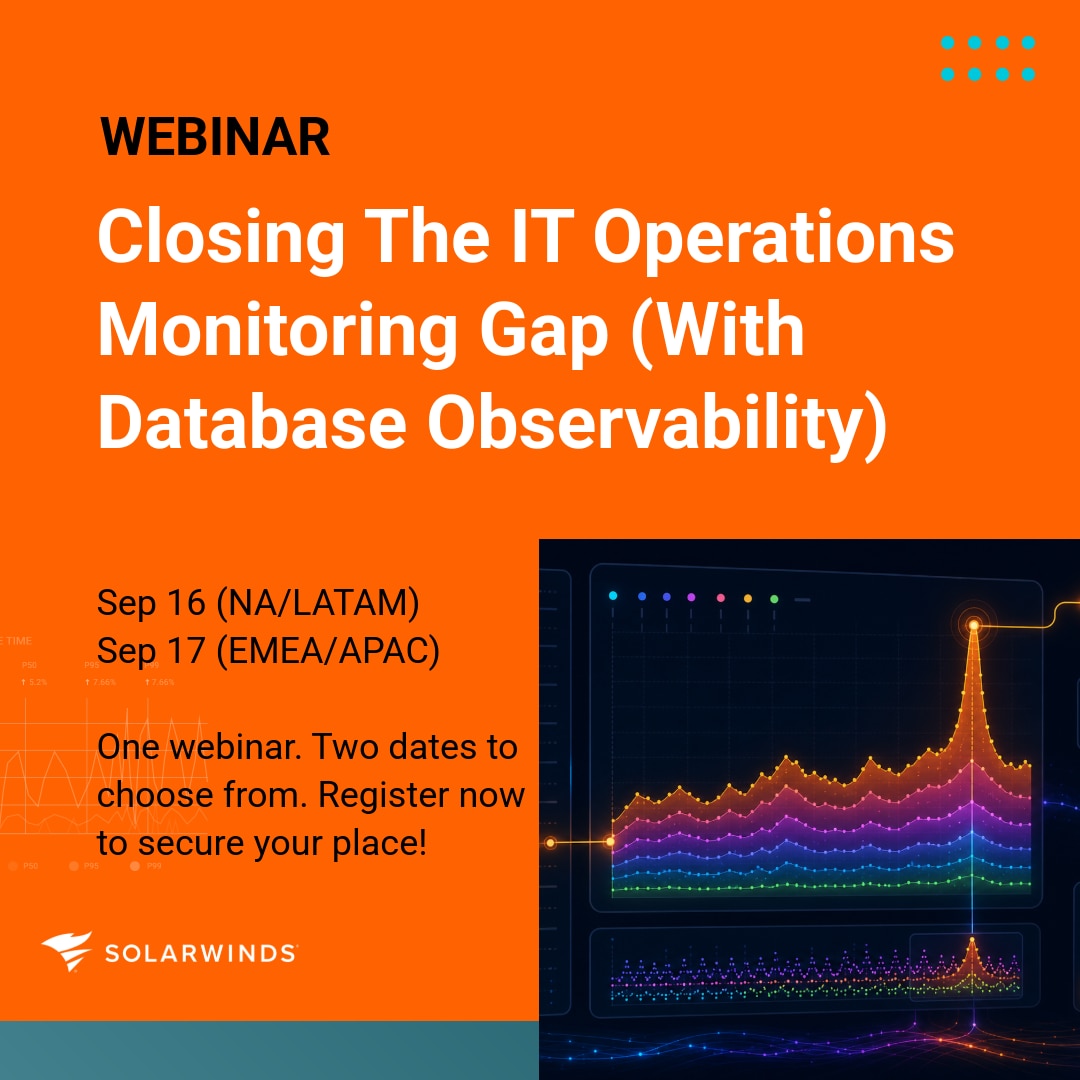
While AI represents the future of the industry, many teams continue to struggle with a more immediate and persistent challenge: the "blind spot" that exists between infrastructure health and actual database performance. On September 16 and 17, a dedicated session will investigate why traditional IT operations monitoring often fails to detect the root causes of application slowdowns.
In many enterprise environments, infrastructure monitoring tools may report that servers, storage, and networks are operating within healthy parameters. However, despite these "green" signals, end-users often experience significant latency or performance degradation. This discrepancy usually stems from activity occurring deep within the database engine—activity that standard infrastructure metrics cannot see.
The upcoming webinar will demonstrate how to uncover these hidden factors by shifting the focus toward database-specific metrics. Participants will learn how to investigate waits, complex queries, workload activity, and blocking issues. By recognizing when healthy infrastructure signals are misleading, IT operations and infrastructure managers can improve their incident routing and troubleshooting efficiency.
The session is particularly relevant for Site Reliability Engineers (SREs) and platform engineering leads who are tasked with maintaining uptime in increasingly complex environments. A key goal of the presentation is to empower infrastructure teams to identify database-related bottlenecks without requiring them to become full-time DBAs. This collaborative approach to monitoring is essential for closing the visibility gap that often leads to prolonged downtime and frustrated development teams.
Migrating Legacy SAP Databases to HANA and HANA Cloud with Confidence
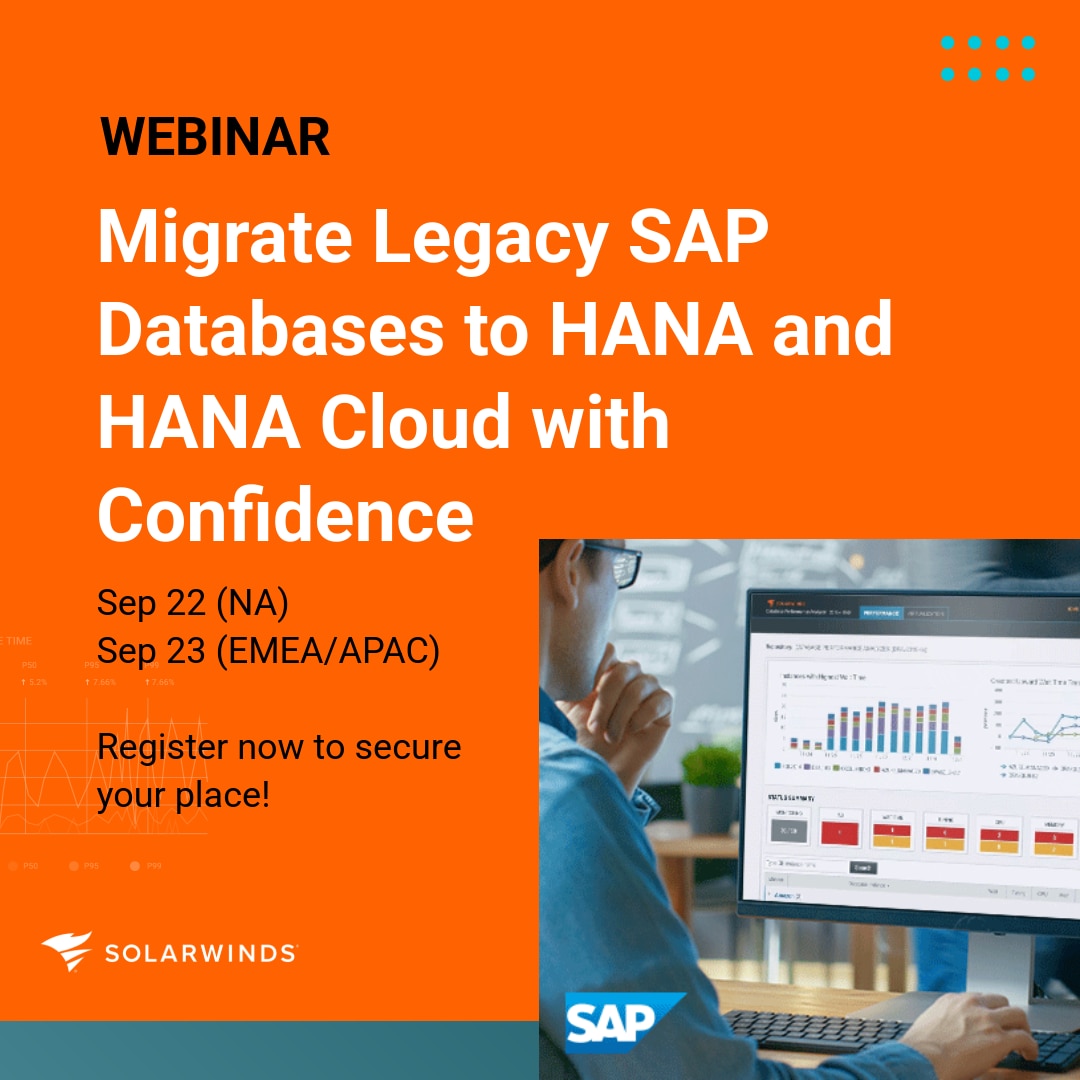
For organizations running critical business processes on SAP, the migration from legacy databases to SAP HANA and HANA Cloud represents a significant milestone. However, the complexity of these environments means that performance issues can have a direct and immediate impact on the bottom line. On September 22 and 23, the webinar series will pivot to the specific needs of SAP Basis and database teams.
SAP HANA performance is often difficult to diagnose because surface-level metrics frequently indicate that a problem exists without explaining the underlying cause. When a critical business process slows down, teams need more than just an alert; they need a roadmap to the solution. This session will highlight how SolarWinds Database Performance Analyzer (DPA) provides that roadmap through the use of wait-based analytics.
Wait-based analytics is a methodology that focuses on where the database is spending time, rather than just how many resources it is consuming. By analyzing what the database is "waiting" for—whether it be disk I/O, memory, or lock contention—teams can pinpoint the exact SQL statement or resource pressure point causing the delay. The webinar will also cover the importance of historical trends and resource visibility, which are crucial for maintaining performance across on-premises, cloud, and hybrid SAP environments. As more companies move toward the cloud, having a consistent view of performance across these different deployment models becomes a non-negotiable requirement for operational success.
The Database No One’s Watching: Getting MongoDB Out of Your Blind Spot
The final segment of the September series, taking place on September 24 and 29, addresses the growing prevalence of NoSQL databases in the enterprise. MongoDB has become a cornerstone of modern application development, yet it often lacks the same level of rigorous observability applied to traditional relational databases like SQL Server or PostgreSQL.
The session, titled "The Database No One’s Watching," addresses the limitations of native tools and generic Application Performance Monitoring (APM) solutions. While these tools provide basic insights, they often miss the "DBA-grade" detail required to conduct a thorough root-cause analysis during an incident. For a database as dynamic as MongoDB, deep visibility into queries, waits, locks, and the performance of individual nodes is vital.
The webinar will showcase how to integrate MongoDB into a unified, cross-database monitoring strategy. As organizations move toward polyglot persistence—using different database engines for different tasks—the ability to monitor all of them through a consistent lens becomes invaluable. By bringing MongoDB out of the blind spot, database teams can ensure that their NoSQL deployments are as stable, performant, and transparent as their traditional SQL counterparts. This session is designed to help teams move away from siloed monitoring and toward a more holistic view of their entire data estate.
A Global Educational Opportunity
The structure of this webinar series reflects the global nature of modern IT operations. By running each session twice—once for North American audiences and once for those in the EMEA and APAC regions—the organizers are ensuring that time zones do not act as a barrier to professional development. Furthermore, the provision of on-demand recordings for all registrants acknowledges the demanding schedules of database professionals, who may be called away by urgent system issues at any moment.
The themes of this month’s sessions—AI integration, IT operations visibility, SAP HANA optimization, and NoSQL observability—represent the most pressing challenges facing the industry today. Each session includes a live Q&A component, allowing participants to engage directly with experts and seek guidance on their specific architectural hurdles.
As the month progresses, these webinars will provide a comprehensive toolkit for database teams looking to enhance their skills and improve the reliability of their systems. Whether a team is focused on the cutting edge of LLM architecture or the essential task of maintaining legacy SAP systems, the September lineup offers a diverse range of technical insights designed to support the continuous improvement of the global database community. Registration remains open for all upcoming sessions, encouraging a wide range of participation from across the technology sector.
 Helpdesk & IT Service Management (ITSM)
OpenSSF and Tech Giants Call for Sustainable Funding to Secure Global Software Supply Chain
The OpenSSF (Open Source Security Foundation) Governing Board has issued an urgent...
 Helpdesk & IT Service Management (ITSM)
NetApp and Oracle Unveil Native Integration to Streamline Enterprise Cloud Migration and AI Workloads
LAS VEGAS — In a move designed to bridge the gap between...
 Helpdesk & IT Service Management (ITSM)
Bridging the Observability Gap: How Integrated Distributed Tracing Isolates Database Latency in Modern API Stacks
In the high-stakes environment of modern software reliability, not every performance crisis...







