

The modern data landscape is currently undergoing a period of unprecedented transformation, driven by the rapid maturation of artificial intelligence, the complexities of hybrid cloud environments, and the increasing demand for real-time data processing. For database professionals, staying ahead of these shifts is no longer a matter of professional preference but a fundamental requirement for maintaining operational stability. To address these evolving challenges, SolarWinds has announced an extensive lineup of database-focused webinars scheduled throughout September. This educational series is designed to provide database administrators (DBAs), IT operations managers, and systems engineers with the technical insights and practical strategies necessary to navigate the intricacies of modern data management.
The series is structured to accommodate a global audience, with each session running live twice to cover major time zones, including dedicated slots for North America and the EMEA/APAC regions. Recognizing the demanding schedules of IT professionals, the organizers have also ensured that all sessions will be available as on-demand recordings for registered participants, allowing for flexible access to the technical masterclasses and deep-dive discussions.
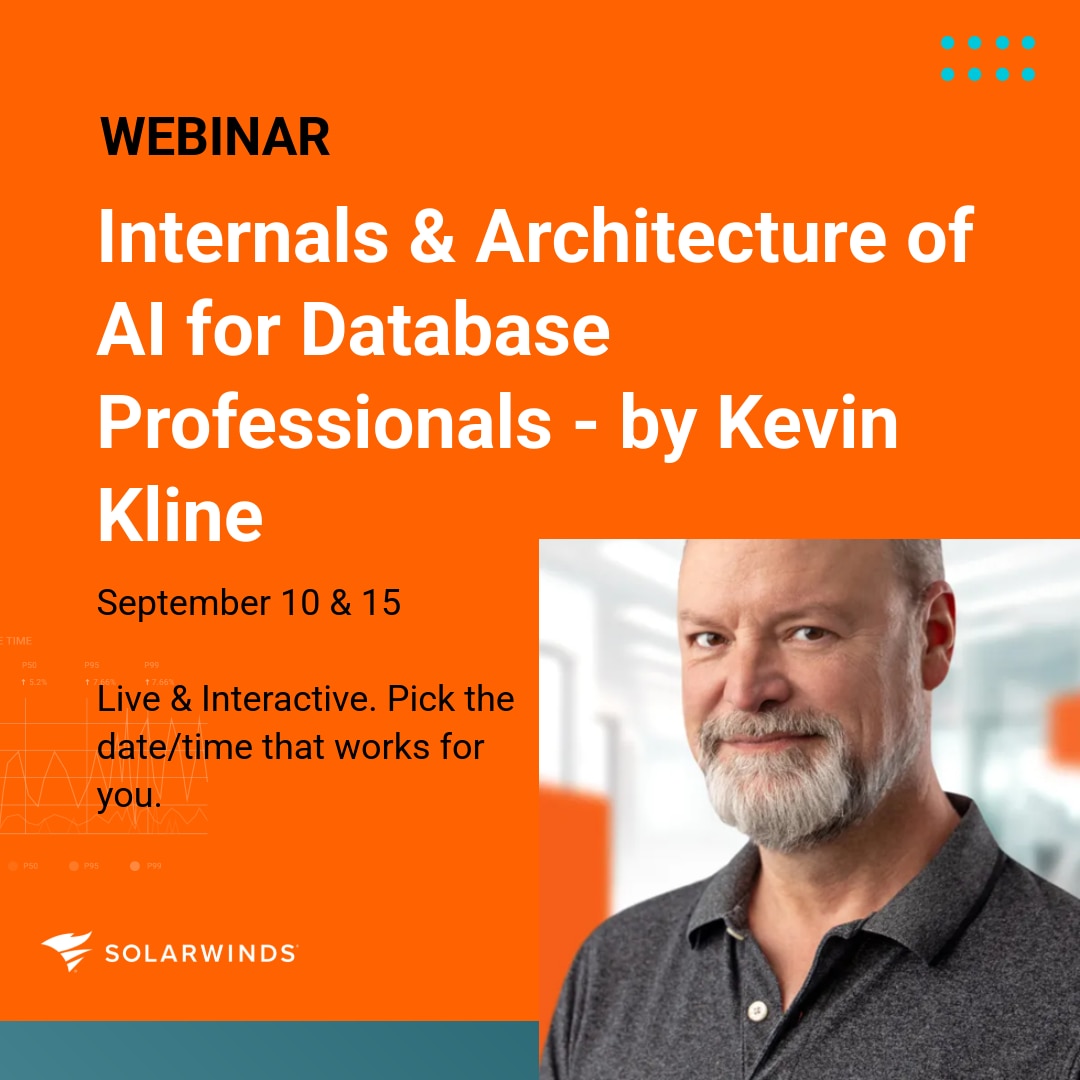
Internals & Architecture of LLMs for Database Professionals by Kevin Kline – Sep 10 & 15
The series commences with a deep dive into the technology currently dominating the global tech conversation: Large Language Models (LLMs). As AI transitions from a theoretical novelty to a core component of enterprise applications, database professionals are increasingly tasked with supporting the underlying data structures that power these models. However, there is often a significant knowledge gap regarding how these models function at an architectural level and how they interact with traditional database systems.

Leading this session is Kevin Kline, a well-regarded expert in the database community and a long-standing advocate for DBA education. Scheduled for September 10 and 15, this masterclass aims to strip away the marketing jargon surrounding AI and provide a grounded, practical look at the internals of LLMs. Kline will explore the fundamental architecture of these models, explaining why understanding their "under the hood" mechanics is essential for the modern DBA.
The session will focus on the practical context of AI, helping database teams understand the implications of LLM deployment on resource allocation, data retrieval patterns, and storage requirements. As these models become more integrated into business intelligence and customer-facing applications, the DBA’s role in ensuring the performance and reliability of the data feeding these models becomes critical. This live, interactive masterclass will provide participants with the opportunity to engage directly with Kline, ensuring that specific technical queries regarding the intersection of AI and database management are addressed.
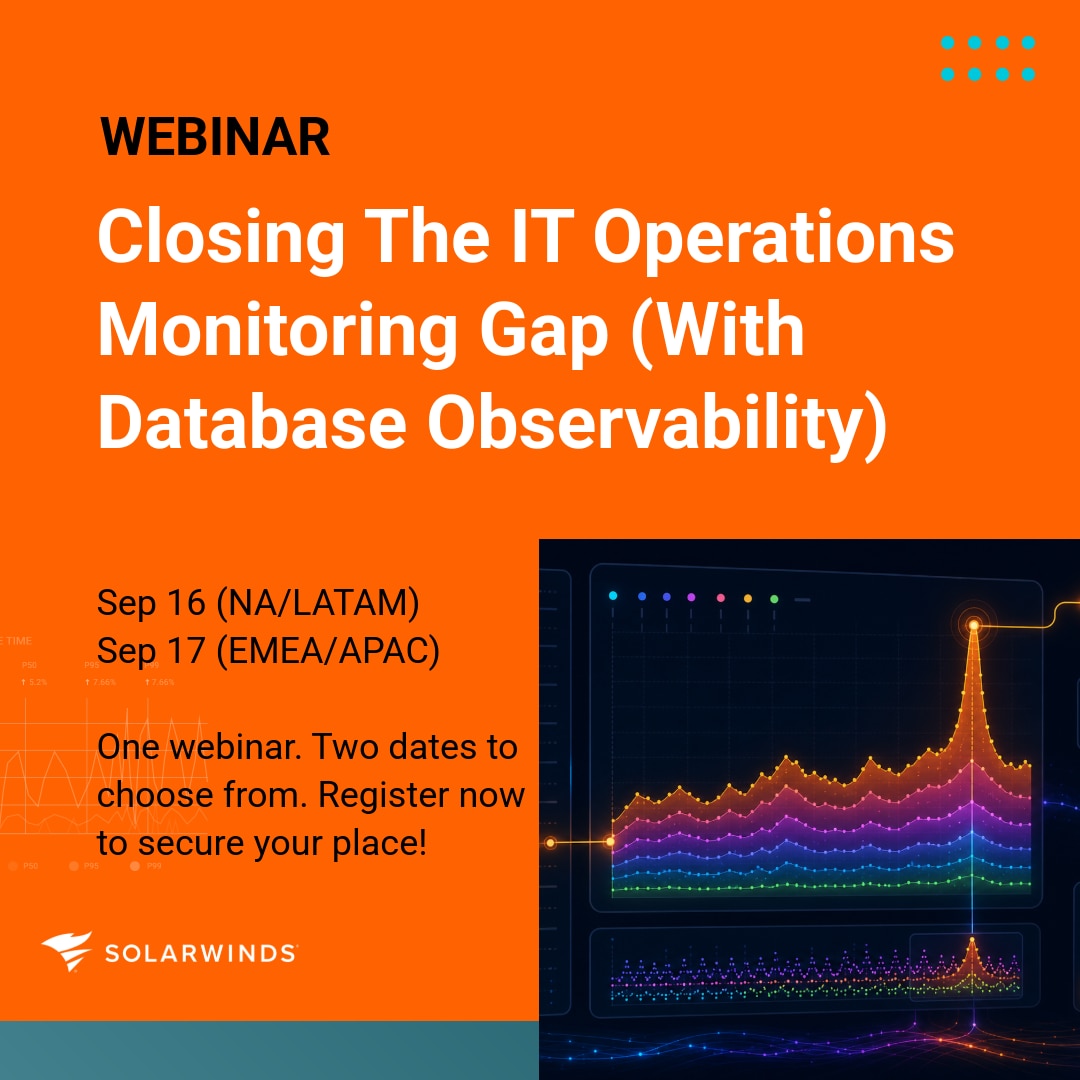
The Database Blind Spot: Closing the Gaps in the IT Operations Monitoring Stack – Sep 16 & 17
Following the exploration of AI, the webinar series shifts its focus to a persistent challenge in enterprise environments: the visibility gap between infrastructure health and database performance. On September 16 and 17, the series will host a session titled "The Database Blind Spot," which addresses the common scenario where traditional monitoring tools report a healthy infrastructure while users continue to experience significant application slowdowns.
In many organizations, IT operations and infrastructure teams rely on high-level metrics such as CPU utilization, memory availability, and network throughput. While these are essential indicators, they often fail to capture the nuanced bottlenecks occurring within the database engine itself. This session is specifically designed for IT operations managers, Site Reliability Engineers (SREs), platform engineering leads, and application support leaders who need to bridge this visibility gap.
The webinar will provide a detailed roadmap for uncovering the internal database factors that contribute to performance degradation. Attendees will learn how to investigate database waits, analyze complex queries, monitor workload activity, and identify blocking issues that remain invisible to standard infrastructure monitoring stacks. By learning to recognize when healthy infrastructure signals are providing a false sense of security, teams can significantly improve their incident routing and troubleshooting efficiency. A key objective of this session is to empower infrastructure teams to identify database-related issues without requiring them to become full-time DBAs, thereby fostering better collaboration across the IT organization.
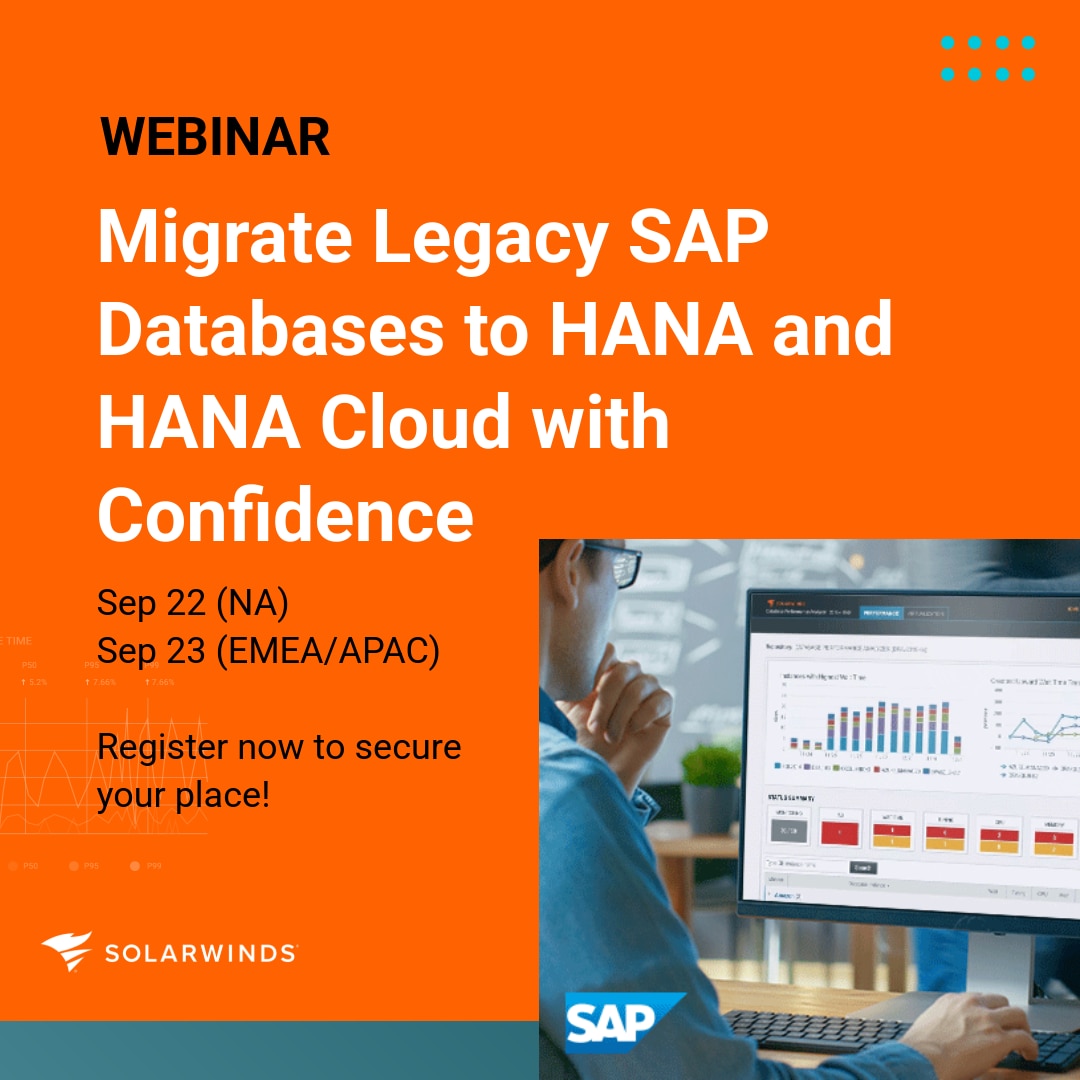
Migrate Legacy SAP Databases to HANA and HANA Cloud with Confidence – Sep 22 & 23
As organizations continue their journey toward digital transformation, the migration of mission-critical ERP systems remains one of the most complex and high-stakes projects an IT team can undertake. On September 22 and 23, the SolarWinds series will tackle the specific challenges associated with migrating legacy SAP databases to SAP HANA and HANA Cloud.
SAP HANA is renowned for its speed and in-memory processing capabilities, but it is not immune to performance issues. When critical business processes—such as supply chain management or financial reporting—are affected by database slowdowns, the pressure on SAP Basis and database teams is immense. Often, surface-level metrics indicate that a problem exists but offer little insight into the "why" behind the performance dip.
This session will demonstrate how the SolarWinds® Database Performance Analyzer (DPA) can be utilized to gain deep visibility into SAP HANA environments. The discussion will center on wait-based analytics, a methodology that prioritizes the time spent by the database on various operations, providing a clear picture of where bottlenecks are occurring. Participants will learn how to investigate expensive SQL statements, analyze resource pressure, and maintain historical trends to identify patterns over time. Whether an organization is operating on-premises, in the cloud, or in a hybrid configuration, this webinar aims to provide the tools and knowledge necessary to manage SAP HANA migrations and ongoing operations with a high degree of confidence.
The Database No One’s Watching: Getting MongoDB Out of Your Blind Spot – Sep 24 & 29
The final segment of the September series, taking place on September 24 and 29, addresses the rise of NoSQL databases, specifically MongoDB. As modern application architectures increasingly favor the flexibility of document-based databases, MongoDB has become a staple in the enterprise. However, many organizations struggle to apply the same level of rigorous monitoring to MongoDB as they do to their traditional relational databases like SQL Server, PostgreSQL, or MySQL.
The session, "The Database No One’s Watching," highlights the limitations of native tools and generic Application Performance Monitoring (APM) solutions, which often lack the granular detail required to diagnose the root cause of database incidents. For many teams, MongoDB remains a "blind spot" in their observability strategy, leading to reactive troubleshooting and prolonged downtime.
This webinar will define what "DBA-grade" observability looks like for MongoDB. It will cover the necessity of deep visibility into individual nodes, query performance, locks, and wait states. By bringing MongoDB into a consistent, cross-database monitoring framework, organizations can ensure that their NoSQL environments are held to the same performance standards as their relational counterparts. The session will illustrate how to achieve a unified view of the entire database estate, enabling more effective root-cause analysis and proactive performance tuning across diverse database platforms.
Securing a Spot in the Series
As the demands on database teams continue to grow, the need for high-quality, technical education has never been more apparent. The SolarWinds September webinar series offers a comprehensive look at the most pressing issues facing the industry today, from the integration of cutting-edge AI to the optimization of legacy enterprise systems and the management of modern NoSQL environments.
Each of the five sessions is designed to be interactive, featuring live Q&A segments where participants can seek advice on their specific environmental challenges. By offering these sessions live in multiple time zones and providing on-demand access to all registrants, the series ensures that valuable technical knowledge is accessible to professionals regardless of their location or schedule. Database administrators, IT managers, and engineers are encouraged to register for the sessions that most closely align with their current projects and long-term strategic goals, ensuring they are well-equipped to handle the complexities of the modern data landscape.
 Helpdesk & IT Service Management (ITSM)
NetApp Insight 2024: Navigating the Shift Toward AI Inference and Sovereign Data Infrastructure
As the autumn conference season gathers momentum, the technology industry’s focus has...
 Helpdesk & IT Service Management (ITSM)
Weaponized Advertising: How an Israeli Firm Exploited the Global Ad Ecosystem to Deliver Zero-Click Spyware
In a discovery that underscores the profound vulnerabilities within the global digital...
 Helpdesk & IT Service Management (ITSM)
Overe Appoints Former Sophos CSO Simon Reed as Strategic Advisor to Accelerate MSP Security Growth
In a significant move aimed at strengthening its leadership and deepening its...





