
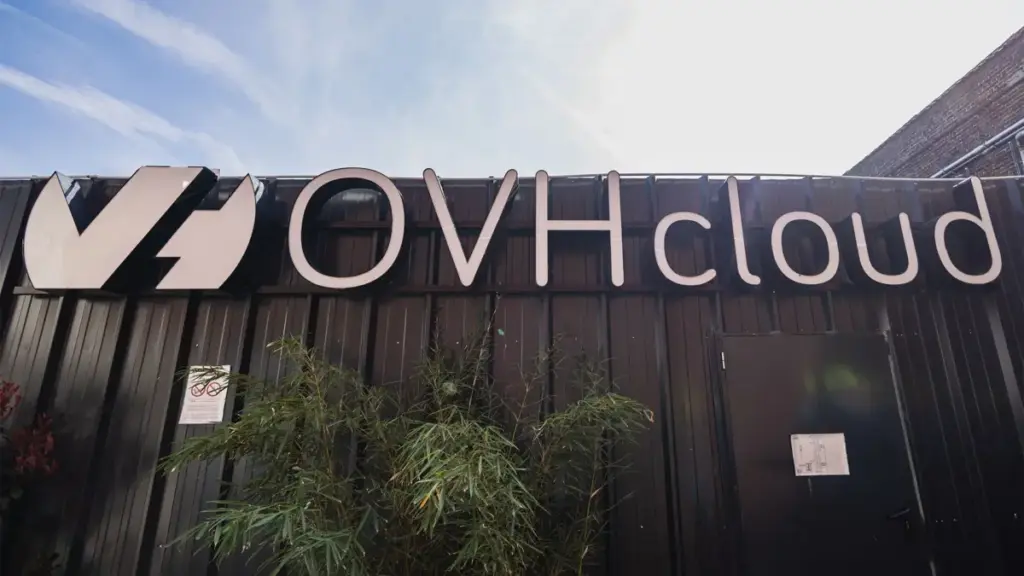
In a strategic move designed to bolster European digital autonomy, OVHcloud has officially entered the competitive arena of Large Language Models (LLMs) with the launch of "Olala." This new family of open-source AI models distinguishes itself not only through its technical architecture but through its provenance, having been developed and trained exclusively on European compute infrastructure. The initiative represents a significant milestone for the continent’s tech ecosystem, signaling a shift away from a total reliance on proprietary models developed by American hyperscalers.
The first release in this ambitious roadmap is the Olala mini 7A1B, a lightweight yet powerful model designed to balance performance with operational efficiency. What sets the Olala family apart from the myriad of models emerging from Silicon Valley is the hardware upon which it was forged. OVHcloud utilized several of Europe’s most advanced supercomputing assets, including the Jupiter exascale system, Luxembourg’s MeluXina, and France’s Jean Zay. By leveraging the EuroHPC Joint Undertaking’s infrastructure, OVHcloud is emphasizing a "made in Europe" philosophy that resonates with growing calls for technological sovereignty across the European Union.
The Strategic Rationale: Moving Beyond Dependency
The development of the Olala family was not merely a technical exercise but a calculated response to the shifting landscape of the global AI market. According to OVHcloud, the project was initiated partly as a defensive measure against the possibility of large American tech corporations retreating from open-source distribution models. In recent years, the industry has watched closely as several major players have moved toward more restrictive licensing or "black box" proprietary systems, creating a sense of vulnerability among enterprises that have built their workflows on third-party foundations.
Octave Klaba, the founder and CEO of OVHcloud, has been vocal about the necessity of this transition. "AI is strategic for OVH," Klaba stated during the announcement. "As well as offering AI services to our customers, we must be able to create models for our own internal needs and for those of our customers."
Klaba’s vision is rooted in a pragmatic assessment of the future of AI availability. He cautioned that the current era of high-quality, free-to-use open-source models might be a fleeting window rather than a permanent fixture of the market. "We cannot simply rely on the generosity of certain labs to share their LLMs as open source in the years to come," Klaba added.
Furthermore, the CEO highlighted that the barrier to entry for model training has dropped precipitously. He noted that the technical "know-how" required to train sophisticated models has become widely accessible, and perhaps more importantly, the financial burden has lessened. "The cost of training has been divided by 20 in three years," Klaba remarked. "It is now possible to create LLMs while making this activity profitable." This shift in economics suggests that regional cloud providers can now compete on the global stage without needing the bottomless capital reserves of a trillion-dollar tech giant.
Under the Hood: Efficiency and Performance
Technically, the Olala mini 7A1B is designed to address one of the primary hurdles of enterprise AI adoption: the high cost of specialized hardware. Built on a novel architecture, the model is optimized to deliver high-speed performance while maintaining a relatively small memory footprint. This makes it an ideal candidate for "edge" computing or for deployment on standard corporate hardware rather than requiring massive clusters of the latest H100 GPUs.
The performance metrics released by OVHcloud are telling. The company claims that the Olala mini 7A1B can run on a standard CPU at a rate of 50 tokens per second. For organizations with access to mid-range professional graphics cards, the performance scales significantly; the model can reach 160 tokens per second when running on an Nvidia RTX A4500 GPU. This level of throughput is essential for real-time applications such as customer service chatbots or live coding assistants, where latency can make or break the user experience.
In terms of scale, the model boasts 7 billion parameters. While this puts it in the "small" category compared to behemoths like GPT-4, the 7B parameter size is widely considered the "sweet spot" for many business-specific tasks, offering a balance of reasoning capability and speed. The current context window stands at 32,000 tokens, which allows the model to process and "remember" roughly 50 pages of text in a single prompt. However, OVHcloud is already looking ahead, with plans to expand this context window to 128,000 tokens before the end of the year, bringing it in line with the most capable models currently on the market.
Adhering to its commitment to transparency, OVHcloud is distributing the Olala mini 7A1B under the permissive Apache 2.0 license. The model is available via Hugging Face, the industry-standard repository for open-source AI. Crucially, the release includes not just the model weights, but also technical specifications and comprehensive documentation regarding compliance with the EU AI Act. This focus on regulatory transparency is a key differentiator, as many US-based models have faced criticism for being opaque regarding their training data and compliance with European privacy standards.
Real-World Application: The Qwant Case Study
The theoretical benefits of the Olala model are already being put to the test in a production environment. Qwant, the privacy-focused French search engine, has integrated the Olala mini 7A1B into its operations. The results, according to reports, have been immediate and substantial.
By switching to OVHcloud’s sovereign model, Qwant has reportedly seen response times improve by 20% compared to the previous model it employed. Perhaps even more significantly for the company’s bottom line, the running costs associated with the AI tasks have plummeted, with expenses now three times lower than they were previously. This combination of increased speed and decreased cost validates Octave Klaba’s assertion that regional, specialized models can be more profitable and efficient than generic, global alternatives.
Looking forward, OVHcloud does not intend to stop at general-purpose models. The company has laid out a roadmap for specialized versions of the Olala family. These will be tailored to specific enterprise-focused workloads, including agentic AI (AI that can perform tasks autonomously), cloud DevOps workflows, and cybersecurity. By focusing on these high-value niches, OVHcloud aims to provide a vertically integrated stack where the hardware, the cloud environment, and the AI models are all optimized to work together within a secure, European jurisdiction.
Digital Sovereignty in the Crosshairs
The launch of the Olala family arrives at a time of heightened geopolitical tension regarding data and technology. There is a growing movement within European organizations and government bodies to decrease their reliance on American technology providers, a trend often categorized under the banner of "digital sovereignty."
This shift is driven by concerns over data privacy, the potential for foreign legislative overreach (such as the US CLOUD Act), and the strategic risk of being cut off from essential technologies. Research firm Gartner has noted that while achieving absolute digital sovereignty may be an unrealistic goal for most nations, the act of minimizing dependence on foreign technology is set to become a critical national security priority for every country by 2030.
AI has become the new frontline for these concerns. The US government has already indicated its willingness to use access to cutting-edge AI models and the semiconductor hardware required to train them as economic levers to advance its national interests. For Europe, which has historically lagged behind the US and China in the "AI arms race," the need for a domestic alternative is viewed by many as an existential necessity for its tech industry.
In response to these pressures, the European Union has begun investing heavily in what are being called "AI gigafactories"—large-scale compute clusters dedicated to fostering a domestic AI ecosystem. Similarly, the UK government has signaled its intent to stay competitive by launching a £500 million venture fund specifically aimed at supporting British AI startups.
OVHcloud’s Olala family represents the private sector’s contribution to this broader continental strategy. By proving that a European cloud provider can build, train, and deploy high-performance AI models using local resources, the company is providing a blueprint for a future where European data stays on European servers, processed by European intelligence. As the "sovereign AI" movement gains momentum, the success of Olala will likely be seen as a litmus test for whether the continent can truly carve out an independent path in the age of artificial intelligence.
 Helpdesk & IT Service Management (ITSM)
Uber Data Breach Exposes Personal Information of Thousands of Drivers Following Third-Party Vendor Compromise
A significant security breach has compromised the personal information of thousands of...
 Helpdesk & IT Service Management (ITSM)
The AI Capability Paradox: Why Senior Leaders are Surging Ahead While Junior Staff Struggle to Keep Pace
The rapid integration of artificial intelligence into the modern workplace has created...
 Helpdesk & IT Service Management (ITSM)
UK Businesses Face Critical 100-Day Countdown as PSTN Shutdown Looms
The United Kingdom’s business community has been issued a stark ultimatum as...







