

In the rapidly evolving landscape of generative artificial intelligence, Oracle Corporation finds itself occupying a unique and somewhat paradoxical position. The long-standing technology giant, once viewed primarily as a legacy database provider, has emerged as a central protagonist in the burgeoning AI industry. Today, the company embodies two conflicting narratives: it is at once a symbol of the surging enthusiasm surrounding the transformative promise of AI and a primary subject of concern regarding the massive capital outlays required to sustain that promise. As the industry grapples with the possibility of an AI bubble, Oracle’s strategic moves suggest a company betting its entire future on the belief that the demand for AI infrastructure is not only real but also durable.
The financial data supporting Oracle’s transition is staggering. Between its 2025 and 2026 fiscal years, the company’s total sales jumped from $57.4 billion to $67.4 billion. This growth has been driven largely by the Oracle Cloud Infrastructure (OCI) business, which has become the engine of the company’s modern era. In the first quarter of fiscal year 2027, OCI revenue reached $7.4 billion, representing a massive 121 percent increase year-over-year.
Perhaps more significant than current revenue is the company’s backlog of future business. Oracle’s remaining performance obligations—a metric representing contracted sales for services not yet delivered—hit a record $664 billion, an increase of $209 billion over the previous year. This suggests that despite market jitters, enterprise appetite for Oracle’s cloud services remains voracious. However, this growth comes with a heavy price tag. To support this exploding demand, Oracle has engaged in a spending spree of historic proportions, pouring hundreds of billions of dollars into the construction of specialized datacenters. In fiscal year 2026, capital expenditures reached $55.7 billion, and projections suggest that figure could exceed $90 billion in the current fiscal year.
This aggressive investment strategy has turned Oracle into something of a cautionary tale for those wary of over-extension. The company faces a "yeah, but" narrative: yes, the growth is unprecedented, but the costs are equally astronomical. This tension is further complicated by external factors, including growing public resistance to the massive physical footprint of datacenter buildouts and a broader societal skepticism toward the rapid encroachment of AI technology. While Oracle is far from the only hyperscaler spending at this level—competitors like Microsoft, Amazon, and Google are also locked in an arms race—Oracle’s rapid pivot has made its financial trajectory a focal point for analysts monitoring the health of the tech sector.
The Technology Itself
While the financial markets focus on the balance sheets, Oracle is working to differentiate itself through the technical capabilities of its cloud business. At the Oracle AI World 2026 conference in Las Vegas this week, the company sought to move the conversation away from dollar signs and toward the practical utility of its infrastructure. Oracle is positioning OCI as a high-performance, flexible environment capable of holding its own against the industry’s heavyweights.
The early stages of the conference did not feature a relentless barrage of product launches. Instead, Oracle executives prioritized two specific, high-stakes areas of enterprise AI: the security of sensitive data and the integration of AI into the daily workflows of corporate employees. The goal is to prove that AI is not just a high-cost experimental tool, but a reliable utility that can ease the operational burdens of modern business.
On the second day of the event, the focus shifted to the underlying architecture of the cloud itself. Oracle announced several additions to the OCI infrastructure intended to provide organizations with a broader range of hardware options as they scale up their AI inference and training workloads. This "open architecture" approach is central to Oracle’s pitch: the company wants to ensure that enterprise and high-performance computing (HPC) customers can run their workloads using the specific software and hardware configurations that best suit their needs, rather than being locked into a single vendor’s ecosystem.
Nathan Thomas, Senior Vice President and Product Manager for OCI, emphasized this philosophy of customer choice. "There’s more comfort with a wide range of options in those environments," Thomas noted. He explained that Oracle views its role as a facilitator of best-in-breed technology rather than a gatekeeper. "We partner very deeply with who we view are best-in-breed in markets. You see us do a lot with Nvidia in chipsets. You see us do a lot with AMD chipsets. We feel very confident those are going to be solutions that our customers continue to want to see and we want to partner deeply there. We don’t want to put ourselves in a position where we’re dictating any of that stuff or trying to cut off any options for those customers."
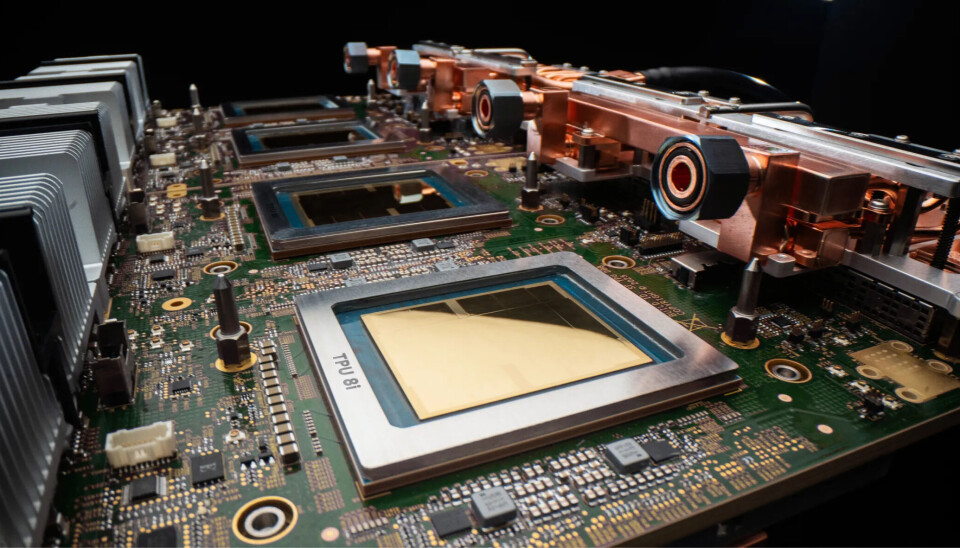
The most striking example of this strategy was the announcement that Google’s Tensor Processing Units (TPUs) will be available on OCI starting next year. This marks the first time Google’s specialized, proprietary AI chips will be offered in a hyperscale environment other than Google’s own. These chips, particularly the eighth-generation TPUs released in early 2026, are designed to handle the rigorous demands of large language model (LLM) training and the high-speed requirements of agentic AI. The TPU 8 series is split into two specialized versions: the 8t for training and the 8i for inference, both of which will soon be accessible to Oracle’s cloud customers.
Oracle is also diversifying into more specialized, non-traditional hardware. In 2027, the company will deploy Cerebras’ fast-inferencing hardware into OCI. Cerebras is known for its "wafer-scale" approach, which places compute and memory on a single, massive chip the size of a dinner plate. Their CS-4 accelerator, based on the Wafer Scale Engine 3 Turbo, claims to offer up to 30 times the performance of traditional GPUs in terms of tokens-per-second-per-user. Additionally, Oracle will offer SambaNova’s fifth-generation SN50 Reconfigurable Dataflow Units (RDUs). These units are designed to work in tandem with GPUs, handling the complex "decode" tasks of AI processing while GPUs handle the "prefill" tasks, optimizing the efficiency of agentic AI systems.
Deep Trust
Beyond hardware, Oracle is addressing the "trust gap" that often prevents large enterprises from fully committing to AI. On Monday, the company unveiled its Deep Trust AI Architecture, a security framework that will be integrated into Oracle’s AI Database, Autonomous AI Database, and APEX AI Application Generator.

The Deep Trust architecture is a response to the growing risks associated with AI, including the potential for AI agents to inadvertently breach security protocols or for threat actors to use AI to launch sophisticated attacks. Oracle’s approach is to embed security directly where the data lives, rather than treating it as an afterthought. This strategy aligns with the company’s long-standing Maximum Availability Architecture, which focuses on system resilience and uptime.
Juan Loaiza, Executive Vice President of Oracle Database Technologies, and Maria Colgan, Vice President of Product Management, described the initiative as a foundational shift. "Deep Trust AI Architecture applies the same principle to AI: build trust into the architecture from the start, instead of trying to bolt it on later," they stated. By enforcing trust at the infrastructure level, Oracle aims to protect both existing legacy applications and new AI-native builds without requiring developers to reinvent security protocols for every new project.
Oracle’s strategy also involves deepening its relationship with OpenAI. By linking OpenAI’s models, including ChatGPT and the Codex developer tool, with Oracle’s own Fusion applications and cloud infrastructure, the company is creating a bridge between frontier AI models and enterprise-grade data. This partnership allows businesses to use ChatGPT plug-ins within the Oracle AI Workspace to connect OpenAI tools directly to NetSuite and OCI, making enterprise data "agent-ready."
The ultimate goal of these integrations is the realization of "agentic AI"—systems that don’t just answer questions but actively perform tasks. Mike Sicilia, Oracle’s Co-CEO, articulated this vision during his keynote address, suggesting that AI should eventually make software nearly invisible to the user. "Work is sometimes organized around the work itself," Sicilia said. "People need to know what applications to open, where to find the information, the steps to follow, and who is to do what’s next. AI allows us to do that much better. It allows for far more intuitive software. In fact, AI should allow you to barely think about the software at all."

To support this transition, Oracle introduced 25 new "agentic applications" across its Fusion suite, covering everything from human resources and supply chain management to customer service. These tools are designed to automate manual tasks like scheduling deliveries or managing payroll. Additionally, Oracle launched the Fusion Companion, an interface that allows users to coordinate these agents through simple natural language commands, and the Fusion Setup and Configuration Registry, a public Git repository aimed at speeding up the implementation of these complex systems.
As Oracle continues its massive datacenter buildout and expands its hardware partnerships, the company is betting that the future of the enterprise lies in this seamless blend of high-performance infrastructure, ironclad security, and autonomous agents. Whether this monumental investment pays off or serves as a warning of AI-driven excess remains the central question for the tech industry heading into the late 2020s.
 Enterprise Tech & Infrastructure
Bridging the Gap in Data Center Convergence: The Evolving Role of Fibre Channel over Ethernet
As data centers face unprecedented pressure to handle massive workloads driven by...
 Enterprise Tech & Infrastructure
Navigating the Shift to Software-Defined Storage: Essential Strategies for Modern Enterprise Data Management
The landscape of enterprise data management is undergoing a fundamental transformation as...
 Enterprise Tech & Infrastructure
AMD Extends Lead in Datacenter Dominance with Launch of Sixth-Generation "Venice" Epyc Processors
The trajectory of the modern datacenter has, for the past decade, been...







