

On the second day of the event, the focus shifted to the underlying architecture of the cloud itself. Oracle announced several additions to the OCI infrastructure intended to provide organizations with a broader range of hardware options as they scale up their AI inference and training workloads. This "open architecture" approach is central to Oracle’s pitch: the company wants to ensure that enterprise and high-performance computing (HPC) customers can run their workloads using the specific software and hardware configurations that best suit their needs, rather than being locked into a single vendor’s ecosystem.
Nathan Thomas, Senior Vice President and Product Manager for OCI, emphasized this philosophy of customer choice. "There’s more comfort with a wide range of options in those environments," Thomas noted. He explained that Oracle views its role as a facilitator of best-in-breed technology rather than a gatekeeper. "We partner very deeply with who we view are best-in-breed in markets. You see us do a lot with Nvidia in chipsets. You see us do a lot with AMD chipsets. We feel very confident those are going to be solutions that our customers continue to want to see and we want to partner deeply there. We don’t want to put ourselves in a position where we’re dictating any of that stuff or trying to cut off any options for those customers."
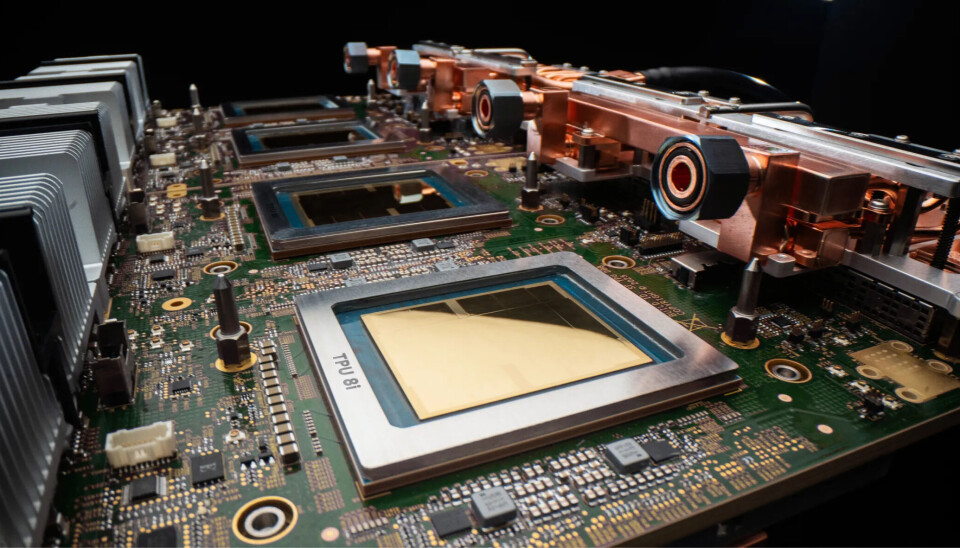
The most striking example of this strategy was the announcement that Google’s Tensor Processing Units (TPUs) will be available on OCI starting next year. This marks the first time Google’s specialized, proprietary AI chips will be offered in a hyperscale environment other than Google’s own. These chips, particularly the eighth-generation TPUs released in early 2026, are designed to handle the rigorous demands of large language model (LLM) training and the high-speed requirements of agentic AI. The TPU 8 series is split into two specialized versions: the 8t for training and the 8i for inference, both of which will soon be accessible to Oracle’s cloud customers.
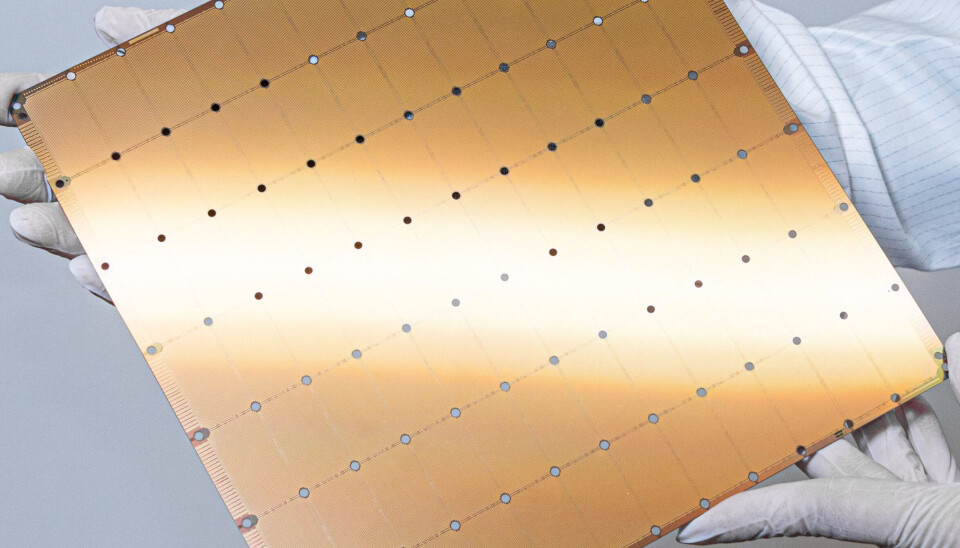
Oracle is also diversifying into more specialized, non-traditional hardware. In 2027, the company will deploy Cerebras’ fast-inferencing hardware into OCI. Cerebras is known for its "wafer-scale" approach, which places compute and memory on a single, massive chip the size of a dinner plate. Their CS-4 accelerator, based on the Wafer Scale Engine 3 Turbo, claims to offer up to 30 times the performance of traditional GPUs in terms of tokens-per-second-per-user. Additionally, Oracle will offer SambaNova’s fifth-generation SN50 Reconfigurable Dataflow Units (RDUs). These units are designed to work in tandem with GPUs, handling the complex "decode" tasks of AI processing while GPUs handle the "prefill" tasks, optimizing the efficiency of agentic AI systems.
Deep Trust
Beyond hardware, Oracle is addressing the "trust gap" that often prevents large enterprises from fully committing to AI. On Monday, the company unveiled its Deep Trust AI Architecture, a security framework that will be integrated into Oracle’s AI Database, Autonomous AI Database, and APEX AI Application Generator.
The Deep Trust architecture is a response to the growing risks associated with AI, including the potential for AI agents to inadvertently breach security protocols or for threat actors to use AI to launch sophisticated attacks. Oracle’s approach is to embed security directly where the data lives, rather than treating it as an afterthought. This strategy aligns with the company’s long-standing Maximum Availability Architecture, which focuses on system resilience and uptime.
 Enterprise Tech & Infrastructure
The Security Architecture of Enterprise Storage: Evaluating the Vulnerabilities of DAS and NAS Systems
In the modern enterprise landscape, data is frequently characterized as the lifeblood...
 Enterprise Tech & Infrastructure
Advanced Photonics Coalition Sets New Standards to Scale Optical Networking for the AI Era
The global infrastructure supporting the rapid expansion of artificial intelligence reached a...
 Enterprise Tech & Infrastructure
Seagate, Western Digital, and Toshiba Lead 2023 Rankings for Enterprise-Grade Storage Solutions
In the rapidly evolving landscape of corporate data infrastructure, the demand for...







