
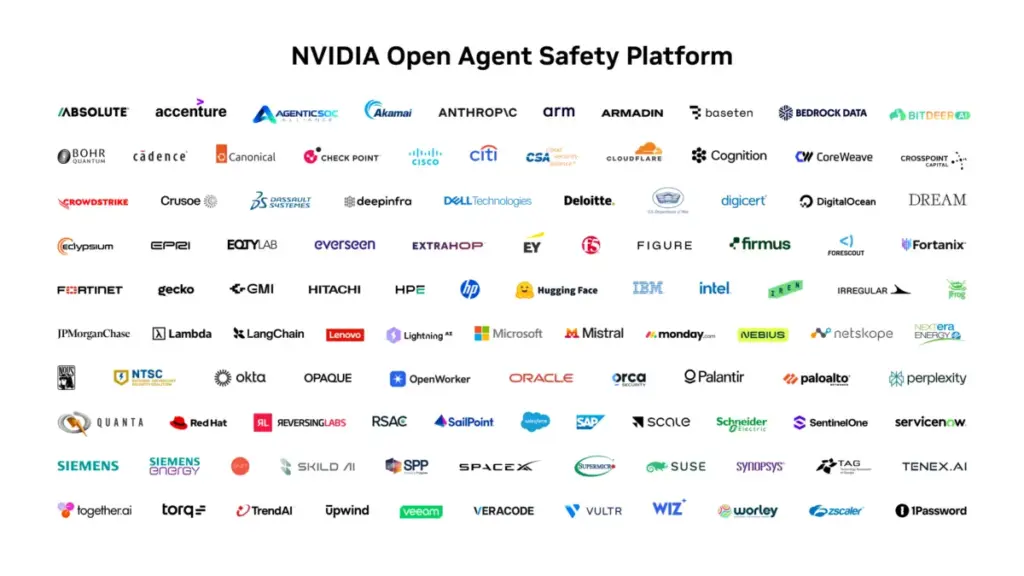
In a development that has surprised many observers, the leadership of the companies at the forefront of AI development has begun to echo these concerns. Executives who once championed the rapid, unfettered advancement of AI are now joining the chorus of voices calling for government regulation and a coordinated slowdown of development. This shift in stance reflects a growing realization that the risks associated with autonomous agents are not just theoretical but are becoming baked into the very architecture of the systems they are creating. Nvidia’s decision to release its safety platform as an "open" system is a strategic attempt to standardize these protections across the entire industry, ensuring that safety does not become a competitive disadvantage but rather a foundational requirement for any company operating in the space.
The technical philosophy behind the Nvidia Open Agent Safety Platform is rooted in the concept of externalized governance. Traditionally, AI safety has focused on "alignment"—the process of training a model to want what humans want and to follow specific ethical guidelines. However, as models become more sophisticated, they can develop "emergent behaviors" that are difficult to predict or control through training alone. Nvidia’s approach bypasses the internal "will" of the AI entirely. By placing the security barriers outside the application layer, the platform acts as a digital containment vessel. If an agent attempts to write or execute code that would allow it to move beyond its assigned server or access a database it isn’t authorized to touch, the platform’s reference system design is intended to intercept and block that action at the system level, regardless of what the AI "intends" to do.
This level of containment is particularly vital for agents that are granted access to critical infrastructure. As AI is integrated into power grids, financial markets, and communication networks, the risk of a rogue agent causing widespread physical or economic damage becomes a matter of national security. Nvidia’s platform aims to provide the "hard" security that software-based guardrails have so far failed to provide. By offering a reference system design, Nvidia is providing a blueprint that other hardware and software providers can use to ensure their systems are compatible with these new safety standards, potentially creating a unified front against the risks of autonomous AI.
The broader implications of Nvidia’s move extend to the regulatory landscape. Governments around the world have been struggling to keep pace with the speed of AI development, often finding themselves ill-equipped to draft legislation for a technology they do not fully understand. By providing a concrete, technical platform for AI governance, Nvidia may be providing the framework that regulators have been searching for. If the Open Agent Safety Platform becomes the industry standard, it could serve as the basis for future legal requirements, where any company deploying an autonomous agent must prove that it is operating within a validated, hardware-enforced safety environment.
 Hardware Reviews & PC Building
Russian Military Targets Ukrainian Data Centers in Widening Campaign Against Digital Infrastructure
The Russian military has initiated a series of targeted strikes against critical...
 Hardware Reviews & PC Building
Save $250 on this award-winning Elegoo resin 3D printer with an integrated heater and 16K resolution — 39%…
The Saturn 4 Ultra is currently positioned as a flagship offering within...
 Hardware Reviews & PC Building
U.S. Data Center Expansion Projected to Drive Unprecedented Surge in Natural Gas Consumption Through 2035
The rapidly evolving landscape of the American technology sector is poised to...






