
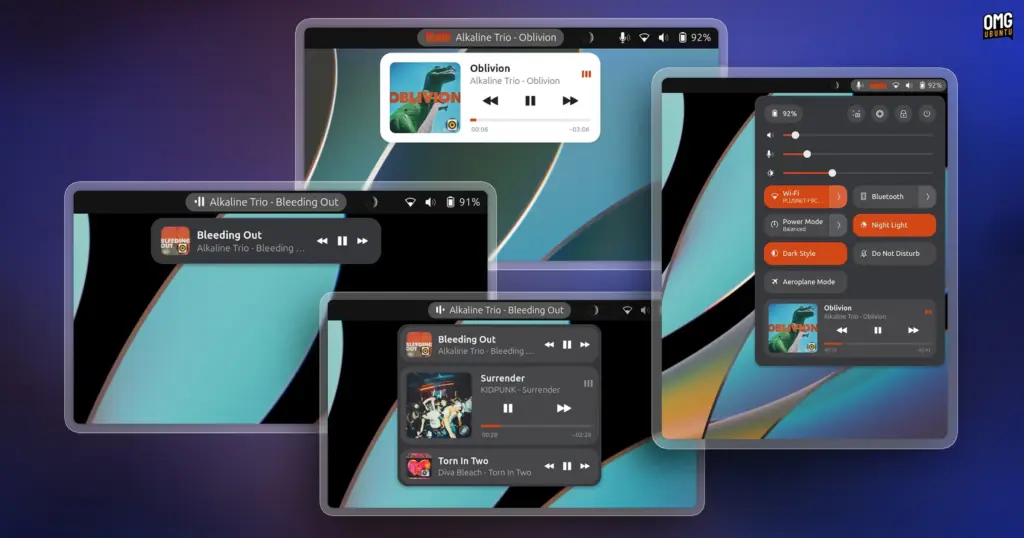
The layout of the extension does carry a few subtle design trade-offs. The text scaling within the applet pop-over appears slightly smaller and formatted differently when compared against native GNOME system menus and standard third-party applets. This compact typographic approach appears to be an intentional design compromise: because Now Playing Card is capable of tracking and listing up to ten simultaneous media players at once, using standard system font sizing would quickly push elements beyond the boundaries of the screen. Shrinking the text slightly ensures that multi-player lists remain readable and fully contained within the menu boundaries even during heavy multitasking sessions.
Another common challenge with MPRIS-based media aggregation on Linux is the sheer volume of non-essential audio sources that modern software generates. Nearly all major web browsers, including Chromium, Google Chrome, Mozilla Firefox, and their derivatives, register any active media element as an independent MPRIS player. In everyday browsing, this means that random video advertisements, social media auto-play snippets, and transient web previews can suddenly spawn media sessions alongside deliberate music listening. To prevent the interface from becoming cluttered with unwanted web noise, Now Playing Card includes a built-in application ignore list within its settings. Users can designate specific applications or browser instances to be disregarded by the extension, ensuring that only trusted, primary media applications populate the card stack.
From a compatibility standpoint, Now Playing Card offers broad support across several generations of the desktop environment. The extension is built to run on GNOME 45 through GNOME 51. This wide compatibility window covers current Long Term Support platforms such as Ubuntu 24.04 LTS, intermediate point releases, and future operating system updates reaching through Ubuntu 26.10, ensuring that users across both stable enterprise-focused distributions and fast-moving bleeding-edge systems can deploy the tool without version incompatibilities.
The project is hosted as an open-source development initiative on GitHub under the repository maintained by epogonii, with packaged releases distributed directly through the official GNOME Extensions directory. For Linux users who find themselves constantly balancing music playlists, remote meetings, podcasts, and browser-based video content, the utility presents a well-rounded and thoughtfully structured alternative to the stock GNOME playback experience.
 Linux & Open Source Solutions
Banshee Music Player Returns to Modern Linux Desktops as a Snap Package
A familiar name from the golden era of the Linux desktop has...
 Linux & Open Source Solutions
Hylki Brings Modern Rust Engineering and Deep Customization to the GNOME Desktop
For years, the Linux desktop has maintained a complicated relationship with the...
 Linux & Open Source Solutions
Ubuntu 26.10 Introduces Top-Screen Layout Picker to Streamline Window Tiling
Ubuntu 26.10 is introducing a new way for users to organize their...







