
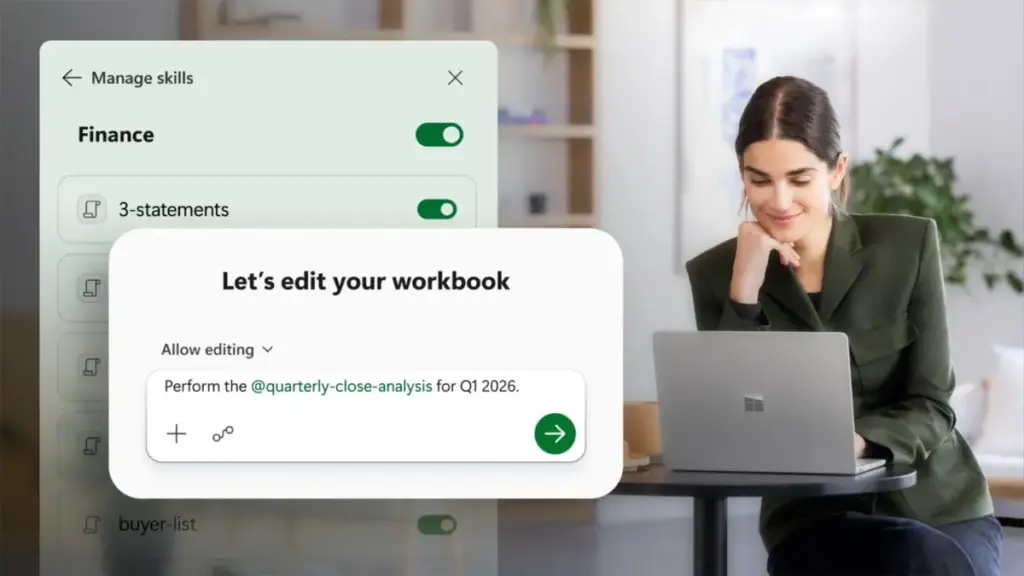
These skills allow finance teams to define exactly how Copilot should execute specific, repeatable processes. Rather than starting from a blank slate with a generic prompt, a skill acts as a guided roadmap for the AI. It instructs Copilot on the specific structure, formatting, and logical flow required for a particular output. This standardization makes the final product easier to review and reuse across an organization, fostering a higher level of trust in the AI-generated content.
The system is designed to be extensible. While Microsoft provides a library of sample finance skills, organizations can create their own custom skills using an open-standard markdown file. By saving a "SKILL.md" file in a shared OneDrive folder, a finance team can ensure that Copilot adheres to their specific internal methodology when building a three-statement model or a board-ready package. This move toward customization is further supported by an upcoming ecosystem in the Microsoft Marketplace, where developers and partners such as LSEG, Ramp, Rogo, Samaya AI, Velixo, and Vena will be able to deploy specialized skills for their own platforms and ERP solutions.
To further align the AI with individual user habits, Microsoft has also introduced personalization features and workbook rules. Personalization allows users to set their preferences once—such as preferred naming conventions or formatting styles—and have Copilot apply them consistently across all future interactions. Workbook rules go a step further by capturing the specific structural and formulaic conventions of a particular file, ensuring that the AI operates within the established logic of that specific document.

Grounded in Data You Trust
In the world of finance, an analysis is only as good as the data that feeds it. Manual data pulls from external terminals and disparate databases are not only time-consuming but are also a primary source of human error. To mitigate this, Microsoft is expanding its ecosystem of financial connectors, allowing Copilot to pull market data, fundamentals, and research directly into the Excel environment.
This direct connection to external data sources ensures that analysis begins with the most current information available. Building on the previous release of connectors for LSEG and Moody’s, Microsoft is adding more options for both public and private market data. Notably, FactSet is currently in preview and is expected to reach general availability in July. These connectors allow Copilot to ground its responses in high-fidelity, professional-grade data, moving beyond the limitations of general web searches or static internal spreadsheets.
By combining this data grounding with "Work IQ"—which provides context based on the user’s internal documents and organizational data—Copilot can now tackle sophisticated prompts. For example, an analyst could ask the AI to pull the last five years of a competitor’s income statement and perform a comparative analysis against their own internal projections, all while maintaining the integrity of the source data.
Unlocking Finance Workflows with Greater Control
The ultimate goal of these features is to unlock the most demanding workflows in the finance department. However, Microsoft recognizes that in finance, the final answer is rarely enough; the methodology is what matters. To address the need for transparency, the company has introduced "Plan with Copilot."
 Productivity Software & Office Suites
Microsoft Reimagines Copilot as a Central Hub for AI-Driven Enterprise Productivity
In a significant move to redefine the landscape of modern work, Microsoft...
 Productivity Software & Office Suites
Microsoft Reports 30 Million Paid Copilot Seats as Enterprise AI Shifts from Assistance to Autonomy
In a recent earnings call that signaled a pivotal moment for the...
 Productivity Software & Office Suites
Microsoft Reimagines Copilot as a Centralized Engine for the Future of AI-Driven Work
In a major strategic shift aimed at redefining the intersection of human...






