
Connect apps to your business data
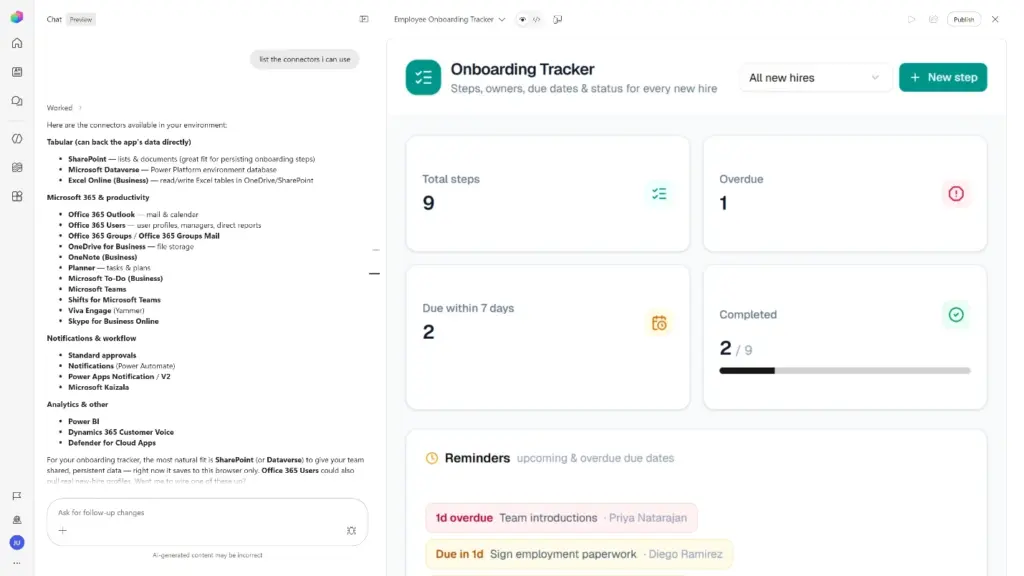
A common pitfall of early AI-generated tools was their isolation; they often functioned as "islands" of data that could not communicate with existing systems. Microsoft is addressing this by ensuring that apps built through Copilot Cowork and Copilot Studio are inherently connected. These applications utilize a vast library of connectors to interact with established business data, ensuring that the apps are not just decorative but deeply functional.
A key component of this connectivity is "Work IQ," a feature that allows the AI to tap into organizational context. This means the applications are aware of the specific environment in which they operate, allowing them to surface relevant information and, more importantly, take action based on that data. This capability transforms the app from a passive viewer into an active participant in the business process.
Microsoft highlights several use cases to illustrate the power of this connectivity. For instance, an employee onboarding application can do more than just list tasks; it can use connectors to pull data from HR sources, display real-time progress, surface specific learning resources tailored to the new hire’s role, and then write the completion status back into the organization’s official records. Similarly, a field service application could retrieve technical specifications from a third-party database, provide the technician with guided repair steps, and automatically log the service results in the company’s central management system. Because these actions happen within the Microsoft 365 tenant boundary, the data remains secure and compliant with internal policies.
Build enterprise apps with open standards and centralized control
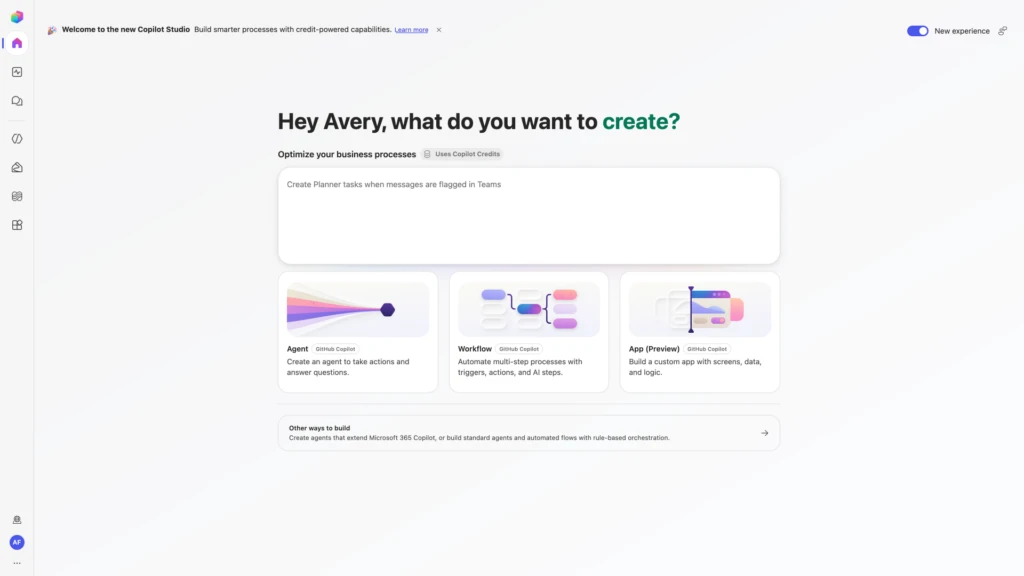
As the number of "citizen developers" grows within an organization, IT departments often face the challenge of "shadow IT"—the proliferation of unsupported and unmanaged software. Microsoft’s new framework is designed to mitigate these risks by building applications on open standards and providing IT administrators with robust oversight tools.
Apps created through this new natural language process are described as "full-stack" applications. They are not proprietary scripts that live only within a chat window; they are structured solutions that support professional-grade development practices. This includes Git-backed source control, which allows for version tracking and collaboration. It also includes deployment stages and version isolation, ensuring that developers can test improvements and build the "next version" of an app without risking the stability of the live version currently being used by employees.
 Productivity Software & Office Suites
The Agentic Edge: New Research Reveals the ‘Knowledge Spine’ Powering the World’s Most Advanced AI Enterprises
In the rapidly evolving landscape of corporate technology, the conversation among C-suite...
 Productivity Software & Office Suites
Microsoft Unveils Microsoft 365 G7: A New Era of AI-Driven Productivity and Governance for Government Agencies
In a significant move to modernize the digital infrastructure of the U.S....
 Productivity Software & Office Suites
Microsoft Unveils Microsoft 365 G7: A New Frontier for AI-Driven Productivity and Governance in the Public Sector
In a significant move to modernize the digital infrastructure of the United...







