

As the use of AI agents expands, the need for oversight becomes paramount. The rapid adoption of autonomous or semi-autonomous tools can lead to significant blind spots if not managed correctly. Government leaders need definitive answers to questions regarding who owns an agent, what data it can access, and whether its operations remain within the scope of its intended purpose.
Agent 365 serves as the dedicated control plane for this new ecosystem. It provides a centralized dashboard where organizations can discover, register, and manage every agent active within their environment. This platform allows administrators to take immediate governance actions, such as deploying new agents to specific departments, blocking those that do not meet security criteria, or removing agents that are no longer needed.
At its launch, Agent 365 will focus on providing a unified foundation for discovery and identification. However, Microsoft expects the platform’s capabilities to evolve rapidly, eventually encompassing full lifecycle governance, advanced risk management, and deeper security integrations. This roadmap reflects the "Intelligence + Trust" vision, ensuring that as the intelligence of the agents grows, the tools to govern them grow in parallel. For agencies navigating the complexities of GCC compliance, the status of these features will be updated continuously as they clear the necessary authorization milestones.
Advancing the Mission with Confidence
The overarching goal of Microsoft 365 G7 is to empower government teams to build greater capacity and resilience. In an era where public servants are often asked to do more with less, AI represents a significant opportunity to scale impact. Whether it is responding more effectively to constituent inquiries or strengthening the resilience of national infrastructure, the G7 suite is positioned as the technological backbone for these efforts.
Realizing the full potential of this technology, however, requires more than just a software license. Microsoft’s announcement emphasizes the importance of leadership, workforce readiness, and responsible governance. The G7 suite provides the tools, but the success of "Frontier Transformation" will depend on how agencies integrate these tools into their broader mission strategies.
The phased rollout and the focus on accredited government clouds underscore Microsoft’s commitment to the unique requirements of the U.S. public sector. By combining AI directly within the flow of work with specialized mission agents and a robust governance control plane, Microsoft 365 G7 offers a path forward for agencies to modernize. It provides a framework where the pursuit of innovation does not come at the expense of the trust and security that are fundamental to public service.
Ultimately, the transformation of the public sector is about the people who serve. With the launch of G7, the focus remains on helping those individuals navigate complex work environments and advance their missions with the confidence that their tools are as secure as they are intelligent. As the capabilities of the suite continue to expand, it is poised to become a cornerstone of the modern, AI-enabled government.
 Productivity Software & Office Suites
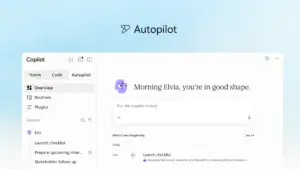
Microsoft Unveils Reimagined Copilot with Agentic Capabilities and New "Autopilot" Digital Teammate
Microsoft has announced a sweeping overhaul of its Copilot platform, signaling a...
 Productivity Software & Office Suites
Microsoft Announces Fifth Annual Power Platform Community Conference in Las Vegas to Address the Future of AI-Driven Business Processes
As modern enterprises continue to navigate an era defined by rapid digital...
 Productivity Software & Office Suites
Microsoft Unveils Microsoft 365 G7: A New "Frontier Suite" Aimed at Transforming AI Adoption for Government Agencies
In an era where public sector leaders are increasingly pressured to modernize...







