
To ensure these user-generated solutions meet enterprise standards, Microsoft is introducing the Microsoft Copilot Managed Runtime. This hosting infrastructure allows code to run safely within a company’s existing Microsoft 365 environment. While it is designed to be easy for any employee to use, it remains under the governance of IT departments. This foundation also supports applications built in Copilot Studio and is being opened to third-party and professional developers to create a more robust ecosystem of custom AI tools.
The Rise of the Persistent Digital Teammate
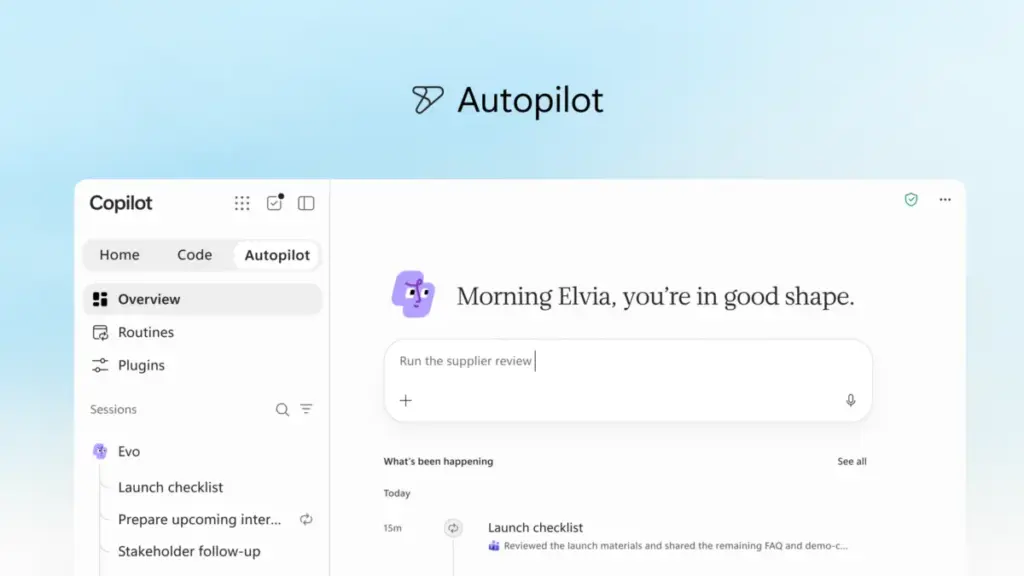
Perhaps the most significant departure from traditional AI assistants is "Autopilot," a feature previously known during its development as Scout. Autopilot is described by Microsoft as a "digital teammate" that operates with a high degree of autonomy. Unlike standard AI that waits for a prompt, Autopilot is proactive and persistent.
Users can assign Autopilot a specific name, role, and goal. Once activated, the agent can monitor communication channels, follow up on email threads, and manage recurring workflows without human intervention. For example, Autopilot can manage a full supplier review process, which involves building a schedule, handling preparatory work, attending meetings, and reaching out to stakeholders for updates. Because it is cloud-hosted, Autopilot continues to work even when the user is offline, ensuring that projects maintain momentum around the clock.

Autopilot is built on Microsoft IQ, the company’s unified intelligence platform. This allows the agent to have its own identity, memory, and workspace within a tenant, giving it a deep understanding of how a specific organization operates. It is designed to appear where people already work—such as in Teams, Outlook, and various chat channels—allowing colleagues to @mention the agent as they would any other member of the staff.
Expanding Business Context and Governance
For AI to be truly effective in a corporate setting, it requires access to the specific data and context of the business. Microsoft is addressing this through Fabric IQ, which connects Copilot to more than 20 million semantic models in Power BI. This ensures that the insights provided by the AI are grounded in the company’s actual data.
Furthermore, Copilot is now being integrated with data and workflows from Dynamics 365 and the Power Platform. This means a salesperson drafting a proposal can have Copilot automatically pull in deal histories or customer support tickets without ever leaving the document.
To manage the proliferation of these new capabilities, Microsoft is launching a new plugin registry. This unified catalog will house plugins from Microsoft, partners, and custom-built internal tools. The registry provides IT departments with a centralized location to approve and govern AI extensions, ensuring that new capabilities are introduced at scale without compromising organizational security or compliance.
 Productivity Software & Office Suites
Microsoft Unveils Specialized AI Capabilities for Finance Professionals in Excel to Address Sector-Specific Complexity
The trajectory of transformative technology has followed a consistent, predictable rhythm for...
 Productivity Software & Office Suites
Microsoft Unveils Strategic Roadmap for Enterprise AI, Prioritizing Agentic Workflows and Flexible Economic Models
In an era defined by rapid-fire technological breakthroughs and a relentless cycle...
 Productivity Software & Office Suites
Microsoft Reports 30 Million Paid Copilot Seats as Enterprise AI Shifts from Assistance to Autonomy
In a recent earnings call that signaled a pivotal moment for the...







