
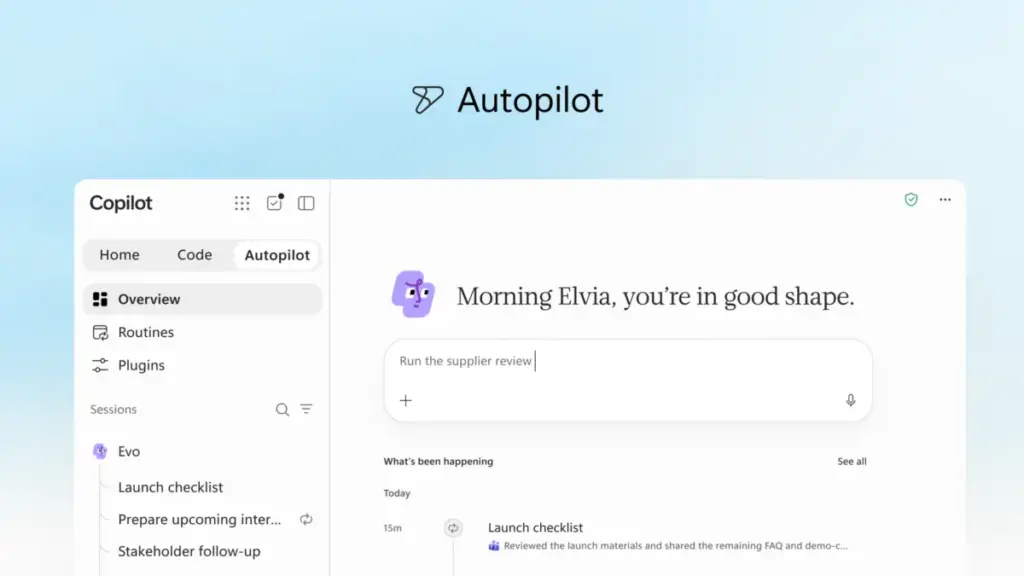
To manage this growing ecosystem of capabilities, Microsoft is launching a new plugin registry. This unified catalog will house Microsoft-built, partner-built, and custom plugins, providing IT departments with a centralized location to approve and govern the tools employees use to extend Copilot’s functionality.
Navigating the Economics of AI: FinOps for AI
As AI usage scales, managing the associated costs has become a primary concern for enterprise leaders. Microsoft is addressing this through a new discipline called "FinOps for AI," which aims to optimize AI spend for maximum business value.
The company is bifurcating its pricing strategy to reflect different types of AI work. For "everyday AI"—such as summaries, drafts, and quick lookups—Microsoft utilizes a User Subscription License (USL). This model employs a feature called "Auto," which automatically routes requests to the most cost-effective model that can handle the task with sufficient speed and accuracy.

For more complex "agentic work," such as the long-running tasks performed by Autopilot or the solutions built in Code, Microsoft is moving toward Usage-Based Billing (UBB). This allows organizations to match their costs directly to the value generated by advanced models. To help administrators navigate these costs, new management tools are being introduced in "Agent 365," allowing for the setting of spending policies, the routing of credit requests, and the monitoring of which AI tasks are yielding the best outcomes.
A Look Toward the Future: Today and Teams Integration
Microsoft concluded its announcement with a "sneak peek" at features currently in development. Coming soon to the Home interface is "Today," a personalized command center that aggregates information from email, calendars, and Teams. Rather than just listing tasks, "Today" is designed to be proactive—preparing drafts for pending replies, proposing schedule changes, and providing the necessary context for forgotten follow-ups so users can act immediately.
Furthermore, the company is testing "@Copilot in Teams," which will allow the AI to participate in group chats and channels with a full understanding of the shared context and permissions of that group. Users will be able to ask Copilot why certain decisions were made in past conversations, and the AI will be able to propose cross-functional reviews and track dependencies across different departments.
These updates are currently rolling out through Microsoft’s Frontier program, with broader availability expected in the coming weeks and months. The company plans to share further innovations at the upcoming Microsoft Ignite conference in November, where the focus will remain on how these tools empower organizations to reimagine the nature of work through the lens of AI.
 Productivity Software & Office Suites
Microsoft Announces New AI-Integrated Office Suites to Streamline Small Business Operations
In the demanding ecosystem of small business management, success is often measured...
 Productivity Software & Office Suites
Microsoft Unveils the "New Copilot": A Strategic Shift Toward Proactive AI Agents and Integrated Productivity
In a significant move to redefine the landscape of digital labor, Microsoft...
 Productivity Software & Office Suites
Microsoft Expands Copilot Ecosystem with Natural Language App Building to Democratize Enterprise Software Development
The landscape of software development is undergoing a fundamental transformation as artificial...







