
Standard productivity tasks, such as summaries and first drafts, will continue to be covered under a User Subscription License (USL). A key innovation here is "Auto," a routing system that automatically weighs the accuracy, speed, and cost of each request to select the most appropriate model for the job.

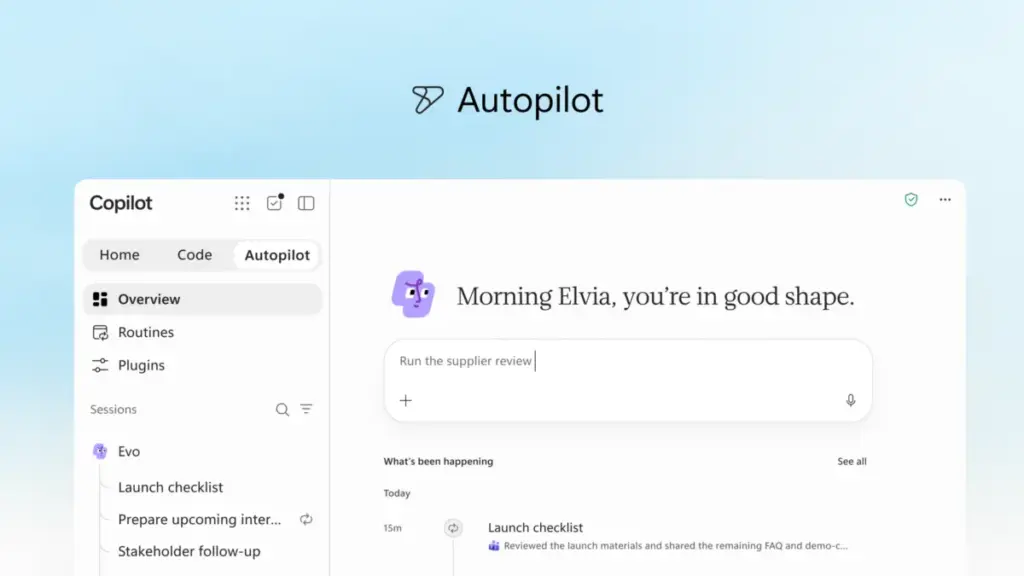
For more resource-intensive "agentic" work—including the use of Cowork, Code, Autopilot, and frontier models like Astra and Fable—Microsoft is utilizing Usage-Based Billing (UBB). This allows organizations to match their costs directly to the value generated by high-end AI operations.
New FinOps capabilities within Agent 365 and Microsoft Copilot will allow administrators to manage these spending policies at scale. Admins can now set which model families are available to specific user groups, route credit requests through existing approval workflows, and analyze which AI tasks are delivering the strongest business outcomes. On the individual level, end-users will be able to view their own credit usage and history directly within the Copilot interface, encouraging responsible use within organizational guardrails.
The Road Ahead: Proactive Command Centers and Shared Context
While many of the features announced today are beginning their rollout through the Frontier program, Microsoft also provided a glimpse into the near future of the platform.
Coming soon to the Home interface is "Today," a proactive command center that aggregates information from email, calendars, Teams threads, and tasks. Rather than just listing what needs to be done, Today is designed to prepare the work in advance—drafting responses, proposing schedule changes, and providing the necessary context for forgotten follow-ups.
Additionally, the company is testing "@Copilot in Teams," which allows the AI to participate in group chats and channels with the shared context of the entire team. This capability enables the AI to answer questions about past decisions by pulling from conversations across various threads and even offering to prepare cross-functional reviews when those decisions impact multiple departments.
The "new Copilot" represents a major bet by Microsoft that the future of work lies not in fragmented applications, but in a centralized AI ecosystem that can both follow instructions and act on its own initiative. As these features move from private preview to broad availability in the coming months, the company continues to position itself at the forefront of the transition to an AI-powered economy.
 Productivity Software & Office Suites
Microsoft Reimagines Copilot as a Unified AI Platform for the Next Generation of Work
In a significant shift that signals the next phase of the artificial...
 Productivity Software & Office Suites
The Rise of the Agentic Enterprise: New Research Identifies the ‘Knowledge Spine’ as the Key to AI Transformation
In the current corporate landscape, the conversation surrounding artificial intelligence has shifted...
 Productivity Software & Office Suites
Microsoft Reimagines Copilot as a Central Hub for AI-Driven Enterprise Productivity
In a significant move to redefine the landscape of modern work, Microsoft...







