
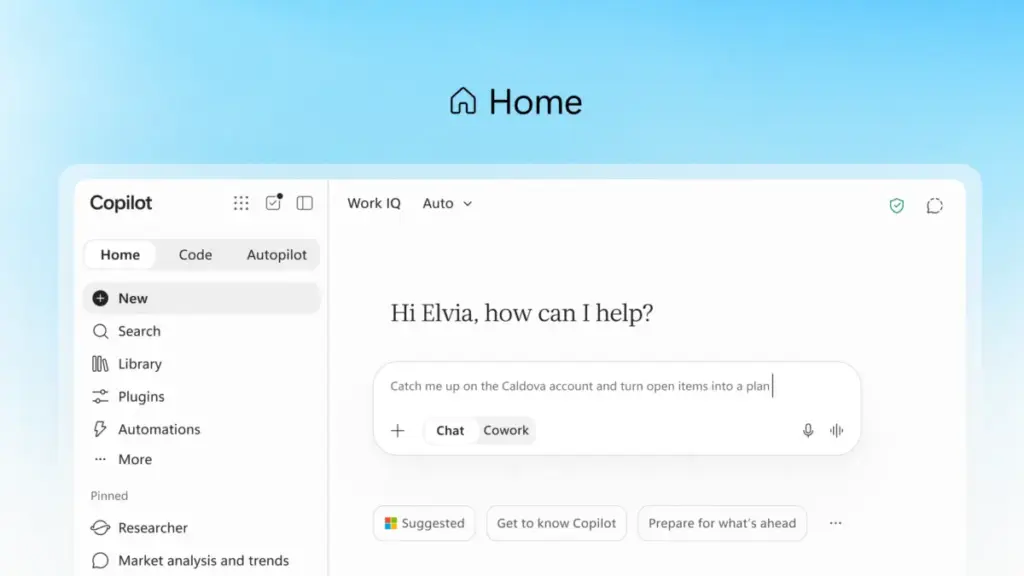
The company is moving toward a bifurcated spending model. For everyday tasks like drafting and summarizing, users typically rely on a User Subscription License (USL), which offers a fixed cost for standard Copilot features. Within this model, a feature called "Auto" dynamically weighs accuracy, speed, and cost for each request, routing the task to the most efficient model available.
However, for more intensive "agentic" work—such as the long-running tasks performed by Autopilot or complex solution building in Code—Microsoft is utilizing Usage-Based Billing (UBB). This allows organizations to match their costs directly to the value generated by advanced frontier models like Astra and Fable.
To help businesses manage this complexity, new cost-management tools are being integrated into "Agent 365." Admins can now set spending policies, manage API access, and determine which model families are available to specific user groups. Business leaders can also analyze which tasks are generating the highest return on investment, allowing them to optimize their AI spend. For the end user, transparency is provided through direct views of credit usage and remaining balances within the Copilot app, encouraging responsible AI consumption within organizational guardrails.
A Roadmap for the Future of Collaboration
The current rollout is described as only the beginning of a broader roadmap. Microsoft also provided a "sneak peek" at upcoming features intended to make Copilot even more personalized.

In October, a new feature called "Today" will enter private preview. Described as a proactive command center, Today will aggregate information from mail, calendars, and Teams to show users what requires immediate attention. Rather than just listing tasks, Today will proactively prepare drafts, propose schedule changes, and surface forgotten follow-ups with the necessary context already attached.
Additionally, Microsoft is enhancing group collaboration with the introduction of "@Copilot in Teams." This feature allows an entire team to invoke Copilot within a shared channel or group chat. The AI will have access to the shared context of that specific group, allowing it to explain past decisions or prepare cross-functional reviews that identify dependencies and open questions. By keeping everyone aligned on the same data, Microsoft hopes to eliminate the need for repetitive status meetings and manual project tracking.
Implementation and Availability
The new Copilot experience is beginning its rollout through Microsoft’s Frontier program, with new capabilities expected to arrive continuously over the coming months. The "Code" feature is slated for preview for Microsoft 365 Premium and Pro subscribers later this year, while Autopilot is expanding to private preview at the end of this month.
Microsoft has invited the global tech community to learn more about these innovations at the upcoming Microsoft Ignite conference, scheduled for November 17–20 in San Francisco and online. As organizations grapple with the complexities of integrating AI into their core business processes, Microsoft’s reimagined Copilot represents a bet that a unified, proactive, and governed platform is the key to unlocking the next era of productivity.
 Productivity Software & Office Suites
Microsoft Launches Copilot Cowork Globally, Bringing Agentic AI to the Fortune 500
Microsoft has officially announced the general availability of Copilot Cowork, marking a...
 Productivity Software & Office Suites
Microsoft Unveils Advanced AI ‘Skills’ and Data Connectors to Transform Excel for Finance Professionals
The evolution of modern computing has historically followed a predictable trajectory, moving...
 Productivity Software & Office Suites
Microsoft Announces Microsoft 365 G7 and Agent 365 to Accelerate AI Adoption and Governance Across U.S. Government Agencies
In an era where the public sector faces the dual challenge of...







