

In a sweeping international law enforcement operation coordinated across multiple borders, authorities have successfully dismantled the infrastructure of the notorious KillSec ransomware group. The crackdown, which targeted the administrative heart of the organization, resulted in the arrest of three key individuals, including a 16-year-old Romanian national believed to be the primary mastermind behind the group’s global operations. The intervention marks a significant milestone in the ongoing battle against Ransomware-as-a-Service (RaaS) models, which have increasingly leveraged young, technically proficient individuals to execute high-stakes cyber extortion campaigns.
The operation was spearheaded by the Hamburg State Criminal Police Office and the Hamburg Public Prosecutor’s Office in Germany, working in close concert with Europol and law enforcement agencies from Spain, Greece, the United Kingdom, and Romania. Over the course of the investigation, tactical teams executed coordinated raids on eight separate properties across these four nations. The searches yielded a significant haul of digital evidence, specialized computing infrastructure, and various criminal assets, providing investigators with a rare window into the internal mechanics of a professionalized ransomware syndicate.
Beyond the physical arrests, the digital component of the takedown was equally extensive. Law enforcement successfully seized control of KillSec’s primary leak site, a dark web platform used by the group to name and shame victims who refused to meet ransom demands. In doing so, authorities managed to secure at least 110 terabytes of data that had been exfiltrated from victim organizations. This intervention effectively prevented the further unauthorized dissemination of sensitive corporate and personal information, offering a reprieve to hundreds of businesses currently caught in the group’s crosshairs.
Technical specialists involved in the operation also targeted the group’s operational backbone, seizing five central servers that were instrumental in managing KillSec’s day-to-day activities. These servers served as the command-and-control hub for the group, storing stolen data and facilitating communication between the core administrators and their network of affiliates. In a final symbolic and practical blow to the group’s public-facing presence, KillSec’s various web domains were redirected to a law enforcement seizure notice, notifying any visitors of the group’s demise.
The identification of a 16-year-old as the alleged leader of the operation has sent shockwaves through the cybersecurity community. Despite his age, the Romanian teenager is suspected of orchestrating the group’s high-level strategy and overseeing the technical development of the ransomware platform. His arrest highlights a growing and troubling trend of minors becoming deeply involved in sophisticated cybercrime. Alongside the teenager, other arrested suspects are believed to have filled specialized roles within the organization, including a primary administrator, a developer—who was also a minor when some of the alleged offenses began—a professional negotiator responsible for communicating with victims, and a high-level affiliate.
Daniel Wilcock, a threat intelligence analyst at Talion Cyber Security, noted that the involvement of such young individuals in major criminal enterprises is a wake-up call for both the private sector and global governments. He emphasized that the technical expertise displayed by these children is undeniable, yet their moral and legal understanding of the consequences of their actions often lags behind their coding abilities. Wilcock argued that the cybersecurity industry must do more to identify and mentor young talent before they are recruited by criminal syndicates, suggesting that the lack of legitimate pathways for utilizing these skills is a contributing factor to the rise in youth-led cybercrime.
The legal ramifications of the takedown extend across the Atlantic. In the United States, another alleged member of the KillSec collective, a Dutch national identified as Fouad Eltibrizi, has been formally charged for his role in the group’s activities. The U.S. Department of Justice has leveled several serious charges against Eltibrizi, including conspiracy to intentionally access a computer without authorization for financial gain, and intentionally causing damage to a protected computer. Furthermore, he faces charges related to the transmission of threats with the intent to extort, highlighting the aggressive nature of KillSec’s business model.
KillSec operated as a Ransomware-as-a-Service (RaaS) entity, a model that has become the dominant structure in the cybercrime world. Under this system, the core developers of the ransomware maintain the code and the infrastructure, while "affiliates" are recruited to perform the actual breaches and deployments. KillSec was particularly active in its recruitment efforts, utilizing public Telegram channels and dark web forums to attract hackers. In exchange for using the KillSec platform, these affiliates would pay a percentage of every successful ransom payment back to the core group.
This collaborative model allowed KillSec to scale its operations with terrifying speed. Since its emergence in early 2024, the group has been linked to approximately 1,000 suspected attacks worldwide. Of these, investigators have already confirmed that at least 500 resulted in successful breaches where data was encrypted or stolen. Authorities have warned that this number is likely to rise as forensic experts continue to sift through the 110 terabytes of seized data and server logs.
The group’s geographical and sectoral reach was vast. According to Group-IB’s High-Tech Crime Trends Report, KillSec was ranked among the ten most active ransomware threats in the Asia-Pacific, Latin American, and Middle Eastern regions within just months of its debut. The group did not discriminate in its targeting, though it showed a clear preference for sectors where the pressure to restore services is highest, such as financial services and healthcare. Their victim list includes government bodies, major insurance providers, investment firms, and even a popular consumer application with a user base numbering in the millions.
The success of the operation was bolstered by the involvement of private-sector partners like Group-IB, which provided critical intelligence to law enforcement. Dmitry Volkov, the CEO of Group-IB, emphasized that while seizing servers is an important step, the true victory lies in the apprehension of the human actors behind the keyboards. Volkov pointed out that digital infrastructure can be replaced relatively quickly by determined criminals, but the institutional knowledge held by developers, administrators, and negotiators is much harder to recover. By arresting the "brain trust" of KillSec, law enforcement has aimed for a permanent cessation of the group’s activities rather than a temporary disruption.
The investigation is far from over. Europol has indicated that the vast amount of evidence seized during the raids—including hardware, encrypted communications, and digital ledgers—is currently being analyzed by specialist teams. One of the primary focuses of this ongoing work is the tracing of criminal proceeds. Like most modern ransomware groups, KillSec relied heavily on cryptocurrency for ransom payments and affiliate payouts. By following the digital money trail, investigators hope to identify further participants in the scheme and potentially recover some of the stolen funds.
The data recovered from the five central servers is also being used to identify victims who may not have even realized they were breached, or who chose not to report the incidents to the authorities. Law enforcement agencies are now in the process of reaching out to these organizations to provide them with the information necessary to secure their networks and mitigate any ongoing risks.
As the legal proceedings against the arrested individuals begin in their respective jurisdictions, the case serves as a stark reminder of the evolving nature of the ransomware threat. The transition from lone-wolf hackers to professionalized, multi-national syndicates—often led by individuals who have not yet reached adulthood—presents a complex challenge for global security. For now, the takedown of KillSec stands as a testament to the power of international cooperation in the face of borderless crime. The redirection of their domains and the seizure of their assets signal the end of a group that, in a very short time, managed to become one of the most prolific threats in the digital landscape.
 Helpdesk & IT Service Management (ITSM)
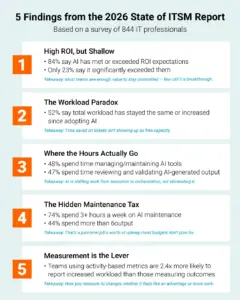
The Hidden Complexity of Efficiency: SolarWinds Report Reveals the Dual Nature of AI in the Modern Service Desk
The promise of artificial intelligence within Information Technology Service Management (ITSM) has...
 Helpdesk & IT Service Management (ITSM)
Keeper Security Hits Major Milestone with 100,000 Enterprise Customers Amid Rapid Growth in Identity Security Market
In a significant validation of the growing demand for unified identity and...
 Helpdesk & IT Service Management (ITSM)
Strategic Espionage Campaign Linked to Chinese Threat Actor Targets Global AI Policy Experts
In a sophisticated display of targeted cyber espionage, a threat actor aligned...







