
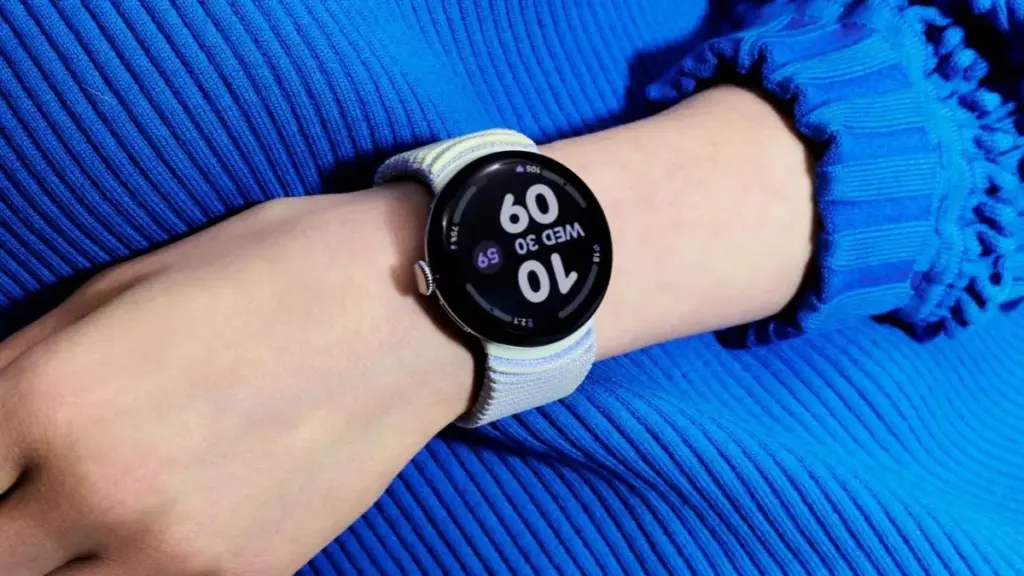
The promise of the modern smartwatch is one of seamless integration, providing a continuous stream of health data, notifications, and connectivity right on the wrist. However, that promise relies entirely on the longevity of the device’s power cell. For many users within the Google ecosystem, that reliability was recently called into question as reports of severe battery depletion began to surface across various generations of the Pixel Watch. After a period of uncertainty for affected users, Google has officially acknowledged the existence of a bug causing this excessive power draw and has confirmed that a solution is currently being deployed to resolve the issue.
The problem, which manifested as a sudden and dramatic decrease in battery life, left many users struggling to get through a single day on a full charge. While the Pixel Watch series has generally been praised for its sleek design and deep integration with Fitbit’s health-tracking suite, battery life has always been a closely watched metric. When a bug disrupts this balance, it transforms a vital piece of wearable technology into a source of frustration. Fortunately, the tech giant has moved to address the situation, clarifying that the fix is not a traditional system-wide firmware update but rather a series of targeted application updates delivered through the Google Play Store.
Understanding the Scope of the Battery Drain Bug
The reports of battery issues were not localized to just one model. Instead, the bug appeared to be agnostic of the specific hardware generation, affecting the original Pixel Watch, the Pixel Watch 2, and the most recent iterations of the device. This suggested that the culprit was not a hardware defect but a software-side anomaly, likely residing within the Wear OS framework or a core background service that handles synchronization and data processing.
Users experiencing the bug reported a stark contrast to their typical usage patterns. In many instances, devices that were previously capable of lasting 24 hours or more were seeing their remaining power plummet to critical levels in as little as 12 hours. This occurred even in scenarios where the watch was being used minimally, suggesting a "vampire" drain—a situation where a background process fails to enter a sleep state and continues to consume processor cycles and radio power unnecessarily.
In a statement addressing the concerns, Google noted that the bug had impacted a "small number of devices." While the company did not provide specific figures, the visibility of the issue on community forums and social media platforms indicated it was significant enough to warrant a swift official response. The company’s diagnostic efforts eventually pointed toward a software conflict that could be resolved by updating the suite of applications that reside on the watch itself.
The Mechanism of the Fix and the Rollout Timeline
Unlike major operating system patches that often require a full system reboot and a lengthy installation process, this particular fix is being distributed through the Google Play Store. This approach allows Google to target specific components of the Wear OS ecosystem—such as Google Play Services, the Fitbit integration modules, or the Pixel Watch companion services—without needing to push a full Over-the-Air (OTA) firmware update.
Google has stated that the rollout of these updates has already commenced and is expected to be completed globally over the next few days. For users who have their watches set to update automatically over Wi-Fi while charging, the fix may arrive without any manual intervention. However, for those who wish to ensure their device is protected as soon as possible, Google has provided guidance on how to manually trigger the update process.
To secure the fix, users are encouraged to access the Play Store directly from their Pixel Watch. By navigating to the "Manage apps" section and selecting "Update all," users can force the device to check for the latest versions of all installed software. This ensures that any background services responsible for the battery leak are replaced with the patched versions. Given the staggered nature of Play Store distributions, some users may see the updates immediately, while others may need to check back periodically over a 48-hour window.
Contextualizing the Recent Wave of Pixel Software Challenges
The battery drain issue on the Pixel Watch does not exist in a vacuum. It comes during a period where Google’s broader Pixel hardware lineup has faced a series of highly publicized software hurdles. The complexity of modern software, which must balance performance, security, and power efficiency across a wide array of interconnected devices, occasionally leads to these types of regressions.
Recently, owners of the Pixel 11 Pro flagship smartphones reported significant frustrations with the "Video Boost" feature. This cloud-augmented processing tool, designed to enhance the dynamic range and clarity of recorded footage, reportedly produced nothing but static for some users, rendering the high-end camera feature unusable. Similarly, the Google Photos app—a cornerstone of the Android experience—has faced its own set of stability issues. Users reported that the app would become unresponsive or sluggish when attempting to perform standard photo edits, a core function for a device marketed heavily on its imaging capabilities.
These incidents, alongside the Pixel Watch battery bug, highlight the ongoing challenge Google faces as it seeks to tighten the integration between its hardware and software. As the company moves toward a more vertical integration model—designing its own Tensor chips and maintaining a bespoke version of Android and Wear OS for its own devices—the expectation for a bug-free experience increases. When issues do arise, the speed and transparency of the fix become the primary metrics by which the company’s support ecosystem is judged.
The Critical Importance of Wearable Reliability
In the competitive landscape of wearables, battery life is often the deciding factor for consumers. Competing directly with the Apple Watch and Samsung’s Galaxy Watch series, the Pixel Watch must prove that it can be a reliable daily companion. For a device that tracks sleep, monitors heart rate variability, and provides emergency SOS features, a dead battery is more than a mere inconvenience; it represents a lapse in the device’s fundamental utility.
The 12-hour battery life reported by some affected users is particularly problematic for those who utilize the Pixel Watch for sleep tracking. If a device requires charging twice a day—once in the morning and once before bed—the user is forced to choose between daytime connectivity and nighttime health data. By addressing this bug through app updates, Google is attempting to restore the 24-hour-plus window that users have come to expect, ensuring that the "always-on" nature of the device remains intact.
While Google has not disclosed the exact technical nature of the bug—whether it was a runaway GPS process, a synchronization loop with the smartphone, or a glitch in the heart rate sensor’s polling frequency—the remedy remains the same for the end user. The reliance on the Play Store for system-critical fixes is a testament to the modular nature of Wear OS, allowing for more agile responses to emerging problems compared to the traditional, slower cadence of monthly security patches.
Looking Ahead for Pixel Watch Users
As the rollout continues, users are advised to remain vigilant regarding their device’s performance. If, after updating all applications through the Play Store, the severe battery drain persists, it may be necessary to perform a restart of the watch to ensure all updated services are correctly initialized. In some rare cases, a persistent battery issue might require a deeper look at individual third-party watch faces or apps that may not yet be optimized for the latest version of Wear OS.
For the majority of the "small number" of affected users, however, this official fix should mark the end of the recent battery woes. Google’s confirmation of the rollout provides a clear path forward and serves as a reminder of the importance of keeping wearable software up to date. As the Pixel ecosystem continues to expand with new hardware and more ambitious software features, the stability of core functions like battery management will remain the foundation upon which user trust is built.
For now, the priority for any Pixel Watch owner experiencing shorter-than-expected runtimes is clear: navigate to the on-watch Play Store, check for updates, and allow the staggered rollout to reach the device. With the fix expected to be fully distributed within the coming days, the Pixel Watch should soon return to its role as a dependable, all-day assistant on the wrist.
 Mobile Device Management (MDM) & Mobile OS
Privacy Concerns Mount as Google Automatically Links Phone Numbers to All Signed-In Android Accounts
A quiet shift in how Google manages user identity on Android devices...
 Mobile Device Management (MDM) & Mobile OS
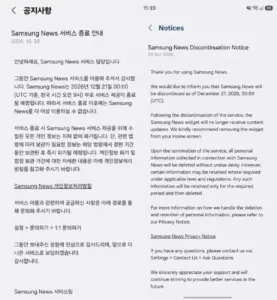
Samsung to Discontinue Native News App in 2026 as Part of Ongoing Software Streamlining
Samsung has officially confirmed that it will be discontinuing its native news...
 Mobile Device Management (MDM) & Mobile OS
Samsung’s Foray into the Googlebook Era: Leaked Benchmarks Reveal Snapdragon X Elite Power and Android 17 Integration
The landscape of portable computing is undergoing its most significant transformation in...







