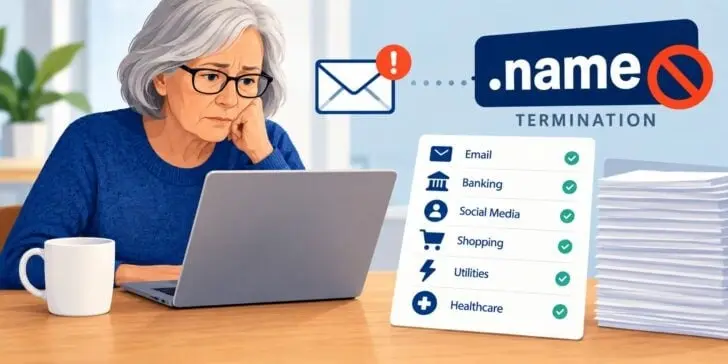
Johnston noted that she is already encountering significant friction. Some services, sensing a change in the foundational contact information, have required her to submit multiple forms of identification and complete complex data protection forms to prove her ownership of the accounts. For a senior citizen, and particularly for her 97-year-old mother, navigating these bureaucratic digital hurdles is an exhausting and daunting prospect. Johnston described the effort as having already become a "full-time daily job" that she expects to continue for weeks.
The situation raises broader questions about the concept of digital permanence. When users register domains, they do so with the expectation that as long as they pay their renewal fees, their digital identity remains secure. The sudden termination of a specific class of domain names undermines this trust and sets a precarious precedent for other niche or specialized TLDs.
Confusion and Misinformation at the Registrar Level
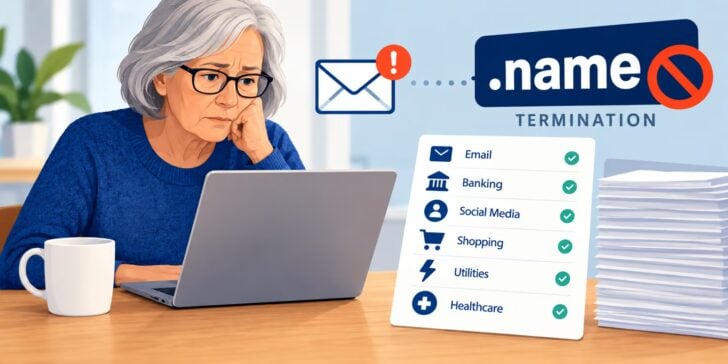
Adding to the frustration of affected users is a lack of clear communication and support from the companies responsible for managing these domains. When Johnston received a notification from her registrar, Network Solutions, regarding the upcoming termination, she sought clarification and assistance.
What followed was a masterclass in corporate disconnect. Despite the termination being a formal policy change approved by ICANN and executed by Verisign, multiple customer service representatives at Network Solutions reportedly told Johnston that the notification was a scam. They advised her to ignore the warnings, pointing to the fact that her domain registration was technically secured and paid for through the year 2030.
This misinformation placed Johnston in a precarious position. Had she followed the advice of the "experts" at her registrar, she would have remained unaware of the looming deadline until her email service simply ceased to function. It was only after Johnston herself insisted that the representative search for ".name termination" that the company acknowledged the reality of the situation.
This breakdown in communication highlights a significant failure in the domain industry’s duty of care. If the registrars—the primary point of contact for consumers—are unaware of major registry-level changes, the end-user is left entirely vulnerable. The confusion also suggests that the timeline and execution of the .name sunsetting were not adequately coordinated across the industry, leaving users like Johnston to navigate a maze of conflicting information.
The Case for Reversal
 Web Hosting & Domain Management
Spaceship Reaches 10 Million Domains Under Management Following Period of Rapid Market Expansion
The digital infrastructure landscape has witnessed a significant shift as Spaceship, a...
 Web Hosting & Domain Management
ICANN Confirms 1,616 Applications for 2026 New gTLD Round as Fees Top $350 Million
The Internet Corporation for Assigned Names and Numbers (ICANN) has officially confirmed...
 Web Hosting & Domain Management
Atom Enhances Domain Seller Experience with Launch of Dedicated Mobile Application
The landscape of the domain name aftermarket is one defined by speed,...