

Furthermore, early deletion or the overwriting of an object before its minimum duration has passed triggers a prorated fee. These "early exit" penalties are tracked separately for each storage class and can quickly erase any projected savings if the data churns faster than anticipated. Whether a restore operation is cost-effective depends on the object size, the timing of the exit, and the total volume of data being moved. It is a calculation that must be performed at the workload level rather than relying on generalized marketing claims.
Every transition to a Glacier tier also adds a 40 KB per-object overhead. This is split into 8 KB billed at Standard rates and 32 KB billed at the destination Glacier rate. For portfolios consisting of many small files, this overhead can be so significant that it entirely negates the storage savings. In such cases, AWS recommends aggregating small objects into larger archives before applying Lifecycle rules.
The Checklist of Overlooked Costs
Beyond the storage classes themselves, several other factors frequently contribute to enterprise budget overruns. Cross-Region data transfer and internet egress are often the largest line items that native cost calculators under-emphasize. Additionally, data routed through Multi-Region Access Points (MRAP) and data replicated between region groups are billed separately from base storage. These costs are critical for organizations maintaining multi-region resilience or compliance architectures.
Request-heavy and metadata-heavy workloads also require special attention. S3 Batch Operations, S3 Inventory listings, and S3 Metadata fees are all metered separately. High-churn workloads, such as those found in data lakes or IoT ingestion pipelines, should size these costs carefully. Finally, encryption adds its own layer of expense; while SSE-KMS encrypted objects remain protected through transitions, every KMS request adds a cost that exists entirely outside of the S3 billing structure.
Governance and Verification
Effective cost management requires robust governance. Activating cost-allocation tags is a fundamental step, allowing bucket-level spend to appear on billing reports. While tagging itself carries no extra charge beyond standard API rates, there is a notable latency in the system; it can take up to 48 hours for a new tag to be fully active and reflected in cost reports.
To verify that Lifecycle actions are actually occurring, AWS recommends using S3 Storage Lens dashboards over CloudWatch metrics. Storage Lens provides a more granular view of daily storage changes and allows administrators to cross-check which access tiers their objects have landed in. Because Lifecycle transitions are asynchronous, there is always a potential delay between the moment an object becomes eligible for transition and the moment the action is executed.
Ultimately, the choice of storage strategy must be tailored to the specific workload. For those with a known aging curve and object sizes well above 128 KB, Lifecycle rules provide a predictable and cost-effective path. For unpredictable or evolving workloads, Intelligent-Tiering acts as an insurance policy against manual mis-tiering, provided the monitoring fees are accounted for. In all cases, the most successful strategies are those that look past the per-gigabyte storage rate and account for the full spectrum of requests, transfers, and metadata fees that define the modern cloud storage landscape.
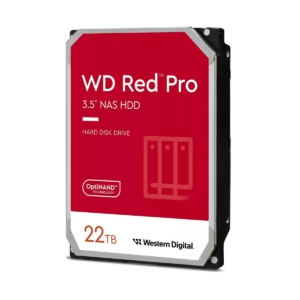 Enterprise Tech & Infrastructure
The Pillars of Data Infrastructure: A Comprehensive Evaluation of the Top Enterprise Hard Drives for 2023
In the modern landscape of digital infrastructure, the demand for robust, high-capacity...
 Enterprise Tech & Infrastructure
Optimizing the Modern Data Center: Strategic Best Practices for Navigating the Shift to Software-Defined Storage
In the rapidly evolving landscape of enterprise technology, Software-Defined Storage (SDS) has...
 Enterprise Tech & Infrastructure
The Architecture of Performance: Balancing Redundancy and Speed with RAID 10
In the complex landscape of enterprise data storage, the selection of a...







