
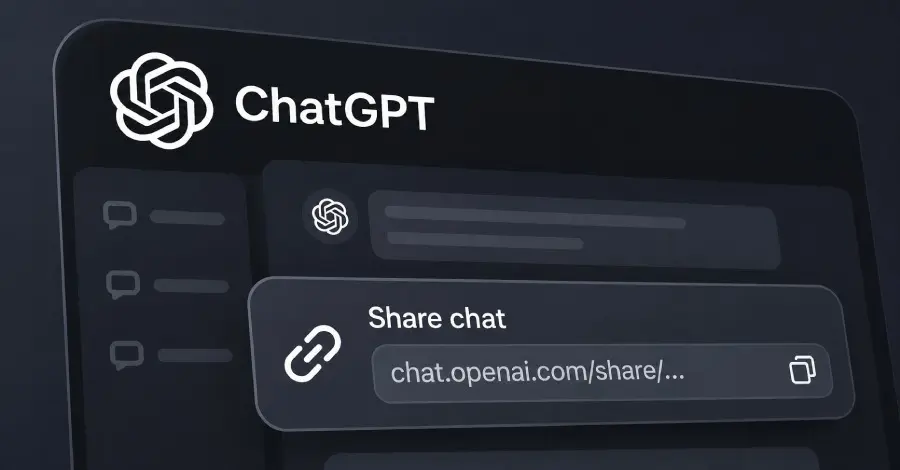
In a significant discovery for the landscape of artificial intelligence security, researchers have unveiled a critical vulnerability within ChatGPT that could have allowed malicious actors to gain full control over a user’s active session. The flaw, which centered on the platform’s popular conversation-sharing feature, enabled the execution of unauthorized code within the context of a logged-in user’s account. This breach of security effectively granted attackers the ability to exfiltrate private conversation histories and perform administrative actions on behalf of the victim without their knowledge or consent.
The vulnerability was identified and documented by security researchers at Parameter, a firm specializing in identifying emerging threats in AI and web infrastructure. Following the principles of responsible disclosure, the team reported their findings to OpenAI via the company’s official bug bounty program on October 18, 2026. Recognizing the severity of the threat, OpenAI moved rapidly to address the issue, implementing a comprehensive fix just eight days later. The company ultimately classified the vulnerability as a "P1" threat—the highest and most serious category in its internal security hierarchy—reflecting the potential for widespread impact on user privacy.
The attack vector was particularly insidious because it leveraged a standard, seemingly benign feature of the ChatGPT ecosystem: the public share link. These links are frequently used by millions of users to showcase AI-generated content, share technical solutions, or collaborate on creative projects. Because the trap was disguised as a standard ChatGPT URL, it could be distributed through any conventional communication channel, including professional emails, instant messaging platforms, support tickets, or social media posts, making it a potent tool for targeted social engineering.
What the Attacker Could Do
The primary danger of this vulnerability lay in its ability to bypass the traditional security boundaries that protect a user’s private data. Once a victim interacted with the malicious share link, the attacker’s embedded code would execute within the victim’s authenticated session. This gave the code the same level of authority and access as the legitimate ChatGPT interface, essentially tricking the browser into believing that the attacker’s commands were coming from the authorized user.

During their controlled testing, the Parameter researchers demonstrated that the exploit could automatically list a victim’s most recent conversations. More alarmingly, the code could programmatically open private chat threads that had never been shared publicly and were intended to remain confidential. The researchers successfully showed that a portion of these private conversations could be transmitted to an external server under their control, illustrating a clear path for data theft.
Unlike many common web attacks that rely on "scraping" or copying information currently visible on the screen, this exploit interacted directly with ChatGPT’s internal, signed-in APIs. This distinction is crucial; it meant the attacker was not limited to what the user was looking at in that specific moment. Instead, the malicious script could probe the account’s entire history and infrastructure. As the researchers noted in their technical write-up, the exploit essentially allowed them to perform virtually any action that the victim themselves could perform within their account, from modifying settings to accessing sensitive personal or corporate data stored in previous interactions.
Importantly, the researchers emphasized that their work was conducted in a strictly controlled environment. Parameter stated that there is no evidence of this flaw being exploited by malicious actors in the wild prior to the fix. Their proof-of-concept was performed between separate accounts owned by the research team to ensure no real-world user data was ever at risk during the discovery phase.
How the Link Broke Out of Its Sandbox
The technical mechanism behind the exploit involved a sophisticated "chain" of vulnerabilities that allowed the attacker to escape the standard security "sandbox" employed by OpenAI. To understand how the breach occurred, it is necessary to examine how ChatGPT handles interactive content through its "Preview" feature.
The Preview feature is designed to allow ChatGPT to render HTML code blocks as functional, mini-webpages. Because rendering arbitrary HTML is inherently risky, OpenAI employs a sandboxing strategy. The Preview content is loaded within a "locked-down frame" (an iframe) hosted on a separate web address. Under normal circumstances, the browser’s Same-Origin Policy (SOP) prevents this isolated frame from interacting with or reading the data on the main ChatGPT page. However, the researchers discovered a secondary feature that inadvertently provided a bridge across this security divide.

The vulnerability chain began with the inclusion of an interactive graph within the shared conversation. To render these graphs, ChatGPT utilizes a third-party mathematics library known as MathLive. When MathLive is loaded into the main ChatGPT page, it initializes a "listener" designed to handle messages regarding its on-screen virtual keyboard. This listener is intended to facilitate communication between different parts of the interface to ensure the keyboard functions correctly.
The critical security failure occurred because this MathLive listener did not properly verify the origin of the messages it received. In the world of web security, a message passed between browser frames is only considered safe if the receiving end confirms the identity of the sender. Parameter discovered that the MathLive listener would accept a keyboard-related message from any sender—including the isolated Preview frame. Furthermore, the listener was configured to allow these messages to carry raw HTML.
By exploiting this oversight, the researchers were able to send a message from the untrusted Preview sandbox to the trusted main ChatGPT page. This message contained malicious HTML that instructed the main page to build a new frame. Because this new frame was generated by the main site itself, the browser treated it as a legitimate part of the chatgpt.com domain.
The final step of the exploit involved bypassing ChatGPT’s Content Security Policy (CSP). A CSP is a security layer that tells the browser which sources of scripts are trusted and which should be blocked. While OpenAI’s policy correctly blocked "inline" scripts (code written directly into the HTML), it contained an exception for scripts hosted on YouTube. The researchers leveraged this exception by loading their final payload via a script hosted on YouTube’s infrastructure, which the browser allowed to execute. This script then had full access to the user’s session, completing the attack chain.
What OpenAI Fixed, and What Users Should Do
Upon receiving the report from Parameter, OpenAI’s security team successfully reproduced the exploit. Recognizing the elegance of the chain and the potential for a total account takeover, OpenAI upgraded the severity of the report from P2 to P1. The remediation process involved updating two different versions of ChatGPT’s web frontend to ensure that the unauthenticated messages relied upon by the attack were strictly rejected.

By October 26, 2026, OpenAI had rolled out the fix across its global infrastructure. The researchers identified three specific design choices that, when combined, created the perfect conditions for the vulnerability:
- The use of a message listener that did not validate the sender’s origin.
- The ability of that listener to process and render raw HTML.
- A Content Security Policy that was permissive enough to allow script execution from a major third-party domain like YouTube.
While the YouTube script was the final piece of the puzzle, the researchers pointed out that it was merely a workaround for the CSP. The fundamental flaw was the lack of origin verification in the MathLive listener, which allowed untrusted content to influence the trusted main application.
For the hundreds of millions of people who use ChatGPT daily, the resolution of this issue brings a sigh of relief with no further action required. Because the vulnerability existed within the web architecture of the platform itself, the fix was applied on OpenAI’s servers. Users do not need to update any software, reset their passwords, or change their account settings to be protected from this specific threat.
The disclosure of this P1 vulnerability highlights the ongoing importance of bug bounty programs in the rapidly evolving AI sector. By incentivizing independent researchers to find and report flaws, companies like OpenAI can address "edge-case" vulnerabilities that might otherwise be overlooked during internal audits. In this instance, OpenAI awarded the Parameter researchers a total of $5,000 for their contribution to the platform’s security. Parameter published its full technical write-up on October 28, ensuring the cybersecurity community can learn from the mechanics of the "sandbox escape" and apply those lessons to other complex web applications.
 Cybersecurity Basics & Security News
Chainalysis Targeted in Cybersecurity Breach Involving Advanced AI-Driven Offensive Techniques
In a disclosure that underscores the escalating sophistication of the modern threat...
 Cybersecurity Basics & Security News
MALFEX Campaign Persists as Researchers Uncover Malicious Native Loader in Popular npm Registry
Cybersecurity researchers have identified a sophisticated new entry in the ongoing software...
 Cybersecurity Basics & Security News
Critical Memory Corruption Vulnerability in Google’s Brotli Decoder Impacts Node.js, Bun, and Enterprise Infrastructure
A pervasive memory-corruption vulnerability has been identified within Google’s Brotli compression library,...







