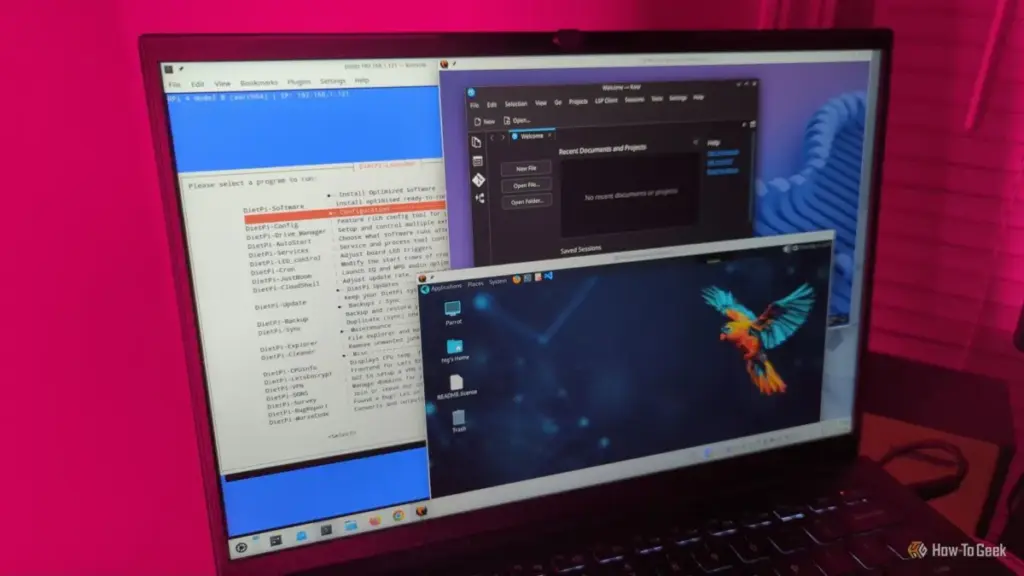
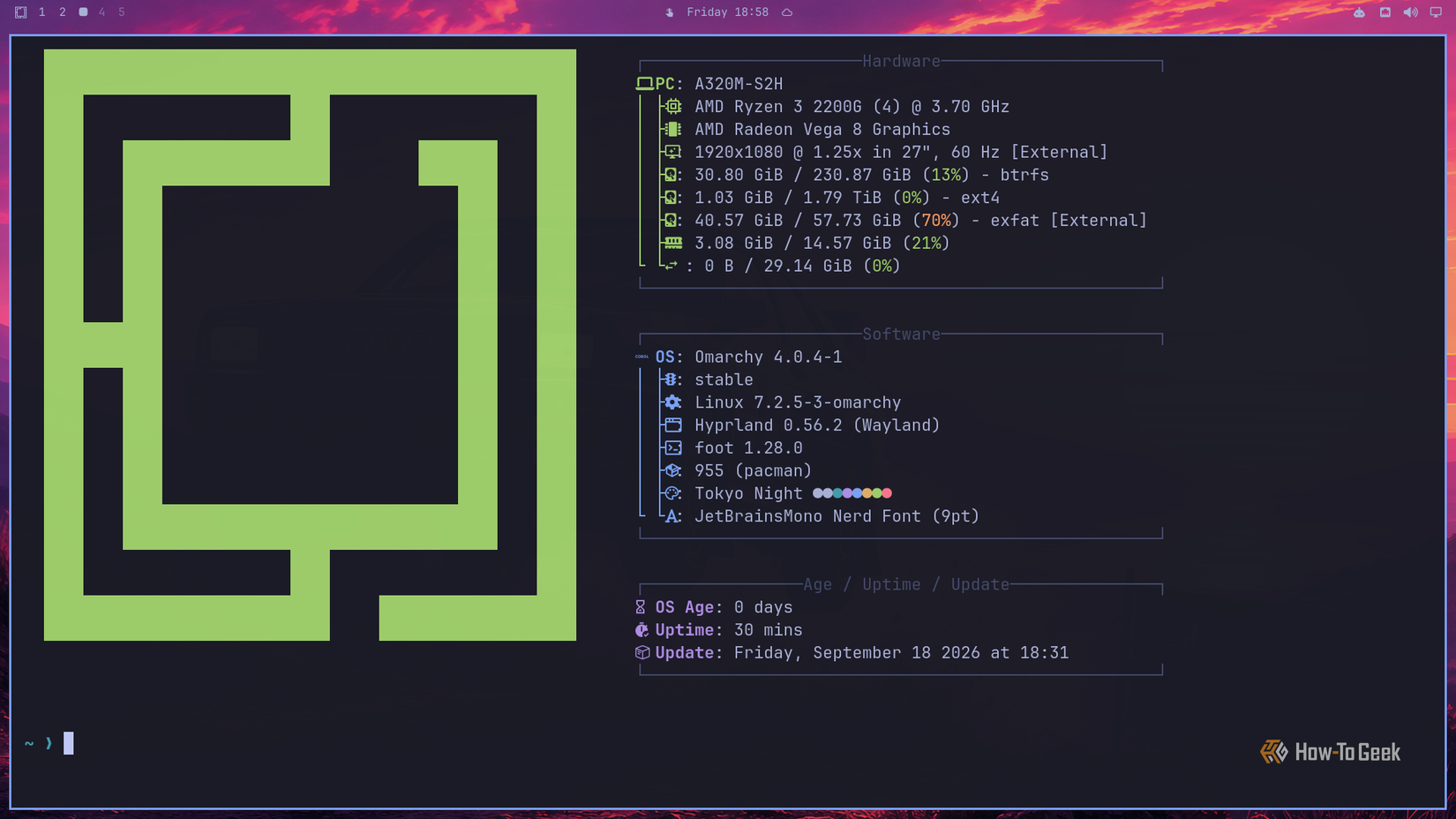
Omarchy takes the fourth spot, representing one of the more ambitious and "viral" projects of the year. Omarchy is an Arch-based distribution that ships with a highly curated environment, featuring a tiling window manager, custom themes, and a heavy emphasis on developer productivity.
What sets Omarchy apart is its integrated support for AI coding agents. Rather than requiring developers to spend days configuring their IDEs and environment variables, Omarchy provides a pre-configured workspace designed for modern, AI-assisted programming. This opinionated approach has earned it a loyal following among developers who appreciate having a "pro" setup out of the box.
However, this high level of curation is a double-edged sword. For users who prefer a minimalist starting point, Omarchy can feel somewhat bloated. The inclusion of so many pre-selected components and tools means that the user is essentially adopting the developers’ vision of a perfect workflow. While that vision is technically impressive and aesthetically pleasing, it lacks the "blank canvas" appeal that many long-time Linux users value, which places it slightly lower in the overall ranking for general use.
pearOS: Reimagining the macOS Experience on Linux
Rounding out the list in fifth place is pearOS. This distribution is built around a singular, clear goal: providing a Linux experience that looks and feels as close to macOS as possible. Using KDE Plasma as its engine, pearOS recreates the iconic Apple aesthetic, complete with a global menu bar, a centered application dock, and a suite of custom apps like "Pinder" that mimic the functionality of their Apple counterparts.
The project offers several versions, including the Arch-based NiceC0re edition, as well as Debian and FreeBSD-based alternatives. This variety shows a commitment to the project’s visual philosophy across different technical foundations. For users moving from a Mac who want to keep their existing hardware but switch to an open-source OS, pearOS offers a comfortingly familiar interface.
Despite its visual polish, pearOS falls to the fifth spot due to some friction in its user experience. The download process, for instance, involves donation prompts that, while understandable for an independent project, can feel somewhat insistent compared to the more straightforward experiences offered by its peers. While it is an excellent choice for those specifically seeking a macOS clone, its appeal is more limited than the broader utility of Linux Lite or the technical purity of Artix.
The State of the Linux Desktop in 2026
These five distributions illustrate the incredible breadth of the Linux community in 2026. From the user-centric stability of Linux Lite to the specialized security power of Kali and the developer-focused ambition of Omarchy, there is no longer a "one size fits all" answer to which distribution is best.
The ranking presented here reflects a balance of maintenance, usability, and broad appeal. While Linux Lite stands as the most recommendable "daily driver" for the widest range of people, the success of more niche projects like Artix and pearOS proves that the Linux ecosystem’s greatest asset remains its ability to provide a home for every type of user preference. As the year progresses, these "breakthrough" distros are not just gaining visits on a chart; they are actively refining what it means to use a modern, open-source operating system.
 Tech Tutorials & How-To Guides
Balancing the Spooky Season: Paramount+ Highlights Comedic Classics and Dystopian Thrills This October
As the calendar turns deep into October, the cultural landscape shifts toward...
 Tech Tutorials & How-To Guides
The Analog Terminal: Revitalizing Retro Hardware for Modern Command-Line Workflows
In an era dominated by ultra-thin 4K OLED displays and the seamless...
 Tech Tutorials & How-To Guides
The Case for the Cathode Ray Tube: Why Your Old Monitor is a Treasure, Not Trash
In an era defined by ultra-thin OLED panels, 4K resolutions, and refresh...