

The practical potential of this approach was recently highlighted by researchers at Sandia National Labs. In a series of demonstrations, the team showed how AI agents could be utilized to develop and test new scientific hypotheses. While those early tests were conducted without the benefit of the highly refined agent harnesses or specialized LLMs available today, they proved the viability of the concept. By delegating the repetitive and computationally heavy aspects of research to an AI, scientists can maintain a continuous workflow that persists long after the human staff has left the laboratory for the day.
For public researchers and academic institutions, where funding is often a primary constraint, the appeal of an AI lab assistant is obvious. It offers a way to maximize the utility of expensive hardware and limited man-hours. In the private sector, the motivation is even more direct: speed to market. As chip designs move toward 2-nanometer processes and beyond, the complexity of routing billions of transistors and ensuring signal integrity across multi-die packages becomes a task that exceeds the capacity of traditional manual design.
The integration of the Maestro models into the Cadence ecosystem suggests a future where the role of the chip designer shifts from manual implementation to high-level supervision. Instead of spending weeks on physical routing or verification debugging, engineers will likely spend more time refining the constraints and goals they provide to their AI agents. As these "Super Agents" continue to evolve, the barrier between high-level architectural intent and physical silicon reality will continue to thin.
Ultimately, the partnership between Cadence and Nvidia signals a maturation of the AI market. The era of experimenting with generic chatbots for engineering tasks is giving way to a period defined by highly specialized, high-efficiency models like Maestro. By combining the massive computational power of Nvidia’s hardware with the deep domain expertise of Cadence’s EDA tools, the industry is laying the groundwork for a new era of silicon innovation—one where the "virus" of generative AI has become the very immune system that allows the industry to survive and thrive amidst escalating complexity.
 Enterprise Tech & Infrastructure
Navigating the Hidden Complexities of Amazon S3: Strategies for Mitigating Enterprise Storage Overspend
The financial architecture of cloud storage is often more complex than it...
 Enterprise Tech & Infrastructure
The Architecture of Performance: Balancing Redundancy and Speed with RAID 10
In the complex landscape of enterprise data storage, the selection of a...
 Enterprise Tech & Infrastructure
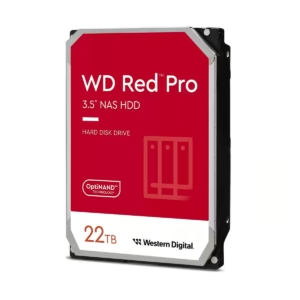
The Critical Role of Enterprise Hard Drives in Modern Data Infrastructure: A Comprehensive Review of the Top 2023 Solutions
In the rapidly evolving landscape of digital infrastructure, enterprise hard drives remain...







