

The 10% fine imposed by the labor judge serves as a stern warning to the legal profession that the court will not tolerate the "gamification" of justice. By referring the matter to the OAB, the judge has also signaled that such tactics may be grounds for suspension or disbarment. The OAB’s eventual decision will be closely watched, as it will set a precedent for how professional ethics boards define "technological misconduct." Traditionally, ethical rules have focused on the honesty of a lawyer’s statements to a judge. This case expands that definition to include the honesty of the data provided to the court’s digital systems.
The broader implications for the global legal community are profound. As courts in the United States, Europe, and Asia begin to experiment with their own AI integrations, the "Brazilian prompt injection" case will serve as a cautionary tale. It underscores the fact that AI is not a neutral observer in the courtroom but a new variable that can be manipulated by those with the technical know-how. The case also raises questions about the "black box" nature of judicial AI. If the judge in this instance had not been vigilant, or if the AI had been slightly more integrated into the final decision-making process, the manipulation might have gone undetected, leading to an unjust ruling based on a compromised analysis.
As the legal world continues to evolve, the boundary between a clever procedural maneuver and an illegal hack is becoming increasingly blurred. The Brazilian labor court has taken a firm stand, asserting that the dignity of justice must be protected not just in the physical courtroom, but within the digital frameworks that now support it. The transition to AI-assisted litigation was intended to make the law more efficient and accessible, but as this case proves, it has also opened a door to a new species of legal malpractice that the justice system is only beginning to understand. The resolution of this case and the subsequent actions by the Brazilian Bar Association will likely serve as a foundational reference point for the intersection of AI, ethics, and the law for years to come.
 Hardware Reviews & PC Building
Rising Component Costs and AI Demand Create Unprecedented Crisis for Consumer PC Market
The landscape of the consumer PC market is currently navigating a period...
 Hardware Reviews & PC Building
Nvidia Unveils Rubin HPC Architecture at Supercomputing 2026 to Power Next-Generation Scientific Simulation and Agentic Workflows
The Supercomputing 2026 conference has officially opened its doors, serving as the...
 Hardware Reviews & PC Building
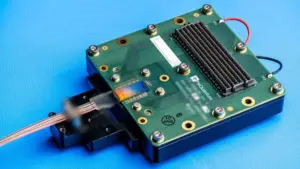
PsiQuantum Leverages Quantum Silicon Photonics to Transform AI Data Center Networking with High-Efficiency Optical Switching
In a strategic move that highlights the growing convergence between quantum computing...







