In the modern landscape of home improvement, the cordless power tool has transitioned from a luxury for professionals to an essential staple for the average homeowner. Most enthusiasts and DIYers maintain a standard arsenal: a reliable drill, perhaps a high-torque impact wrench, a circular saw for weekend projects, and a collection of screwdrivers. However, as battery technology has matured, the industry has seen a pivot toward specialization. Leading this charge is Ryobi, a brand that has carved out a unique niche by moving beyond the traditional workshop and into the more obscure corners of outdoor living.

Ryobi’s strength has long been its ONE+ 18V battery platform, a system that boasts compatibility across hundreds of tools. While competitors often focus on the raw power required for construction sites, Ryobi has increasingly focused on "oddball" tools—specialized devices designed to solve specific, often tedious, household chores. From lawn care and pool maintenance to camping and patio cleaning, the company’s recent product expansions suggest a strategy aimed at total domestic utility. By examining four of their more unconventional outdoor offerings, one can see how the brand is successfully blurring the line between power tools and lifestyle appliances.
Innovation in the Yard: The Power of Specialized Spreaders
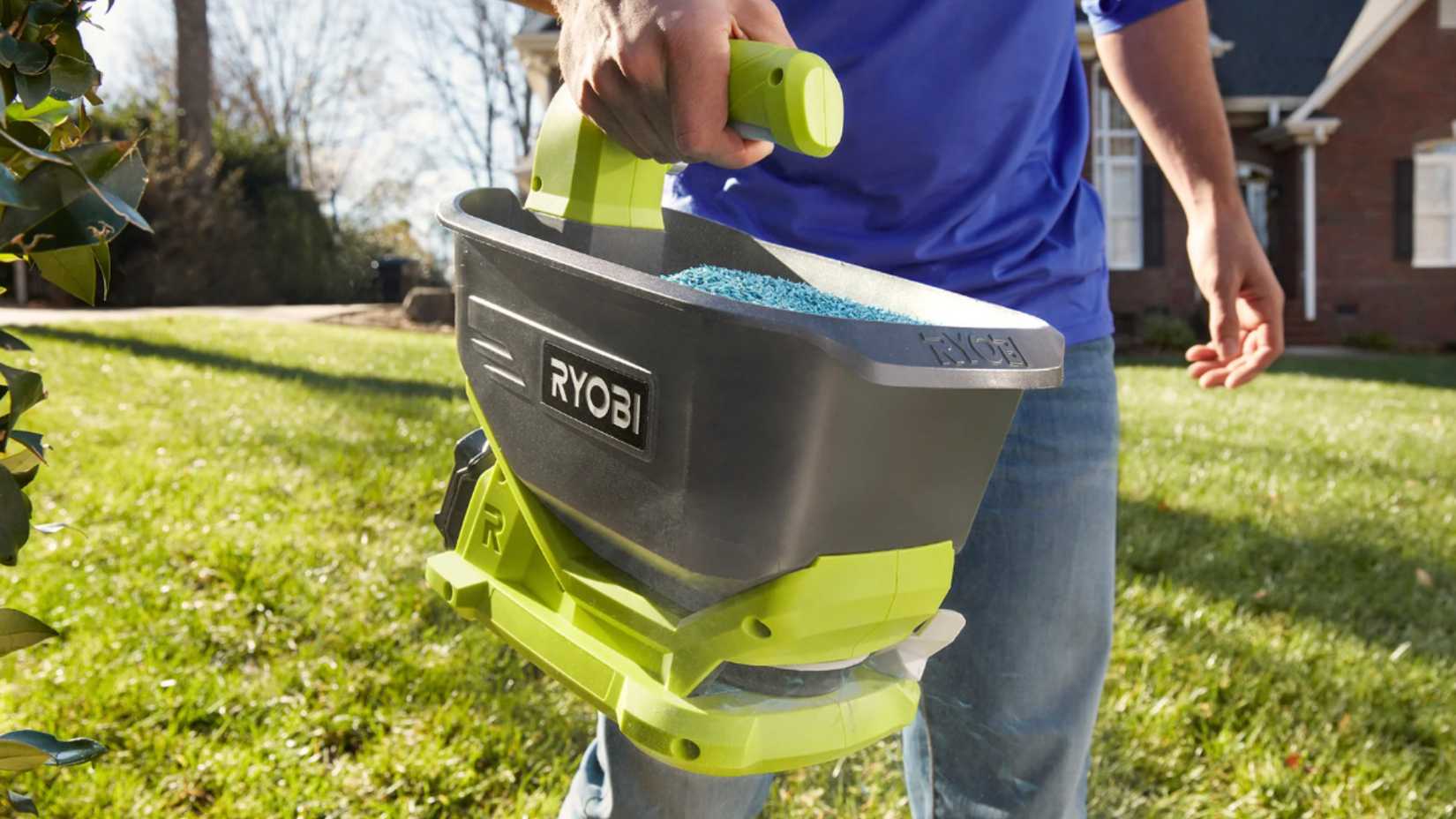
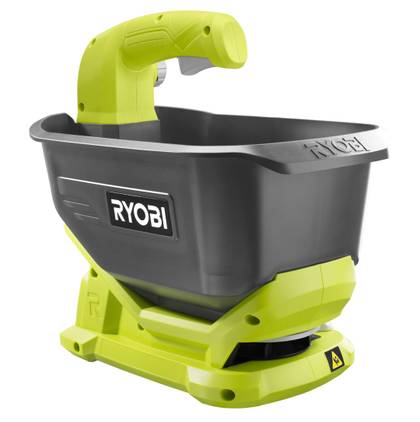
For many homeowners, the pursuit of a pristine lawn is a seasonal battle involving fertilizers, pre-emergents, and pest control. Traditionally, this task required one of two extremes: an expensive, bulky push spreader that takes up significant garage real estate, or a cheap, hand-cranked plastic unit that is often inconsistent and physically taxing. Ryobi has sought to bridge this gap with its 18V Power Spreader, a one-gallon handheld unit that integrates the convenience of cordless power into a task that was once entirely manual.

The utility of the power spreader lies in its consistency. By utilizing the ONE+ 18V battery, the tool maintains a steady distribution rate that is difficult to replicate with a manual crank. Users can adjust a flow dial to account for different materials, ranging from fine grass seed to coarse driveway salt. This versatility ensures the tool remains relevant year-round. In the spring and summer, it serves as a precision instrument for garden beds and spot-treating lawn patches; in the winter, it becomes a critical tool for de-icing driveways and sidewalks.
The transition from manual to powered spreading is more than just a matter of convenience; it is an ergonomic upgrade. For those with larger properties or those who struggle with the repetitive motion of manual cranking, the trigger-operated mechanism significantly reduces fatigue. While some users eventually graduate to full-sized tow-behind or push units for expansive acreage, the handheld power spreader has found a permanent home in the tool sheds of those who prioritize speed and ease of use for localized applications.
The Evolution of Surface Cleaning: From Brooms to Power Brushes
The maintenance of outdoor living spaces—garages, patios, and pool decks—often presents a unique cleaning challenge. While a traditional broom is the standard solution, it is slow and often ineffective at removing stubborn, caked-on debris. Conversely, leaf blowers, while powerful, are frequently too loud for early morning chores and can create a chaotic cloud of dust that settles back onto the very surfaces being cleaned.
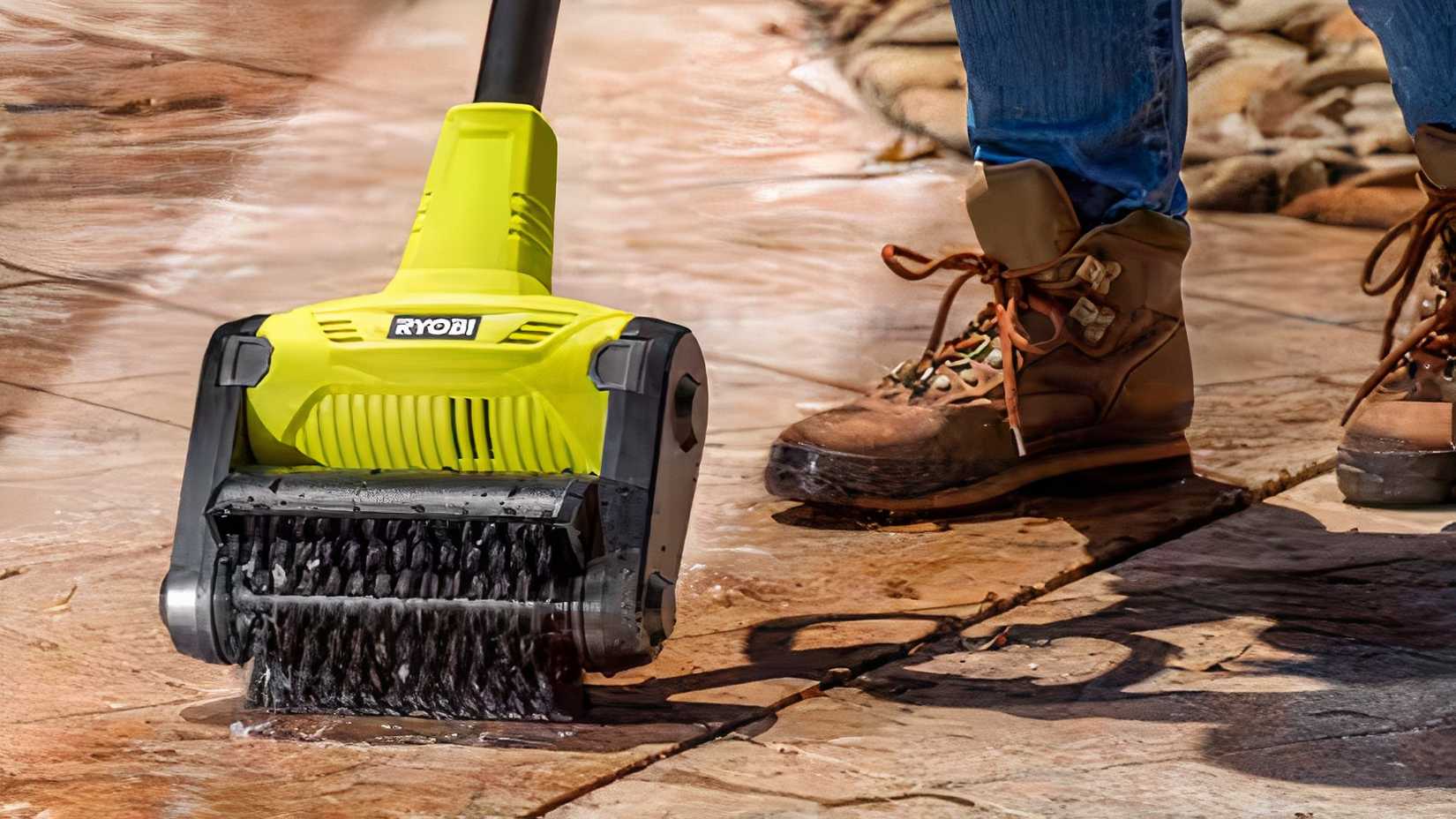
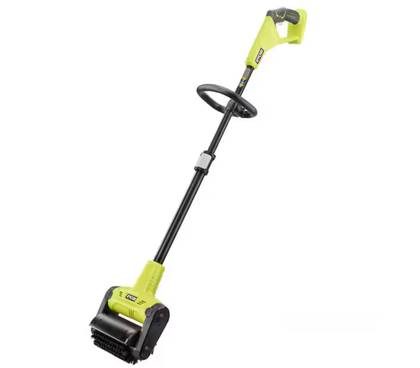
Ryobi’s answer to this dilemma is the 18V Outdoor Patio Cleaner and Sweeper. This tool represents a departure from high-velocity air movement, opting instead for mechanical agitation. Featuring a rotating brush assembly, the sweeper acts as a motorized broom that provides more control than a blower and more power than a manual sweep. It is particularly effective on modern outdoor surfaces, such as epoxy-coated garage floors or stamped concrete patios, where maintaining a polished look is a priority.
The design of the patio sweeper emphasizes accessibility. With an extendable wand and a lightweight profile, it allows users to reach into corners or under patio furniture without excessive bending. Beyond simple aesthetics, the tool serves a practical safety function by clearing away wet leaves, dead insects, and fine grit that can make outdoor walkways slippery. By positioning this tool as a middle ground between the broom and the pressure washer, Ryobi has addressed a specific "micro-chore" that many homeowners previously ignored or found frustrating.
Portable Refrigeration: The Shift Toward Iceless Cooling
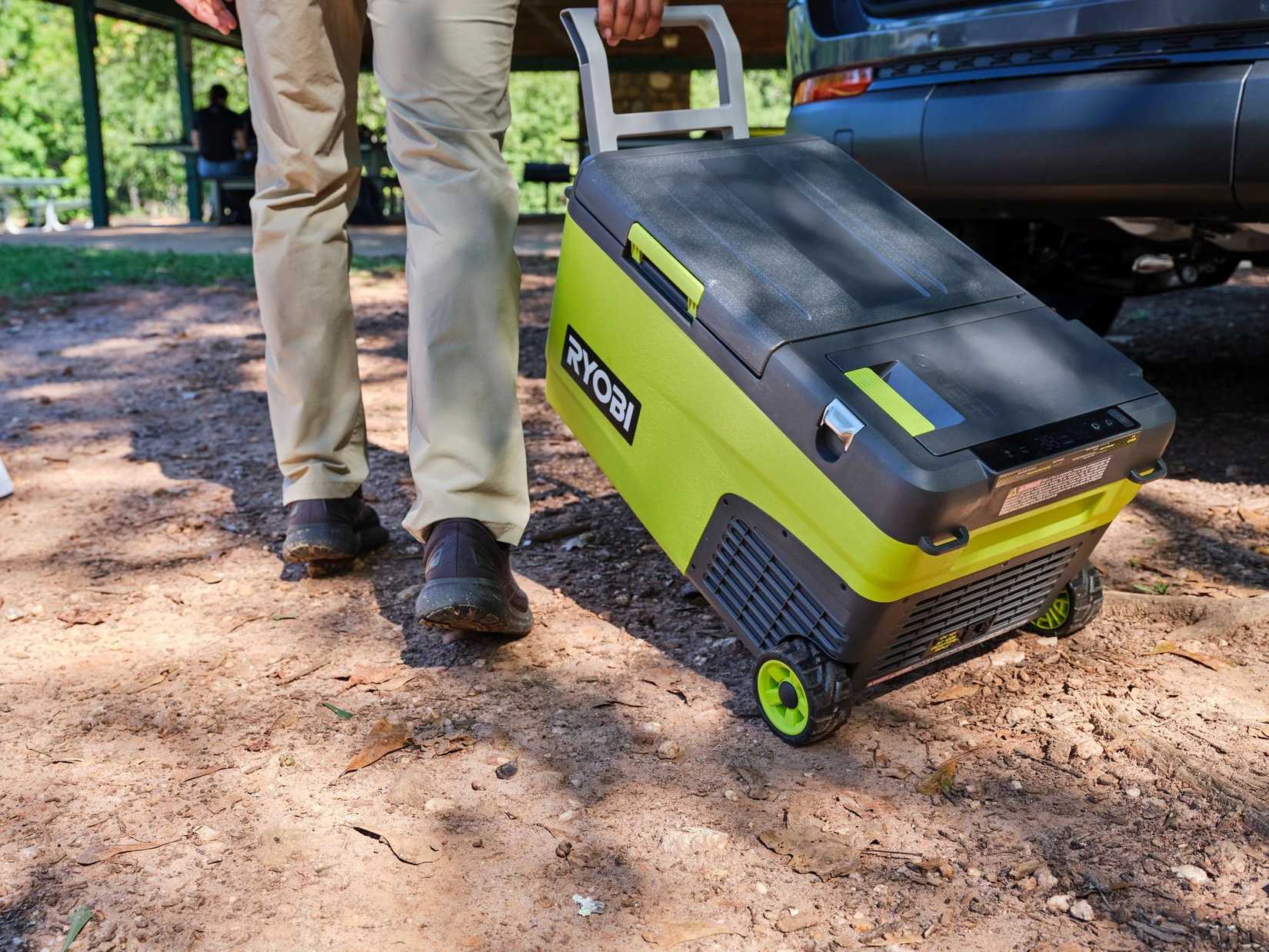
Perhaps the most significant leap Ryobi has made into the lifestyle market is the introduction of the Hybrid Battery-Powered 24qt. Cooler. For decades, the portable cooler market was defined by insulation thickness and ice retention. However, the rise of "overlanding" and extended outdoor recreation has fueled a demand for active cooling solutions. Ryobi’s entry into this space leverages their "Hybrid" technology, allowing the unit to run off a standard 18V battery or a traditional 120V AC extension cord.
The move toward iceless cooling solves several perennial problems associated with outdoor gatherings and camping. Without the need for ice, the internal volume of the cooler is fully dedicated to food and beverages, preventing the common issue of "soggy sandwich syndrome" caused by melting ice. Ryobi claims the 24-quart capacity can house up to 40 cans, making it a viable primary cooler for day trips or a secondary beverage station for backyard barbecues.
The engineering of the cooler reflects a focus on durability. Equipped with large, all-terrain wheels and a robust carry handle, it is designed to be transported across uneven terrain, from sandy beaches to rocky campsites. While the price point of $499 places it in the premium category of outdoor gear, its integration into the Ryobi battery ecosystem provides a level of value that standalone electric coolers cannot match. For a user who already owns half a dozen Ryobi batteries, the ability to swap a fresh pack into their refrigerator ensures that the "cold chain" remains unbroken even in remote locations.
Submersible Technology: Simplifying Pool Maintenance
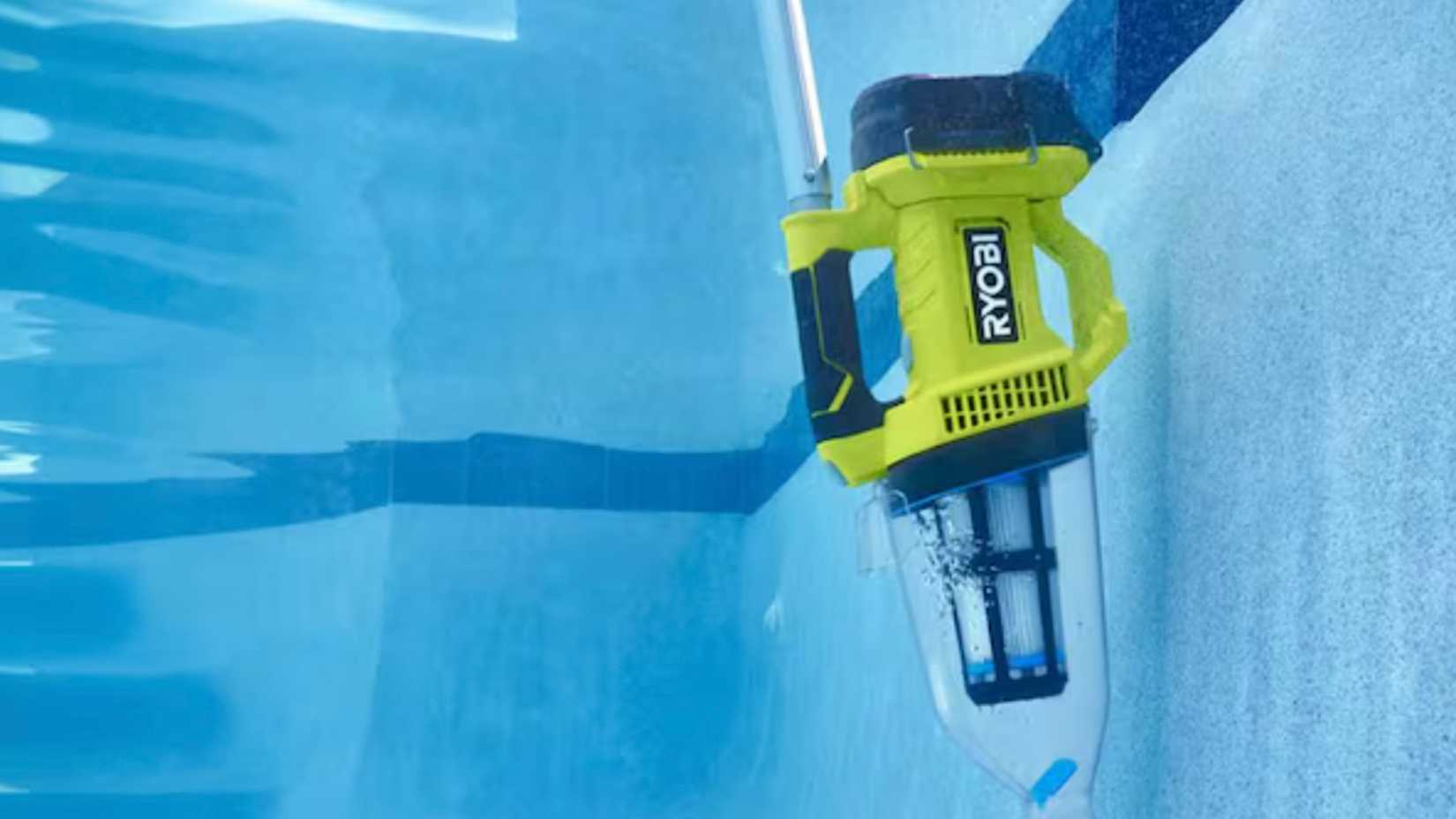
Maintenance of backyard pools is notoriously labor-intensive, often requiring complex vacuum systems that rely on the pool’s primary pump and a tangle of heavy hoses. Ryobi’s 18V Handheld Cordless Pool Vacuum Cleaner aims to simplify this process by offering a self-contained, submersible solution. The most notable engineering feat of this tool is its watertight battery compartment, which protects the 18V ONE+ packs while the unit is fully submerged.
The handheld pool vacuum is designed for the "quick clean"—the removal of sand, silt, bugs, and leaves that accumulate between professional cleanings or before a weekend gathering. By eliminating the need for hoses and booster pumps, the tool allows the homeowner to address debris the moment it is spotted. It features a floor head for large flat surfaces and a specialized brush for scrubbing walls and stairs, all powered by the same battery that might have been in the user’s weed whacker moments prior.
While the tool has a depth rating of approximately 13 feet—sufficient for the vast majority of residential above-ground and in-ground pools—it represents a broader trend of "democratizing" specialized maintenance. Tools that were once the province of professional pool services are now accessible to the average DIYer. The positive reception of the pool vacuum suggests that there is a significant market for cordless tools that can survive in wet environments, opening the door for future Ryobi innovations in marine and plumbing applications.
The Ecosystem Advantage: A Strategy of Total Utility
The success of these "oddball" tools is not merely a result of their individual utility, but rather the strength of the ecosystem they inhabit. Ryobi’s partnership with The Home Depot has created a retail environment where consumers are constantly exposed to new, niche applications for the batteries they already own. The company has even turned the acquisition of these tools into a hobby for some, with "Ryobi Tuesdays" becoming a known window for enthusiasts to hunt for deals on the latest releases.
By expanding into products like the 5-gallon bucket-top vacuum or the aforementioned patio scrubbers, Ryobi is executing a "lock-in" strategy. Once a consumer has invested in the batteries and chargers, the marginal cost of adding a specialized tool becomes much lower than buying into a new platform. This encourages homeowners to experiment with tools they might not have otherwise considered, such as a battery-powered salt spreader or a submersible vacuum.
As the industry moves forward, the distinction between a "power tool company" and a "home appliance company" will likely continue to fade. Ryobi’s willingness to experiment with unconventional designs indicates a future where every manual task in the home and yard has a cordless, battery-powered equivalent. For the modern homeowner, this means that the garage is no longer just a place for saws and drills—it is the charging hub for an entire lifestyle of automated and assisted maintenance.
 Tech Tutorials & How-To Guides
The High-Stakes Game of Liquid Metal Cooling: Is the Performance Boost Worth the Risk?
In the relentless pursuit of peak performance, the PC overclocking community has...
 Tech Tutorials & How-To Guides
The Untapped Power of the ESP32: Why Your Bluetooth Proxy Is Only Reaching a Fraction of Its Potential
In the rapidly evolving landscape of the modern smart home, the ESP32...
 Tech Tutorials & How-To Guides
Fanttik B11 Pro Max Electric Air Duster Sees Significant Price Drop to $59.99 on Amazon
For tech enthusiasts, PC builders, and office workers alike, the battle against...