
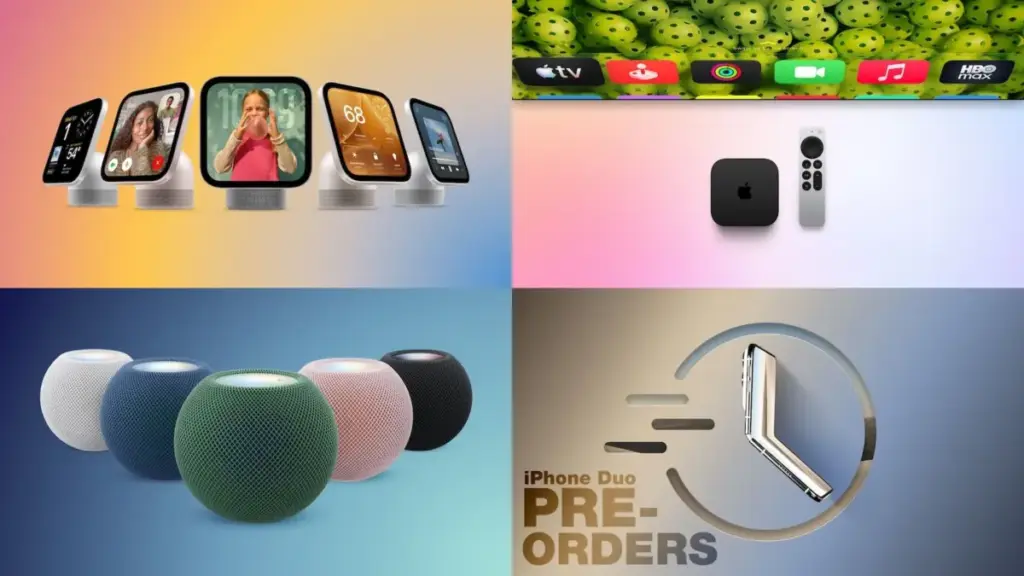
Apple’s busy autumn product schedule reached a fever pitch this week as the company launched a major wave of hardware announcements focused on the living room and smart home ecosystem. Dubbed the "Welcome Home" product launch wave, Tuesday’s announcements introduced a long-rumored dedicated smart display, a substantially upgraded Apple TV 4K with a higher price point, and a second-generation HomePod mini featuring dynamic visual lighting and enhanced audio capabilities.
The home-focused releases arrive alongside mounting consumer frenzy over Apple’s latest mobile hardware. Pre-orders for the new iPhone Duo opened on Friday, resulting in instantaneous shipping delays that rapidly pushed delivery estimates past the holiday shopping season and into early 2027. Amid high demand and constrained supply, secondary market prices have already skyrocketed.
At the same time, Apple is preparing for yet another major hardware showcase before the end of the month. Members of the media have begun receiving invitations to a special launch experience in Los Angeles scheduled for October 28, where the company is expected to reveal next-generation Mac models and updated iPad hardware.
Apple Enters Smart Display Market With $299 ‘HomeView’
Headline honors for Apple’s home hardware drop went to the HomeView, a $299 dedicated smart home hub designed to centralize controls for connected accessories and personal communications. The announcement marks Apple’s official entry into the dedicated desktop and wall-mounted display hardware segment, addressing years of speculation surrounding a tailored central command center for Apple Home setups.
The HomeView features a 7-inch Liquid Retina display and is powered by on-device Siri AI capabilities. To accommodate different home environments, Apple is offering the device in both tabletop and wall-mounted form factors, allowing it to function as a bedside clock, kitchen display, or central hallway control center.
A key element of the device is its contextual user awareness. The HomeView is engineered to recognize multiple household members using facial identification features tied to Apple’s Photos framework. Depending on who is using or viewing the screen, the interface automatically presents personalized widgets, photos, calendar events, and media recommendations.
Furthermore, the HomeView utilizes distance-sensing features to modify its visual presentation. When a user is far from the display, the device prioritizes larger, easily readable content such as glanceable clocks, weather conditions, or album artwork. As a user approaches the screen, the layout shifts to display detailed interactive controls, personal messages, and system toggles.
Beyond smart home accessory control, the HomeView functions as an entertainment and communication terminal. It supports hands-free FaceTime video calls, Apple Music audio streaming with full interactive playlist controls, and digital photo frame functionality leveraging shared user libraries.
Pre-orders for the $299 HomeView opened immediately following the announcement, with official retail availability set to begin on November 13.
Fourth-Gen Apple TV 4K Arrives With A19 Chip, Hands-Free Siri, and $299 Price Tag
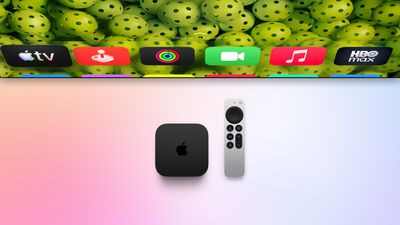
Alongside the HomeView, Apple unveiled the fourth-generation Apple TV 4K, marking the first hardware revision for its set-top box in four years. The upgraded streamer receives a substantial performance boost and new voice interaction capabilities, though it also brings a noticeable increase in cost.
At the heart of the new Apple TV 4K is the A19 chip, providing a sharp bump in processing power and graphical overhead compared to prior generations. The updated silicon brings localized Siri AI processing directly to the set-top box, enabling faster voice query processing and more fluid navigation across tvOS.
To make voice interactions more seamless, Apple has embedded an array of microphones directly into the chassis of the Apple TV box itself. This inclusion allows users to execute hands-free Siri AI commands across the room without needing to locate or press a button on the physical remote control.

The accompanying Siri Remote has also been redesigned. The updated remote now incorporates Apple’s Find My infrastructure with Precision Finding, paired with an integrated chassis speaker. If the remote becomes lost between couch cushions or under furniture, users can trigger an audible chime from an iPhone or ask Siri on the Apple TV box to pinpoint the remote’s location using visual directional prompts. For owners of existing set-top boxes, Apple plans to sell the upgraded Siri Remote as a standalone accessory.
The fourth-generation Apple TV 4K carries a revamped price structure, launching at $299—a significant price hike over previous iterations. Pre-orders are currently live, with official customer deliveries and retail availability set to commence on November 13 alongside the HomeView hub.
HomePod Mini 2 Brings S10 Computational Audio and ‘Sound Glow’ for $149
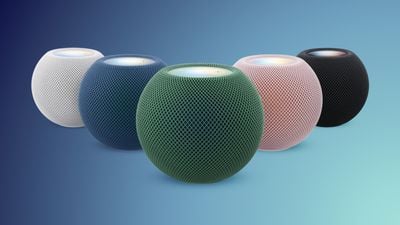
Rounding out Apple’s "Welcome Home" hardware wave is the second-generation HomePod mini. Retaining its compact spherical design, the HomePod mini 2 introduces a refreshed color palette alongside updated internal audio components and visual lighting effects.
The HomePod mini 2 is powered by Apple’s S10 chip, enabling enhanced computational audio features. According to Apple, the S10 processor analyzes playback in real-time to adjust dynamic range, acoustic output, and overall volume, optimizing sound output based on room placement and the characteristics of the media being played. The device also supports a four-speaker surround sound configuration when paired with compatible audio hardware or grouped within a multi-room setup.
A central feature of the new HomePod mini 2 is "Sound Glow," an ambient illumination system built into the top touch panel of the speaker. Instead of displaying a static interface, the illuminated top surface acts as a visual canvas that glows, animates, and pulses in real-time synchronicity with music. The visual lighting system reads treble and bass frequencies while sampling color tones from the playing track’s album artwork, creating a customized visual display tailored to individual songs.
Apple has set the price of the HomePod mini 2 at $149. Pre-orders are currently underway, with shipping and store launch scheduled for October 30. However, Apple noted that built-in Siri AI capabilities will not be available at launch and will instead be enabled through an over-the-air software update released at a later date.
iPhone Duo Supply Crunch Drives Delivery Estimates Into 2027
While Apple expanded its home line on Tuesday, pre-orders for the highly anticipated iPhone Duo kicked off early Friday morning, resulting in immediate supply constraints and shipping delays worldwide.
Orders opened at 5:00 a.m. Pacific Time on Friday across numerous countries. Within seconds of the online storefront going live, initial delivery dates for the initial October 23 launch window began slipping. Less than 30 minutes into the pre-order period, shipping estimates in the United States had slipped to late January 2027—a delay of over three months.
The rapid push into 2027 means that early online buyers will completely miss the holiday delivery window. It remains unclear how many physical units, if any, will be available for walk-in retail customers when the hardware officially launches in stores on October 23.
The immediate stock shortage has already fueled a secondary resale market. Resellers and scalpers who secured launch-day pre-order slots began listing their confirmed orders on third-party marketplaces like eBay within hours of the pre-order window opening, with asking prices reaching as high as $5,000 for early delivery access.
Apple Invites Media to October 28 Experience Ahead of Expected Mac and iPad Mini Refresh
Even as Apple manages the fallout from iPhone Duo shortages and prepares its smart home hardware rollout, the company is readying another series of announcements before the end of October.
Reports confirmed by Bloomberg’s Mark Gurman indicate that Apple has begun issuing formal invitations to select members of the press and content creators for a media event on October 28 in Los Angeles. The gathering forms part of a two-day product experience scheduled for October 27 and 28.

While Apple’s invitation does not explicitly outline product debuts, industry expectations center on significant updates to the Mac and iPad families. Among the expected announcements are higher-end 14-inch and 16-inch MacBook Pro models featuring touchscreen OLED displays. Additionally, refreshed desktop iMac and entry-level MacBook Pro models powered by Apple’s new M6 chip series are anticipated to make their debut.
On the tablet side, rumors point to the unveiling of an updated iPad mini featuring an OLED display panel, bringing higher contrast ratios and color performance to Apple’s smallest tablet format.
With multiple smart home products slated for release through mid-November, the iPhone Duo launch around the corner, and a major Mac and iPad update scheduled for late October, Apple’s autumn release cycle remains one of its most aggressive hardware rollouts to date.
 macOS & Apple IT Support
Amazon Launches First Discounts on Apple Watch Ultra 4 and Series 12 Following Official Release
Following the official market arrival of Apple’s newest wearable lineup, retail channels...
 macOS & Apple IT Support
Apple TV and HomePod Mini Face Extended Shipping Delays as Code Leaks and Software Betas Signal Incoming 2026 Models
Customers looking to purchase an Apple TV or a HomePod mini through...
 macOS & Apple IT Support
Anthropic Updates Usage Policy to Ban Cruel and Abusive Treatment of Claude AI Models
Artificial intelligence safety startup Anthropic has officially updated its Acceptable Use Policy,...







