
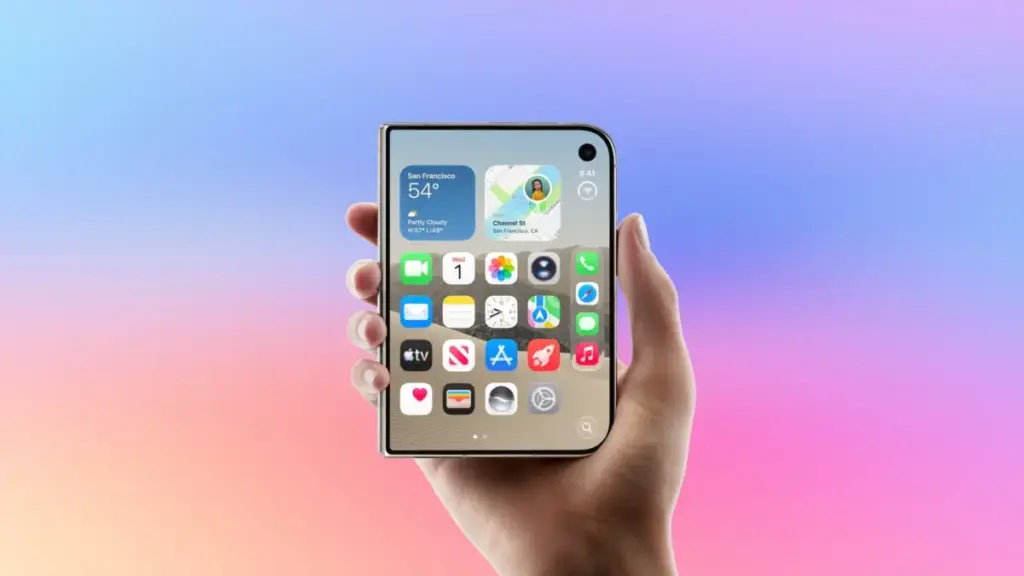
Beyond software patches and post-launch maintenance, Apple is actively looking toward the long-term future of the iPhone Duo product line. According to reporting from Bloomberg’s Mark Gurman, Apple engineers have outlined four core hardware priorities for future iterations of the dual-screen device. These targeted upgrades include the integration of Face ID authentication, the addition of a physical Action button, the implementation of a dedicated telephoto camera lens, and a comprehensive structural redesign aimed at making the device noticeably thinner and lighter.
Gurman noted that Apple has already developed functional prototypes of the second-generation iPhone Duo featuring Face ID hardware integrated directly into the outer cover display. However, engineering timelines and component packaging constraints have placed pressure on the development schedule. Reports indicate that Apple is running short on time to fully validate and finalize outer-display Face ID integration in time for the upcoming release of the iPhone Duo 2. As a consequence, the biometric upgrade may be deferred to a subsequent revision, illustrating the complex engineering trade-offs required when cramming advanced camera arrays and sensors into ultra-thin folding enclosures.
The remaining three objectives outlined in Gurman’s report highlight key areas where Apple aims to achieve parity between the iPhone Duo and its flagship slab-style smartphones. Incorporating a dedicated telephoto camera would resolve current optical zoom limitations, bringing advanced photographic flexibility to the dual-screen form factor. Similarly, introducing the customizable Action button—first featured on high-end traditional iPhones—would give users quick physical access to system shortcuts, focus modes, or accessibility tools. Finally, reducing the overall thickness and mass of the device remains a primary focus, as thermal management and structural rigidity continue to compete against user demand for sleek, lightweight pocketable hardware.
Taken together, the internal software leaks and hardware roadmaps illustrate Apple’s multifaceted strategy for maturing its new device category. While engineering teams in Cupertino continue to refine the physical construction of the iPhone Duo—addressing early hinge durability issues while planning multi-generational hardware upgrades—software developers are simultaneously re-imagining how iOS presents information across non-standard screen layouts. Whether the experimental "SpringBoard/Ionic" complication column makes its way into a public release of iOS or remains buried in internal code, it underscores Apple’s active exploration of denser, more versatile interface paradigms for the future of its expanding iPhone Duo ecosystem.
 macOS & Apple IT Support
Apple Restructures Operating System Development, Closes Legacy Support Forums, and Faces Retail Scrutiny Following Fall Product Launches
Following an intense autumn season defined by major hardware announcements, new product...
 macOS & Apple IT Support
Apple Targeting 2027 Debut for Siri-Powered Smart Glasses as AI Software Challenges Take Center Stage
Apple is preparing to enter the smart eyewear market with its first...
 macOS & Apple IT Support
Apple Temporarily Shutters Seven Key French Retail Stores Amid Safety Concerns and Renewed Nationwide Protests
In a preemptive move designed to protect store personnel, customers, and physical...







