
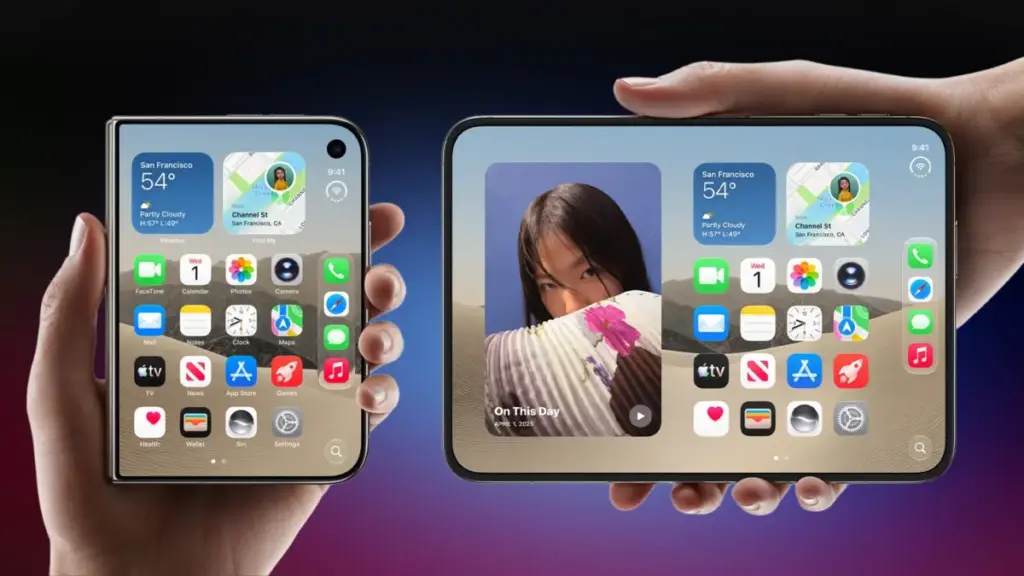
Apple has officially begun issuing detailed email surveys to early purchasers of the iPhone Duo, seeking initial customer feedback roughly two weeks after the landmark foldable device made its commercial debut. The customer outreach provides insight into how Apple is evaluating early consumer reactions to its first entry into the foldable smartphone market, focusing heavily on hardware design choices, display characteristics, camera performance, and the underlying motivations driving early adoption.
Sending post-launch questionnaires is a standard practice for Apple when introducing new hardware categories or major product redesigns. However, the survey distributed following the iPhone Duo’s release on October 23, 2026, carries particular weight given the unique engineering compromises and design decisions inherent to Apple’s first foldable device. By polling verified buyers shortly after launch, Apple is collecting direct user data regarding how the device performs in daily operation beyond laboratory testing and controlled pre-release evaluations.
The opening portion of the survey focuses primarily on consumer behavior and the factors that influenced early buying decisions. Apple asks respondents to select the main reason they chose to purchase the iPhone Duo at this early stage. Among the options provided in the questionnaire are statements indicating that the buyer wanted to try Apple’s first foldable device, that the purchase was made on impulse, or that the buyer anticipated smartphone prices across the industry might increase in the near future. This inquiry suggests that Apple is actively trying to determine whether early sales are being sustained by dedicated technology enthusiasts eager to experience new form factors, spontaneous purchases, or broader economic expectations regarding consumer electronics pricing.
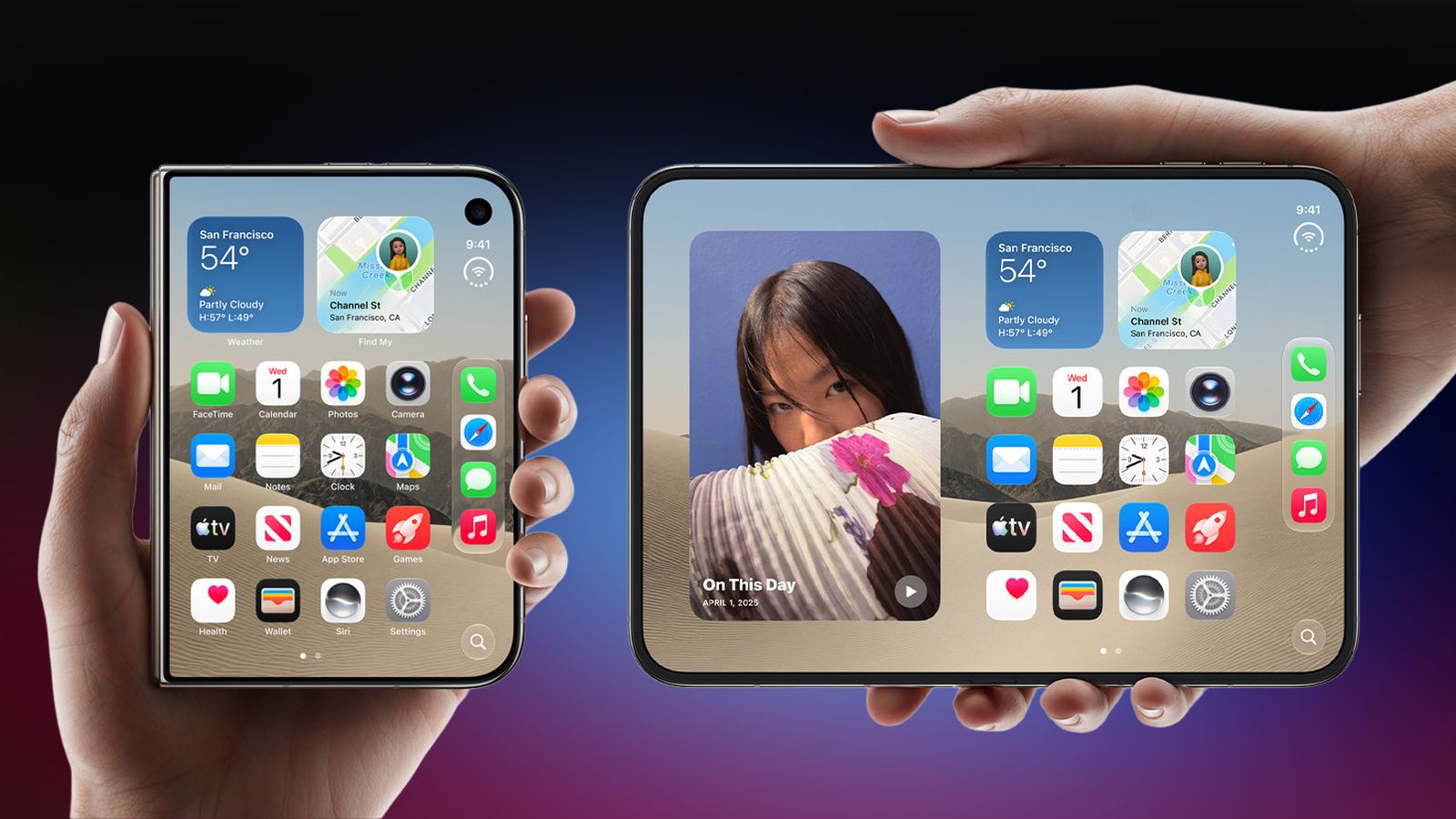
A significant portion of the survey transitions into evaluating the physical hardware experience, with particular emphasis placed on the dual-screen configuration. Apple explicitly asks buyers for their thoughts on the dimensions of the iPhone Duo’s outer display when the device is folded closed. The cover screen measures 5.4 inches, which places its physical footprint in line with Apple’s discontinued iPhone mini lineup. For users who had grown accustomed to larger standard flagship displays, the compact outer screen represents a distinct operational paradigm, and Apple appears interested in learning whether buyers consider the 5.4-inch size practical for routine interactions when the device is closed.
The survey also addresses two of the most discussed visual aspects of flexible screen technology: the display crease and the under-display camera integration. Respondents are asked to evaluate how visible the crease along the central hinge is during regular use. Additionally, Apple asks users whether they find the under-display camera distracting while viewing content on the inner screen, while also requesting feedback on the overall image quality produced by the sensor.
The focus on the under-display camera directly aligns with key points raised in initial reviews of the device. In early technical evaluations, the inner display camera was repeatedly highlighted as one of the primary hardware compromises of the iPhone Duo. To position the camera beneath the flexible screen panel without creating a prominent cutout, Apple utilized a 4-megapixel sensor. The resulting photo and video output proved to be one of the main criticisms in early product reviews, with commentators noting trade-offs in clarity and resolution compared to standard front-facing cameras on traditional iPhones. By asking early adopters whether the camera is visually obtrusive and how they assess its image capture capabilities, Apple is measuring whether real-world users share the concerns expressed by reviewers.
To capture feedback beyond structured questions, Apple concludes the questionnaire with an open-ended prompt. The final question asks respondents what specific features, hardware adjustments, or software capabilities they would add to or change about the iPhone Duo. This open field offers buyers an opportunity to submit direct feedback regarding usability hurdles, feature requests, or design changes they would like to see in future software updates or prospective hardware revisions.
While the survey covers several key hardware characteristics, it is equally notable for the topics it leaves out. Apple does not include any questions regarding Touch ID, despite ongoing discussions among users regarding biometric authentication preferences on foldable form factors. Furthermore, the questionnaire omits any inquiry into the software experience when running unoptimized third-party applications. Because the iPhone Duo relies on expanded screen real estate and dual-display modes, apps that have not been tailored for the new aspect ratios can exhibit scaling or layout anomalies, yet Apple’s survey does not poll users on how these unoptimized applications affect their daily usage.
Another prominent omission from the survey is any mention of display durability or structural integrity issues. Since the iPhone Duo hit retail shelves, a number of early adopters have reported display damage occurring directly along the central folding hinge. Reports shared across online platforms, including Reddit and the MacRumors forums, have documented instances where the inner flexible screen cracked or developed visual defects right at the seam. In several cases, these hardware faults resulted in a permanent vertical line of bright pixels running down one side of the display panel.
Among the reported incidents was an account from an iPhone Duo owner in Australia who stated that his screen cracked along the hinge line after being opened fewer than 20 times. The owner noted that the device had not experienced any drops, impacts, or external pressure prior to the failure. Despite these emerging reports of hinge-related screen damage—which some online communities have referred to as "Crackgate"—Apple’s survey does not ask buyers whether they have encountered physical screen cracking, line artifacts, or mechanical issues with the folding mechanism.
The release of the survey comes amidst a busy rollout period for the iPhone Duo, which was met with tight supply and high demand during its opening weekend. Prior to the official release date, Apple retail employees were instructed to warn customers against attempting to purchase an iPhone Duo as a walk-in customer without a prior reservation. Apple Store staff were advised that walk-in inventory would be virtually non-existent on launch day, prompting employees to discourage unreserved shoppers from visiting physical stores in hopes of securing a unit off the shelf.
At the same time, Apple worked to prepare its software ecosystem for the device’s unique physical layout. Days before the retail debut, updated screenshots began appearing on the App Store showing Apple’s suite of built-in iOS applications running natively on the iPhone Duo. These marketing materials provided the first clear look at how built-in system applications adapt to the foldable form factor, with many applications showcased operating in landscape orientation to take full advantage of the expanded internal display area.
As Apple gathers responses from this initial round of customer surveys, the feedback will provide the company with direct data on how its inaugural foldable device is performing in the hands of consumers. With early buyers weighing the benefits of a foldable design against compromises such as a 5.4-inch cover screen, a 4-megapixel under-display camera, unoptimized software layouts, and reported display durability concerns, Apple’s outreach marks the beginning of a broader effort to refine its foldable smartphone platform moving forward.
 macOS & Apple IT Support
Apple Retail Personnel Instructed to Warn Walk-In Buyers Away on iPhone Duo Launch Day Amid Severe Inventory Shortages
With the official release of Apple’s highly anticipated foldable iPhone Duo fast...
 macOS & Apple IT Support
Amazon Launches Early Prime Big Deal Days Savings on Apple’s 2026 Mac Mini and Mac Studio Lineups
Amazon has officially initiated its early Prime Big Deal Days sales campaign,...
 macOS & Apple IT Support
Apple TV and HomePod Mini Face Extended Shipping Delays as Code Leaks and Software Betas Signal Incoming 2026 Models
Customers looking to purchase an Apple TV or a HomePod mini through...







