
Apple is reportedly preparing a significant expansion of its hardware and services portfolio, with a particular focus on reclaiming a dominant position in the smart home market. While the company is expected to refresh several existing home-focused devices in the near term, a new report suggests a much more ambitious long-term play. According to Bloomberg’s Mark Gurman, Apple is developing a dedicated home security and monitoring service, currently targeted for a 2027 release, which will be anchored by a novel, privacy-centric security sensor.
This development marks a pivot for the Cupertino-based giant. While Apple has long offered HomeKit as a framework for third-party accessories, it has largely stayed out of the first-party home security hardware and professional monitoring business. The upcoming service represents a move to compete directly with established players like Amazon’s Ring and Google’s Nest, leveraging Apple’s reputation for privacy and its massive services ecosystem to entice homeowners.
Apple Home Security and Monitoring Service Planned for 2027, Per Mark Gurman
The roadmap for Apple’s home division appears to be accelerating. For years, the company’s presence in the living room and kitchen was limited to the Apple TV and various iterations of the HomePod. However, recent leaks and industry analysis point toward a major overhaul of the product line. In the immediate pipeline, Apple is expected to debut a new Apple TV 4K, a refreshed HomePod mini, and a highly anticipated home hub—frequently referred to in rumors as the "HomePad"—which is expected to function as a wall-mounted or tabletop control center for the modern smart home.
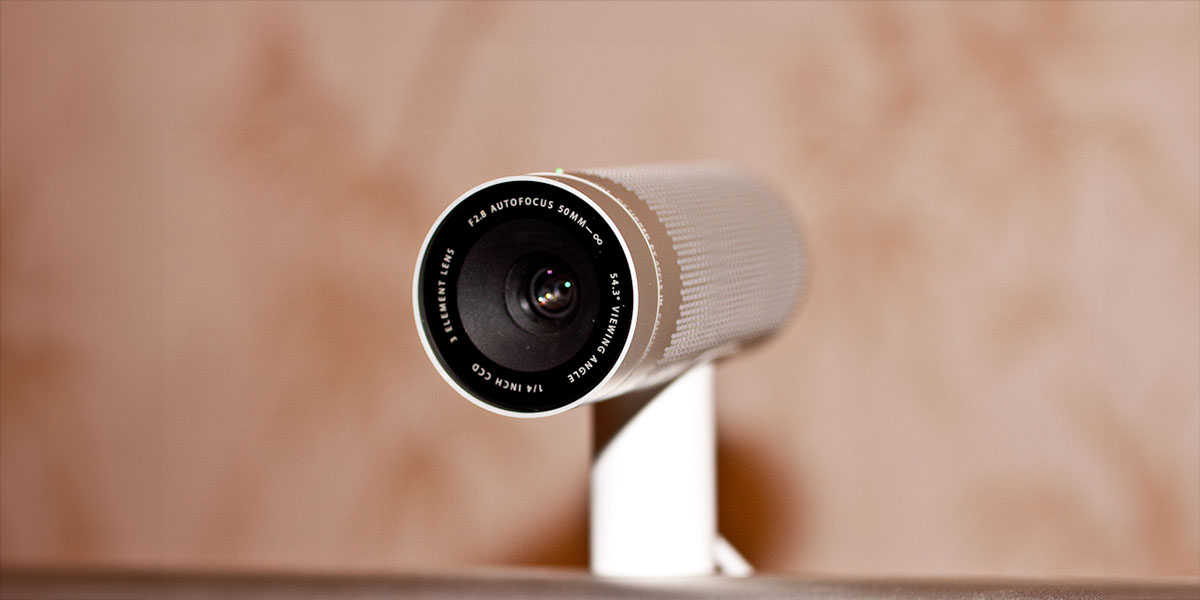
However, the most intriguing detail in the latest Bloomberg report concerns the company’s plans for the year 2027. Gurman indicates that Apple is working on an "in-home security sensor and system" that departs from the traditional surveillance model. Rather than relying on constant video streams that may raise privacy concerns for users, this new device is expected to use advanced on-device artificial intelligence to monitor the surrounding environment.
The core of the strategy is a "privacy-centric" approach. The report suggests that the device will be designed to detect anomalies, movement, or specific environmental changes using AI, rather than capturing and storing actual video footage in the traditional sense. This aligns with Apple’s broader corporate philosophy of processing data locally whenever possible and minimizing the amount of sensitive personal information stored in the cloud.
The most significant revelation, however, is the mention of a specific "service" component. Gurman writes that the new hardware "will tap into a new home security and monitoring service." This phrasing suggests that Apple is not merely selling a standalone sensor, but is instead building a subscription-based platform that could potentially include professional monitoring, emergency response coordination, and enhanced cloud storage for metadata and environmental alerts.
The Strategic Importance of a Home Monitoring Service
The home security market is a multi-billion-dollar industry that has undergone a digital transformation over the last decade. Companies like Ring, Arlo, and SimpliSafe have shifted the model from expensive, hard-wired professional installations to DIY hardware coupled with monthly subscription fees. Apple’s entry into this space would allow it to capture a share of this recurring revenue, which has become a cornerstone of its financial growth through the Services division.
By launching a dedicated monitoring service, Apple could solve one of the primary friction points in the current smart home experience: fragmentation. While many users currently mix and match cameras and sensors from different manufacturers, an end-to-end Apple solution would offer the seamless integration that has made the iPhone and Mac ecosystem so resilient.
There is also a strong possibility that this service could be integrated into the Apple One subscription bundle. Currently, Apple One provides users with a consolidated bill for iCloud+, Apple Music, Apple TV+, and Apple Arcade. Adding a home security tier could significantly increase the "stickiness" of the subscription. For families already deep within the Apple ecosystem, the ability to add professional home monitoring to an existing plan—managed through the Home app—would be a compelling proposition.
A Privacy-First Approach to Surveillance
Apple’s decision to focus on a system that monitors environments without traditional video footage is a calculated move. In recent years, competitors have faced scrutiny over how they handle user data and their relationships with law enforcement. Amazon’s Ring, for example, has frequently been at the center of debates regarding police access to camera footage.
By developing a sensor that uses AI to interpret the world without needing to "see" it in a traditional photographic sense, Apple can position itself as the only major tech company offering home security that doesn’t feel like a compromise on personal privacy. Such a device might use technologies like millimetric wave radar, infrared heat mapping, or high-fidelity acoustic analysis to determine if a person has fallen, if a window has broken, or if an intruder is present, all while keeping the visual privacy of the inhabitants intact.

This approach would be particularly attractive for sensitive areas of the home, such as bedrooms or bathrooms, where traditional cameras are often unwelcome. If Apple can prove that its AI is reliable enough to distinguish between a family pet and a genuine security threat without recording video, it could unlock a new segment of the market that has previously been hesitant to adopt smart home monitoring.
The Evolution of the Apple Home Ecosystem
The 2027 timeline suggests that Apple is taking a measured approach to this rollout. The company has historically been slow to enter new categories, preferring to wait until it can offer a more polished or uniquely differentiated product than the first-movers. The intervening years between now and 2027 will likely be used to build the necessary hardware foundation.
The "HomePad" hub, expected much sooner than the security service, will likely serve as the "brain" of this future system. If the hub is equipped with the necessary processors to handle complex AI tasks locally, it could act as the local server for the 2027 security sensors, ensuring that data never leaves the home unless an emergency is detected.
Furthermore, Apple’s involvement in the Matter and Thread standards indicates a commitment to making the smart home more reliable. By ensuring its future security products are built on these robust, industry-standard protocols, Apple can ensure that its first-party sensors work in tandem with third-party lights, locks, and thermostats, creating a comprehensive security "scene" that can be triggered automatically. For example, if the Apple security sensor detects an intruder, it could simultaneously trigger HomeKit-connected lights to flash and lock all smart-enabled doors, while alerting the professional monitoring service.

Market Competition and Consumer Expectations
When Apple eventually launches its monitoring service, it will enter a crowded field. The industry is currently dominated by specialized firms like ADT and tech giants who have acquired their way into the home. However, Apple has a unique advantage: the iPhone. With the Home app already pre-installed on hundreds of millions of devices, the barrier to entry for a consumer to sign up for an Apple-branded security service is incredibly low.
The success of the service will likely depend on the balance between automated AI monitoring and human intervention. Most professional monitoring services involve a central station where human operators can verify alarms and contact emergency services. Whether Apple intends to build its own monitoring centers or partner with an established firm like ADT—similar to how it partnered with Goldman Sachs for the Apple Card—remains to be seen.
As the 2027 date approaches, the industry will be watching closely to see how Apple defines "monitoring." If the company can successfully merge its prowess in silicon and AI with its unwavering stance on privacy, it may finally turn the smart home from a hobbyist’s collection of gadgets into a professional-grade, essential utility for the average household.
For now, the upcoming refreshes of the Apple TV and HomePod lines will serve as the opening act for a much larger play. Apple is clearly no longer content with just being a participant in the smart home; it is positioning itself to be the platform upon which the future of home security and automation is built.
 Smart Home & IoT Solutions
The Seamless Revolution: How the Apple Home Collection Aims to Break the Smart Home Adoption Barrier
In the fast-paced world of consumer technology, it is often difficult for...
 Smart Home & IoT Solutions
Controller for HomeKit Introduces Natural Language AI to Simplify Complex Smart Home Automations
The promise of the modern smart home has always been one of...
 Smart Home & IoT Solutions
Apple Set to Revolutionize Smart Home Interaction with Exclusive ‘Proximity Control’ Feature for LG-Partnered Accessories
As Apple prepares for its highly anticipated "Welcome Home" special event scheduled...







