
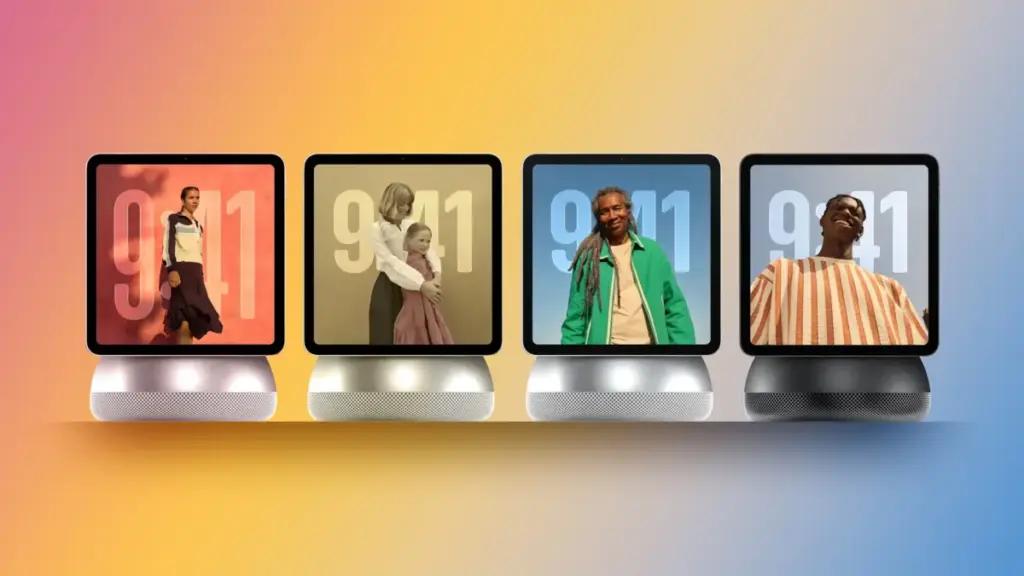
As Apple prepares for an upcoming hardware launch event, recent trademark discoveries suggest that the Cupertino tech giant may be quietly establishing a brand identity and dedicated software platform for an all-new smart home product ecosystem. Corporate registry filings reveal that an obscure entity named Home Services LLC submitted trademark applications for the name "HomeView" across the United States and several international jurisdictions last year. This legal filing closely matches a parallel submission made around the same timeframe by another shell company, Home Operations Suite LLC, which moved to secure trademark rights for "homeOS." Both corporate entities display the structural hallmarks of Apple’s long-standing strategy for reserving branding rights under corporate secrecy, driving speculation that "HomeView" and "homeOS" could make their official public debuts alongside Apple’s rumored smart home display.
Apple has a well-documented history of utilizing secretive shell companies to file trademarks for unannounced hardware products, operating systems, and service features prior to formal public announcements. By routing intellectual property filings through newly formed limited liability companies incorporated in various domestic and international registries, Apple systematically secures global legal protections while attempting to minimize premature leaks to competitors and the public. These entity names often remain disconnected from Apple’s corporate registry until regulatory submissions or product launches make the association undeniable.
This tactical approach to intellectual property protection was demonstrated in the lead-up to the announcement of the Apple Vision Pro spatial computing headset in 2023. Prior to the hardware’s formal reveal, a covert shell company linked to Apple filed trademark applications for "visionOS," which ultimately became the official name of the spatial operating system powering the device. However, that same paper trail also revealed that Apple backed legal protections for "xrOS," a term that was widely anticipated by industry watchers and internal tracking before Apple pivoted to the visionOS branding for launch. The history of the xrOS trademark underscores an important reality regarding trademark tracking: while shell company filings confirm active corporate positioning, they do not guarantee that every registered trademark will serve as the final retail title of a commercial product.
The emergence of the HomeView and homeOS filings aligns directly with Apple’s official invitation for an upcoming special event. Apple announced a product launch event scheduled for Tuesday, October 13, centered around the invitation tagline "Welcome home." The presentation is widely expected to focus heavily on an expansion of Apple’s smart home ecosystem, headlined by the introduction of an all-new smart home hub designed to act as a centralized command center for domestic management.
According to reports from Bloomberg’s Mark Gurman and corroborated details regarding Apple’s fall schedule, the October 13 event will showcase an aggressive push into home hardware. In addition to the smart home display, Apple is expected to introduce an updated HomePod mini speaker alongside a refreshed Apple TV 4K set-top box. Together, these updates suggest a coordinated attempt to overhaul Apple’s ambient computing presence and unify its smart home ecosystem across visual, audio, and living room streaming devices.
The expected smart home hub represents an entirely new hardware category within Apple’s lineup, frequently characterized as a hybrid device bridging the functionality of an iPad tablet and a HomePod speaker. Leaked conceptual details and design previews describe a compact, tabletop command center that couples a high-resolution touch display with a specialized dome-shaped speaker base containing internal audio hardware and processing components. The base is anticipated to feature multiple color options, offering a decorative aesthetic tailored to blend naturally into various residential settings.
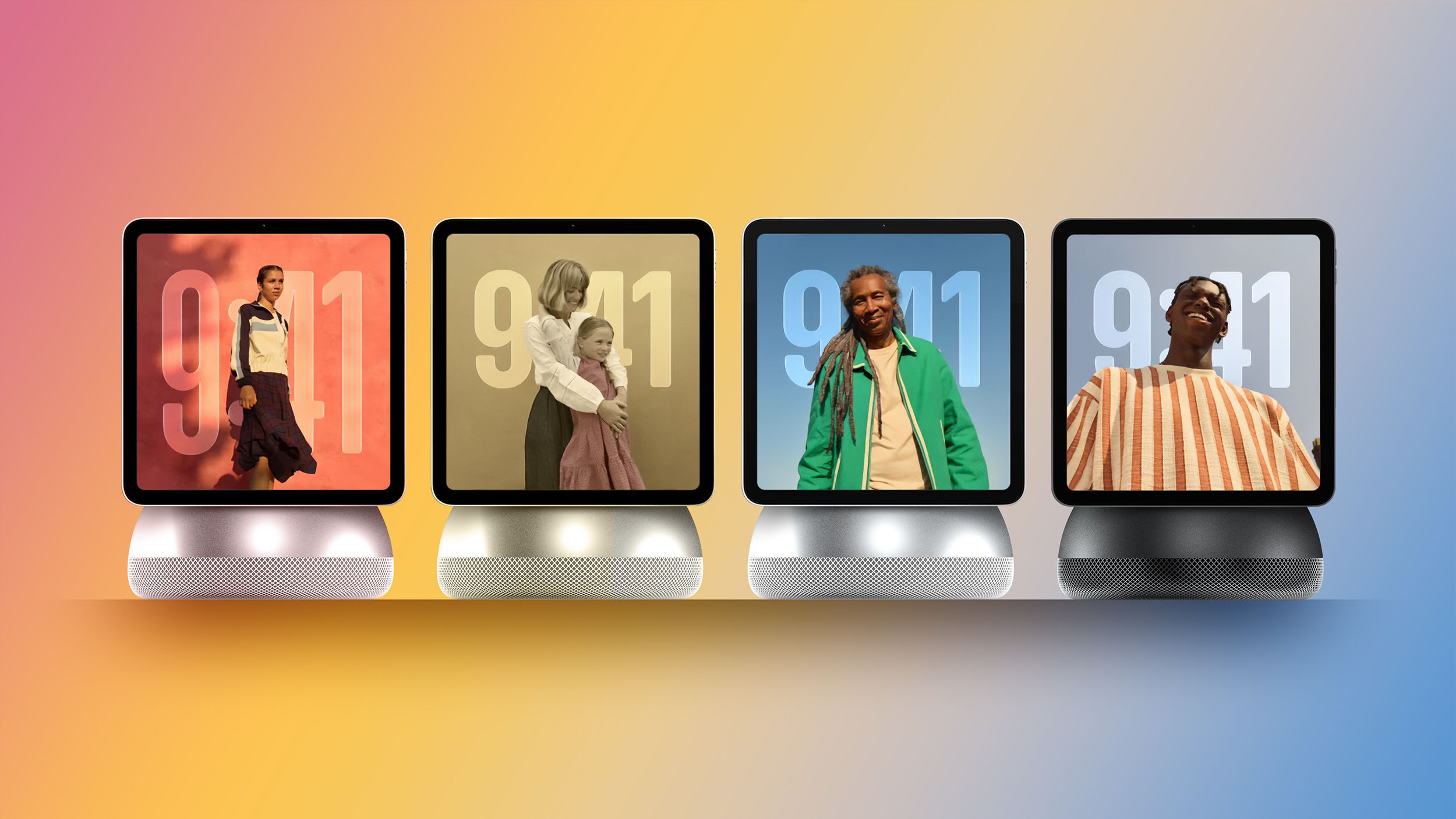
To power this stationary hybrid hardware, Apple is understood to be developing an all-new operating system engineered specifically for home environments. If the recent trademark filings hold true, this system could officially bear the name "homeOS." Similar to how watchOS, tvOS, and visionOS provide custom user interfaces for their respective hardware form factors, homeOS would offer a dedicated software environment optimized for shared household use. The platform is expected to prioritize persistent glanceable widgets, HomeKit security camera feeds, smart home controls, FaceTime interactions, and hands-free voice control powered by Siri.
While "homeOS" appears to be a strong contender for the underlying software platform, the final retail name of the physical smart home display remains open to debate. The "HomeView" trademark stands out as a strong candidate, particularly because the term emphasizes the visual, screen-based nature of a device designed to provide a comprehensive view of home security, device statuses, and household calendars.
Industry observers have also proposed alternative speculative names for the smart home device, including "HomePad." This name directly reflects the hybrid construction of the unit, combining the touch-screen versatility of an iPad with the dedicated room audio profile of a HomePod. The HomePad branding would clearly communicate the product’s functional identity to existing Apple customers who are already familiar with both product lines.
Another potential option is a direct naming approach such as "Apple Home." While adopting "Apple Home" as a hardware name could present potential overlap with Apple’s existing "Apple Home" software application used to control HomeKit accessories on iOS and iPadOS, Apple has previously demonstrated a willingness to utilize overlapping branding across unified product lines.
The most visible example of this naming strategy exists within Apple’s living room ecosystem. Apple currently offers a physical streaming device called the "Apple TV 4K," a software hub integrated into iOS and tvOS called the "Apple TV app," and a premium subscription streaming video service titled "Apple TV+." Given that three distinct layers of hardware, software, and services coexist under the "Apple TV" moniker, Apple could plausibly elect to align its physical central home hub under the simple "Apple Home" umbrella. Alternatively, Apple could lean into its established premium audio branding by naming the new display "HomePod Pro," positioning the unit as an advanced, screen-equipped variant of its primary smart speaker lineup.
The October 13 "Welcome home" event is part of a larger, multi-stage autumn launch schedule for Apple. Sources familiar with Apple’s internal launch plans indicate that the company is preparing two separate waves of product announcements during the month of October. While the October 13 presentation is set to focus exclusively on smart home hardware—highlighted by the smart home hub, the new HomePod mini, and the upgraded Apple TV 4K—a second set of product announcements is slated to take place during the final week of October.
This multi-event rollout structure allows Apple to dedicatedly showcase its expanding vision for ambient computing without overcrowding its traditional computing and mobile hardware announcements. By securing trademarks for "HomeView" and "homeOS" while preparing a physical command hub and secondary living room devices, Apple appears positioned to execute its most significant expansion into the home technology market to date.
 macOS & Apple IT Support
Apple Confirms iPhone 18 Pro Max Cellular Outage on AT&T Network, Recommends Full Device Replacement for Affected Hardware
Apple has officially acknowledged a persistent technical issue impacting its latest flagship...
 macOS & Apple IT Support
Apple Signals Major Smart Home Push With October 13 Announcement Featuring New Smart Display, Apple TV 4K, and HomePod mini
Apple is preparing to kick off a multi-stage autumn hardware rollout, starting...
 macOS & Apple IT Support
Apple Reaches Agreement to Hire AI Audio Startup Huxe’s Key Personnel and License Its Technology
Apple has reached an agreement to recruit key personnel from Huxe, an...







