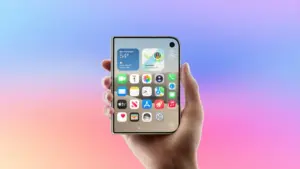
As revealed in the code analysis, these devices store an "apple-deviceid" within the Matter payload located on the accessory’s NFC (Near Field Communication) tag. When a user taps their iPhone against the device, the NFC handshake instantly transmits this ID to iOS. This allows the operating system to identify the specific accessory and its current state with near-zero latency.
However, the system does not rely solely on physical contact. To facilitate the "nearness" detection that doesn’t require a direct tap, the accessories broadcast a Bluetooth Low Energy (BLE) advertisement specifically for Apple Proximity Control. This BLE beacon allows the iPhone to calculate the distance to the accessory, triggering the Dynamic Island hint as the user enters the immediate vicinity.

The pairing process is also being streamlined through this new hardware. When a user first sets up one of these second-party accessories, the Dynamic Island will provide real-time visual feedback on the pairing status, moving away from the traditional modal pop-ups that have defined the iOS setup experience for years. For users who prefer a more traditional experience or have privacy concerns regarding proximity-based triggers, Apple is expected to include a toggle within the Home app to disable these features on a per-device basis.
The Strategic Shift to Second-Party Hardware
The collaboration between Apple and LG marks a turning point in Apple’s smart home philosophy. While Apple has historically relied on the "Made for iPhone" (MFi) and HomeKit certification programs to populate its ecosystem, the results have been mixed. Third-party manufacturers often prioritize broad compatibility across multiple platforms like Amazon Alexa and Google Home, which can sometimes lead to a "lowest common denominator" feature set.
By entering a "second-party" partnership with LG, Apple can exert much tighter control over both the hardware specifications and the software integration. This approach mirrors how Apple works with partners in other sectors, such as its collaboration with LG on the UltraFine display line. In this scenario, LG handles the large-scale manufacturing and industrial design, while Apple dictates the internal silicon requirements, security protocols, and exclusive software features like Proximity Control.
Reports from Bloomberg earlier this week confirmed that the Apple-LG initiative includes a comprehensive lineup of essential home hardware. The initial rollout is expected to feature a smart thermostat, a deadbolt lock, an indoor security camera, an outdoor security camera, and a floodlight camera. By focusing on these core categories, Apple is positioning itself to compete directly with established players like Amazon’s Ring and Google’s Nest, but with a unique value proposition centered on the privacy and convenience of the Apple ecosystem.
 Smart Home & IoT Solutions
Simplifying the Smart Home: Why the Apple Home Collection Could Finally Bridge the Gap to Mass Adoption
For those who inhabit the world of technology reporting and enthusiast forums,...
 Smart Home & IoT Solutions
Controller for HomeKit Introduces Natural Language AI Feature to Simplify Complex Smart Home Automations
In the rapidly evolving landscape of smart home technology, the gap between...
 Smart Home & IoT Solutions
Apple’s Upcoming HomeView Hub to Feature Integrated HomeKit Security Camera with Advanced Privacy Controls
In the rapidly evolving landscape of the smart home, Apple has long...