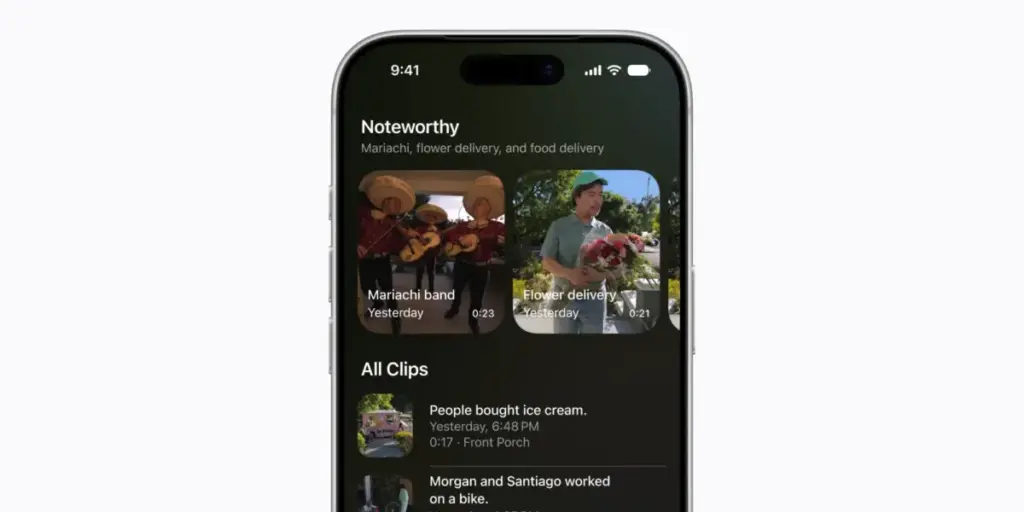
To illustrate the practical impact of this change, consider a typical arrival scenario. Under the old system, a user’s phone might ping seven or eight times as a resident pulls into the driveway and enters the house. In iOS 27, those fragmented alerts are synthesized into a single, evolving narrative. A single alert might initially say "Lydia arrived," and then, as the actions occur, it will update to read: "Lydia arrived. Checked the mail. Garage door was closed."
This approach draws inspiration from the "Live Activities" framework found elsewhere in iOS, providing a live, glanceable status of home events. By focusing on the latest and most relevant information, the Home app ensures that users stay informed about the status of their property without the cognitive load of managing dozens of redundant alerts. It transforms the notification center from a log of sensor triggers into a meaningful summary of household events.

The Broader Strategy: A Unified Intelligence
The timing of these software reveals, just days before the October 13 event, suggests that Apple is positioning the smart home as a primary beneficiary of its broader "Apple Intelligence" initiative. By moving the processing of video and sensor data into the realm of generative AI, Apple is attempting to bridge the gap between "connected" devices and truly "smart" ones.
The "Welcome Home" event is widely expected to introduce new hardware that can act as the local "brains" for these operations. While the iPhone handles much of the interface, the local processing of 4K video and the synthesis of real-time notifications likely rely on the latest silicon found in HomePods or a rumored new home hub device. This local processing is central to Apple’s value proposition, offering a level of speed and privacy that cloud-dependent competitors struggle to match.
As the smart home market matures, the focus is shifting away from the novelty of controlling lights with a phone and toward the utility of a home that anticipates and summarizes its own status. With iOS 27, Apple is making a clear statement: the future of the Home app is not just about more buttons or more cameras, but about more intelligence. By streamlining how data is recorded and how it is communicated to the user, Apple is refining the smart home experience into something that feels less like a technical project and more like a natural extension of the modern household.

With these updates, Apple is not only addressing the technical demands of power users—such as 4K video support—but also the everyday needs of the average family looking to reduce the digital noise of a connected life. As users begin to explore the "Reduce Notifications" feature and the high-resolution capabilities of HKSV, the Home app is poised to become an even more essential tool in the Apple ecosystem. The upcoming "Welcome Home" event will likely provide the final pieces of the puzzle, revealing the new hardware designed to bring these ambitious software features to life.
 Smart Home & IoT Solutions
The Frictionless Frontier: Why the Apple Home Collection Could Finally Bring the Smart Home to the Masses
For those deeply embedded in the world of consumer technology, it is...
 Smart Home & IoT Solutions
Apple Reportedly Developing Privacy-Centric Home Security Service and AI-Powered Monitoring Hardware for 2027
For years, Apple’s presence in the smart home market has been characterized...
 Smart Home & IoT Solutions
Apple Poised for Major Smart Home Overhaul as Apple Intelligence Breathes New Life into Stagnant Product Line
For several years, Apple’s presence in the smart home market has felt...