

Apple has implemented automated security controls across its operating systems to block compromised web security certificates associated with eMudhra, a prominent Indian certificate authority. The decisive action follows the discovery by security researchers earlier this month that private cryptographic keys linked to eight of eMudhra’s intermediate certificate authority (CA) certificates contained weak cryptographic construction. These flaws could theoretically allow malicious actors to impersonate legitimate secure websites and intercept sensitive user communications. While cybersecurity analysts emphasize that there is currently no evidence indicating the compromised keys were exploited in real-world attacks, the severe potential risks prompted Apple alongside other major web browser vendors to deploy swift countermeasures across their respective hardware and software ecosystems.
Transport Layer Security (TLS) certificates serve as the foundational bedrock of modern internet confidentiality and trust, assuring users that their connections to websites—ranging from online banking portals to enterprise cloud services—are encrypted and genuine. When a certificate authority issues certificates using weak private cryptographic keys, the chain of trust that underpins public key infrastructure (PKI) is fundamentally compromised. Intermediate CAs act as trusted delegates for root authorities, signing digital certificates for end-entity websites. If an intermediate CA key is vulnerable, an adversary equipped with sufficient computational resources or unauthorized key access could forge valid TLS certificates for any domain, seamlessly launching man-in-the-middle attacks that bypass standard browser security warnings.
Prior to the discovery of the cryptographic weakness, eMudhra’s certificate infrastructure enjoyed widespread, default trust across the digital landscape. Its digital certificates were universally validated by all major internet browsers and operating system trust stores, including Apple’s Safari, Google Chrome, Microsoft Edge, and Mozilla Firefox. Because certificate trust is globally interconnected, a structural vulnerability within a recognized intermediate CA immediately affects users across every operating system that relies on that authority’s validation chain. Consequently, key technology maintainers coordinated rapid mitigation efforts to disallow the compromised intermediate keys and protect millions of global users from potential exploitation.
In an officially published technical support document, Apple detailed the specific parameters of its defensive measures. Beginning October 19, Apple updated its server-managed certificate trust architecture to automatically block the eight affected eMudhra intermediate TLS web certificates. The revocation applies across Apple’s native software environment, including its flagship Safari web browser, the built-in Mail application, and all third-party iOS, iPadOS, and macOS applications that utilize Apple’s core networking and security frameworks. Because Apple handles trust store evaluations dynamically through background synchronization channels, the mitigation was applied silently and automatically, requiring no manual intervention or software updating on the part of standard iPhone
, iPad, or Mac users.

Despite the automated protection implemented for general consumers and graphics-based applications, Apple alerted advanced technical users and system administrators to a critical exception within its desktop operating system environment. While standard macOS applications relying on native system frameworks immediately reject the compromised eMudhra certificates, certain command-line utilities operating within the terminal environment bypass the primary trust evaluation pipeline. Apple confirmed that command-line tools executing on macOS can still accept connections secured by the compromised intermediate certificates until a full operating system update is formally distributed to devices.
To bridge this temporary operational gap, Apple advised system administrators, software developers, and power users who rely on terminal commands to manually modify their local certificate trust stores. Specifically, the company outlined instructions for editing the central certificate bundle located at /etc/ssl/cert.pem on macOS machines. By manually identifying and removing the associated root CA certificates from this file path, command-line operations—such as automated scripts, server utilities, and network diagnostic tools—can be effectively shielded from trusting the compromised eMudhra infrastructure. Apple noted that a forthcoming macOS system update will automatically apply these necessary modifications to the default /etc/ssl/cert.pem file, though the company has not yet provided a confirmed release date for the update.
The incident underscores the delicate operational balance inherent to global public key infrastructure, where the compromise of intermediate cryptographic assets can ripple across billions of endpoint devices. Security researchers who uncovered the compromised keys noted that the vulnerability stemmed from weak key generation mechanisms, a flaw that severely diminishes the mathematical complexity required for an attacker to derive private keys. In modern cryptography, private keys must maintain immense structural entropy to prevent unauthorized parties from recalculating the key pair. When key generation algorithms fail to provide sufficient randomness, attackers can calculate matching private keys, allowing them to digitally sign fraudulent certificates that pass standard cryptographic validation checks.
The rapid response by Apple to nullify eMudhra’s compromised keys aligns with its broader software strategy centered on platform security, data privacy, and aggressive identity protection. Apple has long positioned its native software stack, particularly the Safari web browser, as an industry benchmark for user privacy and security enforcement. The tech giant recently launched a prominent "Switch to Safari" marketing campaign aimed at encouraging Google Chrome users on Mac to transition to Apple’s native browser. In its promotional literature, Apple argued that Safari delivers superior privacy controls and defense mechanisms compared to competing web browsers, emphasizing its tight integration with hardware-level security architectures and proactive certificate management routines.
As Apple prepares its forthcoming operating system patch to address command-line vulnerabilities on macOS, technical organizations are advised to review their internal certificate reliance policies. System administrators overseeing enterprise Mac deployments should verify whether terminal-based workflows or background maintenance scripts interact with web resources that previously relied on eMudhra certificate chains. Until the promised macOS patch arrives, manual curation of /etc/ssl/cert.pem remains the primary recommended safeguard for command-line networking environments.
The global response to the eMudhra certificate vulnerability demonstrates the efficacy of contemporary security research and rapid revocation infrastructure. Through automated trust store updates, the vast majority of Apple device owners were shielded from potential cryptographic impersonation without experiencing service disruptions or requiring system restarts. As software vendors continue to refine automated revocation mechanisms, the turnaround time between public disclosure of vulnerable certificate authority keys and platform-wide mitigation continues to shrink, neutralizing potential abuse before malicious entities can capitalize on structural cryptographic flaws.
 macOS & Apple IT Support
Best Buy Offers $100 Gift Card Incentive as Pre-Orders Open for Apple’s New MacBook Pro With PROLED XDR Display
Following Apple’s official unveil of its next-generation laptop line, pre-orders for the...
 macOS & Apple IT Support
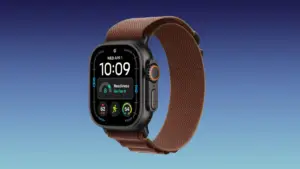
Amazon Drops Apple Watch Ultra 4 to All-Time Low of $699.99 in Rare Post-Launch Discount
Amazon has introduced a significant price reduction on Apple’s latest flagship wearable,...
 macOS & Apple IT Support
Apple Launches Major Hardware and Software Suite as iOS 27, macOS Golden Gate, and iPhone 18 Series Hit the Market
Following last week’s high-profile "Surprise and Shine" keynote event—the first major product...







