
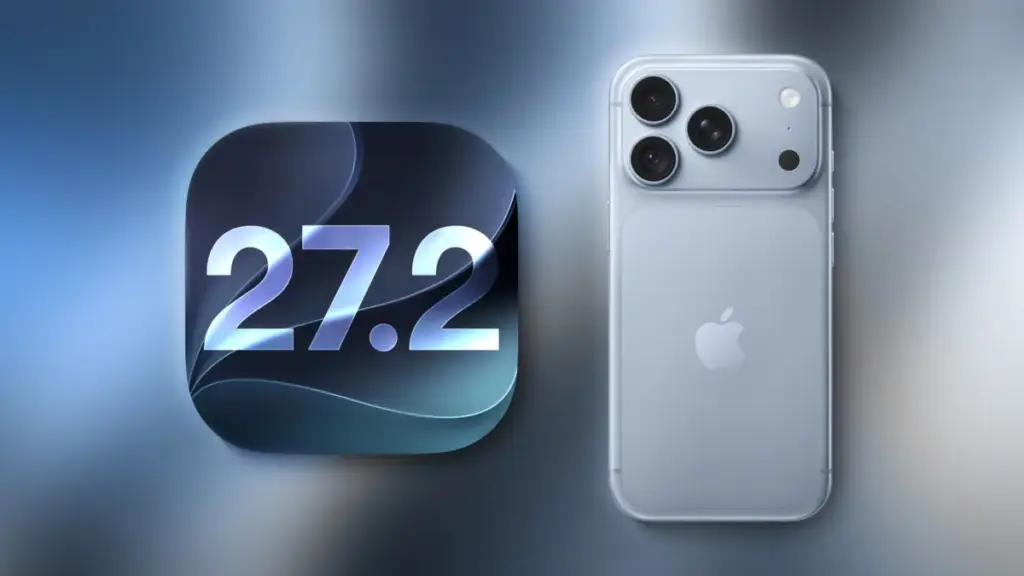
Apple has introduced a selfie-based age verification system in its iOS 27.2 and iPadOS 27.2 software updates, giving users in supported regions a new method to prove they are adults without submitting sensitive personal identification such as a credit card or a government-issued photo ID. The feature offers a privacy-focused alternative for users encountering age-restricted software, services, or system settings, allowing them to complete age checks directly through their device’s camera interface.
According to an official Apple support document detailing the feature, the new system works by estimating whether an individual is an adult through an automated analysis of their facial features. Rather than taking a static photo, the age verification capture sequence guides the user through a series of dynamic motion checks. Onscreen prompts instruct the user to slowly turn and tilt their head, enabling the system to evaluate key facial metrics and capture views of the face from four distinct directional angles.
To execute the facial analysis while preserving user privacy, Apple has implemented a hybrid processing architecture that splits the computational workload between local hardware and remote secure cloud infrastructure. The verification mechanism combines real-time processing executed locally on the user’s iPhone or iPad with high-level analytical processing powered by Private Cloud Compute. Once both layers of analysis complete their checks, the final verification results are synthesized locally on the device itself.
Data privacy and security form a core component of the new feature’s design. Apple explicitly states in its support documentation that the video captures and facial imagery captured during the scan remain completely inaccessible to Apple, external developers, or any third parties at all times during the evaluation process. The imagery is processed within an isolated environment, and as soon as the system successfully establishes and confirms the user’s adult status, the temporary selfie data utilized during the scan is permanently deleted from the system.
Furthermore, Apple has designed the system to minimize friction for users after an initial confirmation is made. Once an individual successfully completes the selfie-based facial analysis and establishes their adult status on their account or device, Apple confirms that no further age verification requests will be required in the future. This one-time verification framework ensures that users are not repeatedly subjected to facial scans during everyday device operation.
The prompt asking users to verify their age can be triggered by several common system interactions. Users may encounter the age confirmation check while setting up a new Apple Account, completing a system software update, attempting to download or launch applications rated 18+ in the App Store, or adjusting device safety controls and content restriction settings. However, receiving the prompt and having access to the selfie-based submission method depends heavily on geographical location, as regional legal standards and regulatory mandates dictate when adult verification is required and how it can be fulfilled.
The inclusion of selfie-based age verification arrives as part of the broader release of iOS 27.2, which Apple officially deployed to the public on October 26, 2026. The major update represents a significant milestone for Apple’s mobile operating system, serving to unite the specialized hardware of the iPhone Duo alongside standard iPhone models on the very same version of iOS. By aligning these hardware lineups under a synchronized software framework, Apple has streamlined update distribution and feature parity across its flagship device ecosystem.
The public release of iOS 27.2 followed an extensive development and testing cycle among software developers. Apple seeded the Release Candidate (RC) version of iOS 27.2 and iPadOS 27.2 to registered developers on October 19, 2026, exactly one week after releasing the fourth developer beta of the software. Throughout the beta cycle, registered developers were able to download test builds over the air by navigating to the Settings app, selecting General, choosing Software Update, and opting into the iOS 27 developer beta track.
Beyond the introduction of the selfie-based age verification system, iOS 27.2 introduces several key functionality updates and system enhancements across the platform. Notably, the update includes substantial upgrades to Siri AI capabilities, expanding the virtual assistant’s conversational context and recall systems. With these updates, Siri AI can remember and reference past conversations held with the user, enabling individuals to inquire about previous interactions, such as retrieving a specific restaurant recommendation or reviewing contextual details mentioned in earlier queries.
The arrival of iOS 27.2 follows earlier software maintenance releases designed to address system stability across Apple’s hardware portfolio. On September 28, 2026, roughly two weeks after the initial launch of the primary iOS 27 release, Apple issued iOS 27.0.1. That targeted maintenance update was pushed over the air to resolve a bug impacting Face ID functionality on supported devices. Alongside iOS 27.0.1, Apple also released corresponding bug-fix updates including iPadOS 27.0.1 and visionOS 27.0.1, as well as iOS 26.7.1 and iPadOS 26.7.1 for older devices unable to upgrade to the iOS 27 platform.
With iOS 27.2 and iPadOS 27.2 now available to all supported devices, the new selfie-based age verification feature is actively rolling out to users based on regional availability. Users in supported areas who encounter age restriction prompts during account setup, app downloads, or system configuration can now utilize the camera-guided facial check as a direct, private alternative to traditional document-based identity verification.
 macOS & Apple IT Support
Early Black Friday Deals Bring Apple Watch Series 12 to Record Lows Alongside Broader Apple Hardware Discounts
With the annual holiday shopping season entering high gear, early Black Friday...
 macOS & Apple IT Support
Apple Details tvOS 27.2 Features in Official Release Notes, Highlighting Remote Tracking, FaceTime Enhancements, and Screen Saver Updates
Apple has updated its official support documentation to outline the full feature...
 macOS & Apple IT Support
Verizon to Charge $10 Monthly for Apple’s iOS 27 iPhone Handoff Feature as Carrier Support Expands
Verizon has officially confirmed its pricing structure for Apple’s newly introduced iPhone...







