The emotional resonance of the forum’s closure was felt deeply by international contributors as well. Elías Rojano Núñez, an active participant from Chile who contributed extensively to the Spanish-language boards, expressed profound sadness over the unannounced shutdown. For Rojano Núñez, helping everyday users navigate technical hurdles provided a deep sense of personal fulfillment. While expressing disappointment at the lack of advance notice from Apple, he remained grateful for the lasting relationships he cultivated with fellow volunteers around the world over many years.
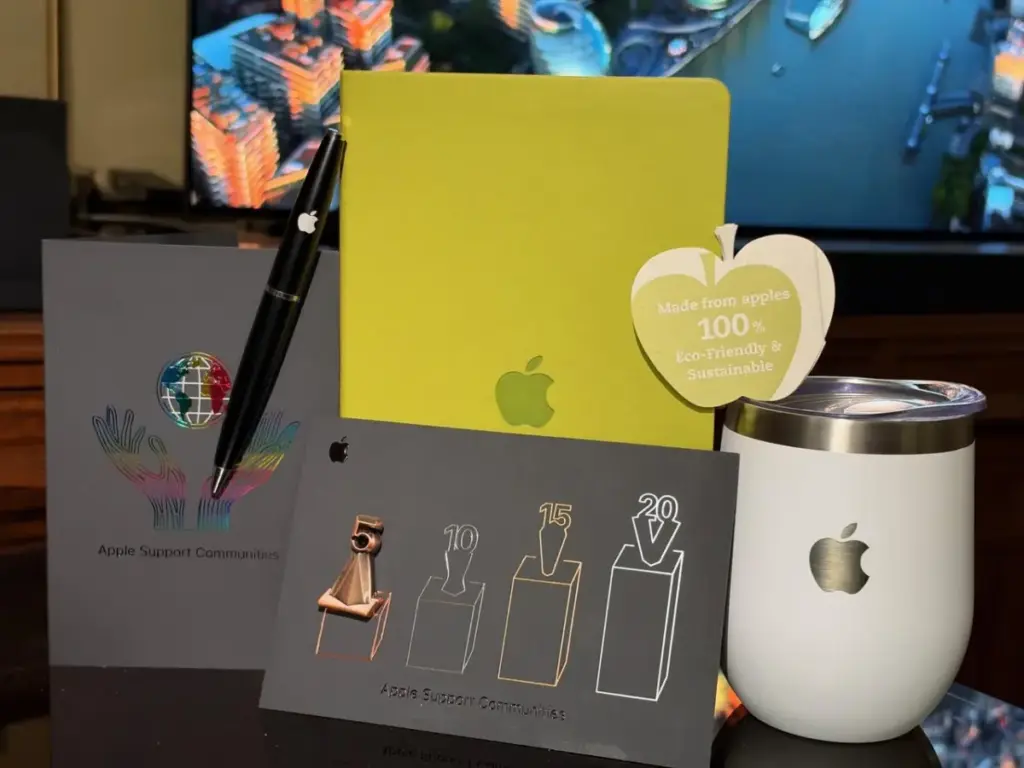
To mark their service, Apple regularly dispatched tangible tokens of appreciation to its top community members. Over the years, dedicated volunteers received physical anniversary pins marking 5, 10, 15, and 20 years of active participation, alongside specialized Apple-branded merchandise such as custom apparel, hats, tote bags, and umbrellas. These physical artifacts served as symbols of a shared identity and mutual effort, reinforcing the reality that behind the digital threads was a real human community.
The decision to sunset the Apple Support Community arrives at a moment of broader transformation for Apple’s customer support and product ecosystem. As the company prepares for major hardware releases—such as the new Apple HomeView smart display powered by Apple Intelligence and Siri AI, alongside the fourth-generation Apple TV 4K—its overall support strategy has pivoted increasingly toward automated systems, direct app-based support, and internal AI development. Concurrently, internal reports indicate that Apple has been refining its software development pipelines for future operating system iterations, including iOS 28 and macOS 28, altering how bug testing and user feedback are gathered internally.
Yet, despite the rise of automated diagnostics and corporate help channels, no modern support portal fully replicates the organic, peer-to-peer knowledge sharing that defined the Apple Support Community for nearly thirty years. Whatever its functional shortcomings or structural flaws, the platform was far more than a simple database of troubleshooting steps. For thousands of volunteers and millions of everyday users, it was a reliable digital neighborhood and a place of true community belonging. As November 20 approaches and the servers prepare to go dark permanently, the global community of volunteers leaves behind a profound legacy of public service—deserving of a respectful, heartfelt thank you rather than a silent dismissal.
 macOS & Apple IT Support
Apple Releases watchOS 27: A Comprehensive Look at New AI Features, Interface Changes, and Health Updates Across Apple Watch Generations
Apple officially launched watchOS 27 on September 14, introducing a sweeping array...
 macOS & Apple IT Support
Apple Festival Place Permanently Closes as Apple Prepares Modernized Retail Space in Nearby Reading
Today marks the official conclusion of Apple’s retail operations at Festival Place...
 macOS & Apple IT Support
Verizon to Charge $10 Monthly for Apple’s iOS 27 iPhone Handoff Feature as Carrier Support Expands
Verizon has officially confirmed its pricing structure for Apple’s newly introduced iPhone...