

Amazon is not alone in this pursuit. Google is currently developing TorchTPU, a similar project aimed at allowing PyTorch to run natively on Google’s Tensor Processing Units (TPUs). The emergence of these tools suggests a broader industry trend toward hardware agnosticism, where the choice of silicon is determined by price and performance rather than software compatibility.
In line with this trend, Amazon announced that it is contributing its changes upstream to the PyTorch project itself. By working directly with the PyTorch community, Amazon aims to remove the specific code segments that tie the framework to individual chips. The ultimate goal is to make PyTorch more hardware-agnostic for the entire developer community, benefiting all users regardless of whether they use Trainium, TPUs, or traditional GPUs.
This commitment to open-source development is reflected in the licensing of TorchNeuron. The tool is being rolled out as free and open-source software under the Apache 2.0 license. This ensures that the community can inspect, modify, and improve the tool, fostering a more collaborative environment for AI infrastructure.
The Future of AI Infrastructure
The introduction of TorchNeuron represents a maturation of the AI hardware market. As the demand for generative AI and large language models (LLMs) continues to skyrocket, the industry is moving away from a monolithic hardware landscape toward one defined by diversity and competition.
"By reducing the friction of adopting new hardware, TorchNeuron introduces something the AI industry has largely lacked: meaningful choice," Amazon stated. The company argues that when developers are no longer "penalized" for moving between chips—either through lost time or increased complexity—the entire ecosystem benefits.
In this new environment, chipmakers will be forced to earn the business of developers based on the merits of their hardware’s efficiency and cost-effectiveness. For the developer community, this shift promises lower operational costs and the ability to iterate at a faster pace, potentially accelerating the next wave of AI breakthroughs.
As TorchNeuron becomes more widely adopted, the focus will likely shift to how well Amazon can scale its hardware production to meet the needs of the PyTorch community. For now, however, the launch of TorchNeuron stands as a significant milestone in the effort to democratize AI development and break the software chains that have long restricted the industry’s hardware choices.
 Helpdesk & IT Service Management (ITSM)
UK Home Office Proposes Landmark £1 Billion Cloud Services Deal with Amazon Web Services
The UK Home Office is preparing to significantly escalate its investment in...
 Helpdesk & IT Service Management (ITSM)
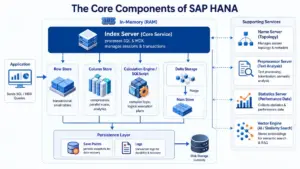
Decoding SAP HANA Architecture: How In-Memory Processing Redefines Enterprise Data Management
In the rapidly evolving landscape of enterprise technology, the ability to process...
 Helpdesk & IT Service Management (ITSM)
Microsoft Rebrands Global AI Tour as ‘Frontier’ Series Amid Growing Crisis of Workplace Confidence
The evolution of artificial intelligence has moved with a velocity rarely seen...







