

In a discovery that underscores the shifting landscape of global cybersecurity, researchers have identified a critical vulnerability within the NGINX web server software that has remained undetected for over ten years. The flaw, which dates back to 2015, represents the latest in a series of significant security gaps in foundational internet infrastructure brought to light by the increasing deployment of artificial intelligence in code auditing.
The vulnerability, officially cataloged as CVE-2026-123007 and colloquially dubbed "nginx2root," has sent ripples through the IT community due to the ubiquity of the affected software. NGINX is a cornerstone of the modern web, utilized by millions of websites and high-traffic services to handle load balancing, media streaming, and web serving. The revelation that a critical flaw has been sitting dormant in such a vital piece of software for a decade highlights a growing "security debt" that is only now being addressed through automated means.
The discovery was the result of independent efforts by several prominent security research teams, including Rapid7 and Wiz Research. However, the initial identification is credited to Xint, an AI-powered vulnerability discovery platform. The involvement of Xint highlights a broader trend where machine learning models are being trained to recognize complex patterns and logical errors in source code that have historically eluded human reviewers and traditional static analysis tools.
The technical anatomy of "nginx2root"
At its core, the nginx2root vulnerability stems from an integer underflow error within NGINX’s implementation of the HTTP/2 protocol support. This specific technical oversight was first introduced with the release of NGINX version 1.9.5 in 2015, the version that brought initial HTTP/2 support to the software. For ten years, as NGINX evolved and became even more integrated into the global digital fabric, this specific logic error persisted across numerous updates and patches.
From a functional standpoint, the flaw allows an attacker to potentially carry out remote code execution (RCE) or trigger a complete crash of the server. Remote code execution is considered one of the most dangerous types of vulnerabilities, as it allows an unauthorized party to run arbitrary commands on the victim’s system, potentially leading to a full takeover of the server environment.
Despite the severity of the potential impact, the barrier to entry for exploiting nginx2root is notably high. Security analysts have noted that the requirements to successfully execute an attack are sophisticated, involving a precise orchestration of network packets and server states. To date, there have been no confirmed reports of attackers exploiting the flaw in the wild. Nevertheless, the potential for catastrophic failure led NGINX’s parent company, F5, to assign the vulnerability a CVSS (Common Vulnerability Scoring System) severity rating of 9.2 out of 10. This "Critical" designation reflects the extreme risk the flaw poses to the confidentiality, integrity, and availability of systems running vulnerable versions of the software.
The discovery of nginx2root is not an isolated incident but rather part of a mounting wave of "archaeological" security findings. It follows closely on the heels of other high-profile disclosures, such as PHP2shell—a vulnerability that existed in the PHP programming language for nearly 15 years before being found—and Java4shell, a critical flaw first introduced in early 2023. These incidents suggest that the digital foundations of the internet are far more brittle than previously assumed, containing legacy errors that have survived decades of manual scrutiny.
The "changed rules" of vulnerability discovery
The rapid succession of these discoveries has led industry experts to warn that the traditional methods of managing software security are becoming obsolete. Roshan Piyush, a Senior Principal Security Research Engineer at the AI development firm Harness, noted that the disclosure of two major flaws in such a short window serves as a significant warning to the industry.
"Seeing two serious security flaws made public a day apart is a major red flag for anybody who hasn’t recognized that the rules of the game have changed," Piyush said. He emphasized that the impact of these vulnerabilities extends far beyond the tech sector, affecting the basic services that modern society relies upon.
"Java4Shell and nginx2root aren’t obscure problems with a niche impact," Piyush continued. "Both give attackers the ability to take control of a server and sit in software that runs a huge part of the internet. These tools work quietly in the background of banks, airlines, and telecom networks—integrated into the online services that we all rely on every day. Most people never think about them, but they have the potential to cause chaos."
The fact that these flaws are being discovered by AI tools is a double-edged sword for the cybersecurity industry. On one hand, it allows defenders to clean up decades of insecure code. On the other, it provides attackers with a powerful new mechanism to find "zero-day" exploits in legacy systems that organizations may have assumed were secure simply because they had been around for a long time.
AI bug hunting continues to disrupt the status quo
The rise of AI-driven bug hunting is creating a period of severe disruption within the security community. As AI tools become more sophisticated, they are being used to audit vast codebases at a speed and depth that was previously impossible for human teams. This has resulted in a sharp uptick in the volume of bugs being identified, many of which are located in well-established, "trusted" codebases.
A recent report from Microsoft security researchers provides a stark illustration of this new reality. Researchers used a pre-release code-audit product codenamed "MDASH" to scan a specific subset of Linux kernel subsystems. The project was remarkably lean, requiring only one researcher and one intern working over a three-month period. Despite the limited resources, the AI-assisted audit resulted in 59 upstream bug reports and 33 new CVEs.
Perhaps most telling was the age of the bugs discovered in the Linux kernel. The average age of the flaws identified by the MDASH tool was over eight years. Even more concerning was the discovery of three vulnerabilities that had remained hidden in the kernel for over 20 years. These findings suggest that age and widespread use are no longer reliable proxies for software security.
This avalanche of new disclosures is forcing a dramatic gear-change across the technology sector. Software vendors and open-source maintainers are finding themselves under unprecedented pressure to accelerate their patching cycles. For IT leaders and system administrators, the challenge is equally daunting; they are now faced with an order of magnitude more patches to test and apply within their production environments, often with very little lead time.
Knock-on effects for the software ecosystem
The sheer volume of new bug reports is beginning to impact the development and release schedules of major software projects. The phenomenon is creating a bottleneck in the software supply chain as maintainers struggle to keep up with the influx of security-critical fixes.
A notable example of this trend occurred with the latest version of the popular database software PostgreSQL. Originally scheduled for release on October 29, the launch of PostgreSQL 19 was pushed back to November 19. The delay was necessary to accommodate a massive surge in bug fixes, which saw an 86% increase compared to the previous version. Many of these fixes were the direct result of automated auditing tools uncovering long-standing issues that had to be resolved before a stable release could be finalized.
This paradigm shift is also rendering traditional security playbooks ineffective. Organizations that rely on yearly audits or manual code reviews are finding themselves trailing behind the capabilities of automated discovery platforms.
"Bugs that have lain dormant for years—over a decade in the case of nginx2root—can now be found in hours, with just a few hundred dollars’ worth of AI tokens," Piyush added. "That’s a massive problem for companies that still rely on security playbooks that were written even a year ago."
As the industry moves forward, the consensus among security experts is that the only way to counter the speed of AI-driven discovery is through AI-driven defense. Relying solely on manual intervention to patch systems is becoming a losing strategy in an environment where vulnerabilities are being unearthed at an exponential rate.
"It’s just not possible anymore to patch everything by hand and do it quickly enough to prevent an exploit," Piyush concluded. "Security teams have to move at the same pace as attackers, using AI to automatically block vulnerable builds from shipping, identify those already in production, and rollout fixes that keep systems secure while patches are implemented."
The discovery of nginx2root serves as a definitive marker for this new era. It is a reminder that the "foundational" software of the internet is often built on code that was written before modern security standards were fully realized—and that the tools now exist to find every crack in that foundation. For organizations worldwide, the race is now on to patch these legacy flaws before the same AI tools that found them are turned against them by malicious actors.
 Helpdesk & IT Service Management (ITSM)
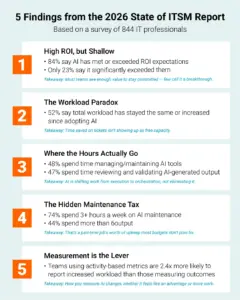
The Paradox of Efficiency: SolarWinds 2026 Report Highlights the Growing Pains of AI Integration in ITSM
The promise of artificial intelligence within the IT Service Management (ITSM) sector...
 Helpdesk & IT Service Management (ITSM)
CISA Issues Emergency Directive as "PHP2Shell" Vulnerabilities Trigger Global Exploitation Surge
The United States Cybersecurity and Infrastructure Security Agency (CISA) has issued an...
 Helpdesk & IT Service Management (ITSM)
Irish Financial Sector Braces for Impact After Major Supply Chain Cyber Attack Hits Credit Unions
A significant cybersecurity incident originating at a Belfast-based IT service provider has...







