

The journey of .de is a reflection of the internet’s own evolution from an experimental academic network to an essential utility for modern life. In its earliest days, the concept of a "domain name" was foreign to almost everyone outside of specialized computer science departments. When the .de extension was first established, the internet as we know it—the World Wide Web—did not yet exist. Instead, these early registrations were used for basic networking and email routing among a tiny group of researchers and technical pioneers.
By 1988, two years after its technical inception, the scale of the .de registry was remarkably small. At that time, there were only six registered .de domains in existence. The administration of the zone was handled by the University of Dortmund, which took over the responsibility of managing the list of names. During this period, the process was entirely manual. There were no automated registration platforms, no real-time availability checks, and no commercial registrars. A manually maintained list was sufficient for a handful of academic institutions, but the infrastructure was never designed to handle the explosive growth that was looming on the horizon.
As the early 1990s approached, the demand for internet connectivity began to shift from purely academic use toward the private sector and early commercial adopters. The manual systems at the University of Dortmund were increasingly strained by the rising volume of requests. It became clear that the administration of Germany’s digital identity required a more robust, scalable, and professional framework. This led to a pivotal turning point in 1993 with the formation of the IV-DENIC interest group. This group was tasked with finding a sustainable path forward for the management of the domain extension.
The IV-DENIC group eventually put the nameserver operations and administrative duties out to bid, seeking a partner capable of modernizing the system. The contract was won by the Karlsruhe Institute of Technology (KIT), which officially took over the management of .de in early 1994. By the time KIT assumed control, the number of registrations had grown to approximately 1,000 domains. While this was a significant increase from the six domains seen just a few years prior, it was only a precursor to the massive surge in interest that would define the mid-1990s.
The period between 1994 and 1996 saw the internet move into the public consciousness. As web browsers became more accessible and businesses began to recognize the potential of an online presence, the .de registry experienced its first taste of exponential growth. By mid-1996, the number of registered domains had jumped to 20,000. This rapid expansion necessitated yet another evolution in how the registry was governed. The stakeholders recognized that a university-led model might not be the most appropriate long-term solution for a critical piece of national infrastructure that was becoming increasingly commercialized.
 Web Hosting & Domain Management
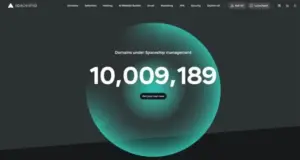
Spaceship Reaches 10 Million Domains Under Management Following Period of Rapid Market Expansion
The digital infrastructure landscape has witnessed a significant shift as Spaceship, a...
 Web Hosting & Domain Management
Public Interest Registry Names TECHO as .Org of the Year at Annual Impact Awards in Washington, D.C.
The Public Interest Registry, the long-standing non-profit organization responsible for managing and...
 Web Hosting & Domain Management
Qatar Tightens Control Over .qa Domain Space with Strict New Residency and Usage Requirements
The landscape for Qatar’s national top-level domain, .qa, is undergoing a seismic...







