
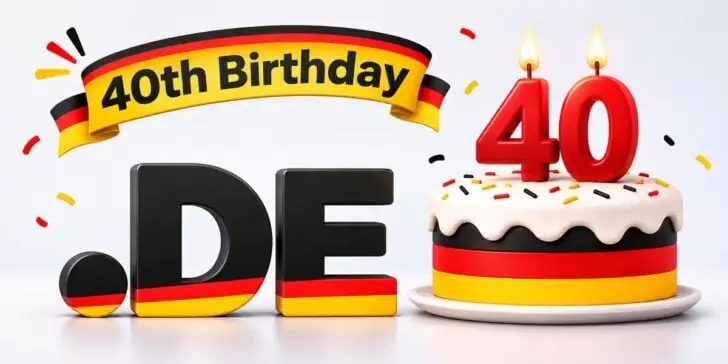
The landscape of domain usage in Germany remains a fascinating contrast to that of the United States. In the U.S. market, the .com extension is so dominant that it is often synonymous with the internet itself. American consumers are conditioned to expect a .com suffix, and other extensions often struggle to gain the same level of intuitive trust. In Germany, however, the situation is reversed. Whether walking down a high street in Berlin or driving through the industrial hubs of Bavaria, a casual observer will see .de domains on almost every storefront, billboard, and commercial vehicle. For a German consumer, the .de extension is the default; it represents a local connection and a sense of proximity that a global .com often lacks.
This cultural preference has helped .de maintain its position as a powerhouse even in the face of competition from hundreds of new generic top-level domains (gTLDs) that have launched over the last decade. While extensions like .berlin or .shop have found their niches, they have not fundamentally challenged the supremacy of .de. The 40-year history of the extension has built a legacy of trust that is difficult to replicate.
As .de enters its fifth decade, the focus of the registry and the broader German internet community has shifted toward maintaining the security and stability of this vast infrastructure. With 18 million domains, the technical challenge of ensuring that every DNS query is resolved instantly and securely is a massive undertaking. DENIC eG continues to operate as the custodian of this digital resource, navigating the complexities of modern internet governance, cybersecurity threats, and the evolving regulatory environment in Europe.
The 40th anniversary of .de is more than just a celebration of a technical protocol; it is a celebration of the digital foundation of modern Germany. From a manual list of six names at the University of Dortmund to a sophisticated cooperative managing 18 million registrations, the .de domain has mirrored the transformation of society itself. As the internet continues to evolve, the .de extension remains a vital and enduring symbol of Germany’s place in the global digital economy, standing as one of the most successful and recognizable examples of a country code top-level domain in history.
 Web Hosting & Domain Management
Public Interest Registry Names TECHO as .Org of the Year at Annual Impact Awards in Washington, D.C.
The Public Interest Registry, the long-standing non-profit organization responsible for managing and...
 Web Hosting & Domain Management
Rick Schwartz’s Beanstalk Challenge Files Federal Lawsuit Against Competitor Over Trademark Infringement and Cybersquatting Allegations
The domain name industry, a sector often defined by high-stakes negotiations and...
 Web Hosting & Domain Management
Qatar Tightens Control Over .qa Domain Space with Strict New Residency and Usage Requirements
The landscape for Qatar’s national top-level domain, .qa, is undergoing a seismic...







