
In the rapidly evolving landscape of enterprise technology, the transition from hardware-centric environments to software-defined architectures has become a defining trend of the decade. At the heart of this transformation lies hyperconverged storage, a methodology that leverages software to virtualize data storage alongside compute and networking functions within a single, unified system. By decoupling the hardware from the software, hyperconverged storage offers a level of flexibility and scalability that traditional, hardware-tethered systems—such as network-attached storage (NAS) or dedicated disk arrays—simply cannot match.
The shift toward hyperconvergence represents a departure from the "siloed" approach to IT infrastructure, where storage, networking, and server resources were managed as independent entities. Through virtualization, hyperconverged storage creates far more flexible pools of resources, allowing businesses to adapt to fluctuating data demands with unprecedented speed. As organizations grapple with the explosion of data generated by modern applications, the ability to scale readily and provide greater functionality has positioned hyperconverged storage as a cornerstone of the modern software-defined data center (SDDC).
The Mechanics of Hyperconverged Storage
To understand the impact of hyperconverged storage, one must first examine how it functions differently from its predecessors. Traditionally, enterprises relied on direct-attached storage (DAS), where each computing device possessed its own dedicated drive, or networked storage approaches like a storage area network (SAN) or NAS. In these legacy models, the storage was often a physical "box" with its own proprietary management system, creating bottlenecks and management complexities.
Hyperconverged storage disrupts this model by abstracting storage and its controls from the underlying hardware. In this architecture, storage is packaged with compute and networking resources that operate independently of the physical chassis. This abstraction allows for incremental scaling; as an organization needs more power or space, it can add nodes to a cluster rather than overhauling an entire array.
Businesses looking to implement this technology generally navigate three primary deployment options. The first involves purpose-built appliances where the software and hardware are pre-integrated by a single vendor. The second is a software-only approach, where the hyperconverged storage layer is installed on existing or third-party hardware. The third involves cloud-integrated or hybrid models that extend the hyperconverged environment into public cloud ecosystems, ensuring a seamless flow of data across different environments.
Core Architectural Components
The architecture of a hyperconverged storage system is built upon a foundation of several integrated components. Central to this is the hypervisor, which runs the virtual machines (VMs) and serves as the primary orchestration layer. Accompanying the hypervisor are software-defined applications and virtual networking tools that manage data traffic and processing tasks.
One of the most significant shifts introduced by hyperconvergence is the move toward commodity hardware. Unlike traditional storage solutions that often required expensive, proprietary arrays and specialized silicon, hyperconverged storage is designed to run on standard x86 servers. This "democratization" of hardware allows enterprises to leverage the cost-efficiencies of mass-produced server components while the sophisticated "intelligence" of the system resides in the software layer.
This software layer overlays the entire infrastructure, virtualizing all storage resources so they can be shared across a multitude of users and devices. The result is a unified pool of storage that may encompass a diverse array of NAS devices, SAN arrays, and even cloud assets, all managed as a single, tightly integrated entity. Furthermore, the inclusion of load balancing and software-defined networking ensures that data is placed in the most optimal location to maximize performance and meet the specific compliance or latency needs of the enterprise.
Key Features and the Role of Software-Defined Storage
A defining characteristic of hyperconverged storage is the elimination of the need to manage hardware components in isolation. In the traditional data center, an administrator might have to navigate different operating systems and management interfaces for a flash array, a NAS filer, and a cloud storage bucket. Hyperconvergence collapses these silos.
 Enterprise Tech & Infrastructure
Protecting the Enterprise Perimeter: The Evolving Security Challenges of DAS and NAS Storage
In the modern enterprise landscape, data is often described as the new...
 Enterprise Tech & Infrastructure
South Korea’s Pursuit of Silicon Sovereignty: FuriosaAI and Rebellions Lead the Charge to Break Nvidia’s Stranglehold
During the height of the Cold War, the development of the atomic...
 Enterprise Tech & Infrastructure
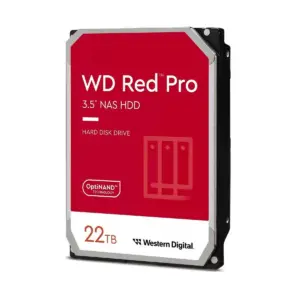
The Pillars of Data Infrastructure: A Comprehensive Review of 2023’s Top Enterprise Hard Drives
In the modern corporate landscape, data storage is no longer a secondary...