
The domain name industry continues to exhibit unprecedented levels of activity, driven by a surge in both speculative investment and legitimate business formation. According to the latest data from Verisign, the registry operator for the ubiquitous .com and .net extensions, the third quarter of the year saw a staggering 13.1 million new domain registrations. This figure represents a historic peak for Verisign, eclipsing a record that had been set only three months prior. While a portion of these registrations can be attributed to the competitive market for expired domain backorders—where investors vie for names that have been let go by previous owners—a significant volume of this growth stems from "hand registrations." This practice involves investors identifying and registering available names directly at the base retail price, betting on their future value in the secondary market.
Among the most ambitious practitioners of this high-volume strategy is domain investor Josh Reason. Earlier this year, Reason gained significant attention within the industry after appearing on the Domain Name Wire podcast to detail an aggressive and meticulously planned experiment: the hand registration of 7,500 domain names. At the time, Reason outlined the specific formula and data-driven criteria he used to filter through millions of potential combinations to find those he believed held untapped commercial potential. Now, one year into the experiment, Reason has returned to share an update on the performance of this massive portfolio, offering a rare glimpse into the mathematics and the realities of large-scale domaining.
The sheer scale of Reason’s undertaking highlights a broader trend in the domain industry. When an investor registers 7,500 domains, they are making a substantial financial commitment, not only in terms of the initial registration fees but also the looming renewal costs. In an era where premium one-word and two-word .com domains often command five- or six-figure prices on the aftermarket, the hand-registration strategy relies on "buying low" in bulk. The objective is to identify emerging trends, niche keywords, or linguistic patterns before the wider market catches on. However, the success of such a strategy is never guaranteed, and the one-year mark serves as a critical inflection point where an investor must decide which assets are worth keeping and which should be allowed to drop.
During his recent follow-up discussion with Andrew Allemann on the Domain Name Wire podcast, Reason provided a transparent breakdown of his results. A primary focus of the update was the performance of specific keywords. In the world of domaining, keywords act as the foundational pillars of value. Reason discussed which categories of names have emerged as "winners"—those that have either sold or generated significant inquiry traffic—and which have failed to gain traction. This retrospective analysis is vital for high-volume investors, as it allows them to refine their "formula" for future registration cycles. The data from Reason’s experiment suggests that while the "spray and pray" method is often criticized, a disciplined, keyword-focused approach can yield a viable return on investment if the hit rate on sales covers the carrying costs of the entire portfolio.
 Web Hosting & Domain Management
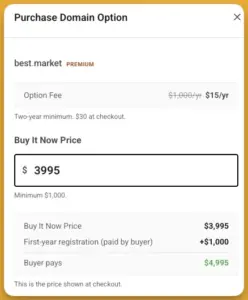
Identity Digital launches “domain options” for domain investors
The first partner to facilitate these options is Deqo, a newly developed...
 Web Hosting & Domain Management
Germany’s .de domain name turns 40
The journey of .de is a reflection of the internet’s own evolution...
 Web Hosting & Domain Management
Digital Identity Crisis: The Human Cost of Terminating Third-Level .name Domains
For Judy Johnston, the technical sunsetting of a niche domain extension is...







