

Apple has implemented automated security controls across its operating systems to block compromised web security certificates associated with eMudhra, a prominent Indian certificate authority. The decisive action follows the discovery by security researchers earlier this month that private cryptographic keys linked to eight of eMudhra’s intermediate certificate authority (CA) certificates contained weak cryptographic construction. These flaws could theoretically allow malicious actors to impersonate legitimate secure websites and intercept sensitive user communications. While cybersecurity analysts emphasize that there is currently no evidence indicating the compromised keys were exploited in real-world attacks, the severe potential risks prompted Apple alongside other major web browser vendors to deploy swift countermeasures across their respective hardware and software ecosystems.
Transport Layer Security (TLS) certificates serve as the foundational bedrock of modern internet confidentiality and trust, assuring users that their connections to websites—ranging from online banking portals to enterprise cloud services—are encrypted and genuine. When a certificate authority issues certificates using weak private cryptographic keys, the chain of trust that underpins public key infrastructure (PKI) is fundamentally compromised. Intermediate CAs act as trusted delegates for root authorities, signing digital certificates for end-entity websites. If an intermediate CA key is vulnerable, an adversary equipped with sufficient computational resources or unauthorized key access could forge valid TLS certificates for any domain, seamlessly launching man-in-the-middle attacks that bypass standard browser security warnings.
Prior to the discovery of the cryptographic weakness, eMudhra’s certificate infrastructure enjoyed widespread, default trust across the digital landscape. Its digital certificates were universally validated by all major internet browsers and operating system trust stores, including Apple’s Safari, Google Chrome, Microsoft Edge, and Mozilla Firefox. Because certificate trust is globally interconnected, a structural vulnerability within a recognized intermediate CA immediately affects users across every operating system that relies on that authority’s validation chain. Consequently, key technology maintainers coordinated rapid mitigation efforts to disallow the compromised intermediate keys and protect millions of global users from potential exploitation.
In an officially published technical support document, Apple detailed the specific parameters of its defensive measures. Beginning October 19, Apple updated its server-managed certificate trust architecture to automatically block the eight affected eMudhra intermediate TLS web certificates. The revocation applies across Apple’s native software environment, including its flagship Safari web browser, the built-in Mail application, and all third-party iOS, iPadOS, and macOS applications that utilize Apple’s core networking and security frameworks. Because Apple handles trust store evaluations dynamically through background synchronization channels, the mitigation was applied silently and automatically, requiring no manual intervention or software updating on the part of standard iPhone
 macOS & Apple IT Support
Amazon Trims Base AirPods 5 Price Ahead of Official Launch Alongside Broader Autumn Apple Hardware Discounts
As Apple prepares to officially launch its latest generation of personal audio...
 macOS & Apple IT Support
Amazon Drops 13-Inch MacBook Air to $1,349 with New $250 Discount Ahead of Black Friday
Amazon has introduced a significant price reduction on the 13-inch MacBook Air...
 macOS & Apple IT Support
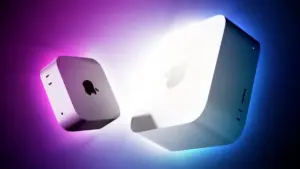
Amazon Slashes Prices Across Apple Desktop Lineup With Significant Discounts on M6 Mac Mini and M5 Max Mac Studio
Amazon has rolled out a fresh round of savings on Apple’s desktop...







