
In a significant move aimed at modernizing the infrastructure of the domain secondary market, Afternic has officially announced the wide-scale release of its Portfolio API. The rollout, which follows a period of limited access and internal testing, opens up a suite of programmatic tools to all sellers on the platform. By providing a direct gateway to its backend systems, Afternic is enabling domain investors to move beyond manual dashboard management, offering a path toward the kind of high-level automation typically reserved for large-scale registrars and institutional-grade portfolio managers.
The release of the Portfolio API is part of a broader evolution within Afternic, a GoDaddy-owned entity that has long served as a primary hub for the global domain aftermarket. For years, the industry has operated on a spectrum ranging from manual "point-and-click" management to sophisticated, custom-built internal systems. This new API bridges that gap, allowing individual investors and mid-sized firms to integrate their Afternic portfolios directly with third-party software, custom-built internal dashboards, and automated management scripts.
The core value proposition of the Portfolio API lies in its ability to facilitate the automation of repetitive tasks and the optimization of large-scale domain holdings. While the platform has recently introduced user-friendly tools such as the Afternic Portfolio Agent—a rule-based system designed to automate pricing and listing updates within the Afternic interface—the API serves a different segment of the market. While the Portfolio Agent is a robust solution for many sellers who prefer to work within a guided environment, the API is tailored for those who require bespoke integrations and the ability to manipulate data outside of the standard Afternic ecosystem.
One of the primary applications for the new API is the creation of custom management environments. For investors who manage portfolios across multiple platforms, the ability to pull real-time data from Afternic into a centralized proprietary dashboard is a significant advantage. This allows for a unified view of a seller’s inventory, sales performance, and pricing strategies without the need to toggle between various tabs and login portals. By leveraging the API, a seller can programmatically update listing details, adjust asking prices based on external market signals, and monitor the status of their domains with a level of precision and speed that manual entry cannot match.

Beyond simple inventory management, the Portfolio API unlocks new possibilities for data-driven decision-making. By integrating with other facets of the GoDaddy technical ecosystem, such as the Auctions API and the Domains API, investors can build a comprehensive "tech stack" for their domain business. This interconnectedness allows for a seamless flow of information from the point of registration and auction acquisition to the final listing and sale on the Afternic network. For instance, an investor could develop a system that automatically lists a newly acquired domain from a GoDaddy auction onto Afternic with pre-calculated "Buy It Now" prices based on historical data pulled through the API.
 Web Hosting & Domain Management
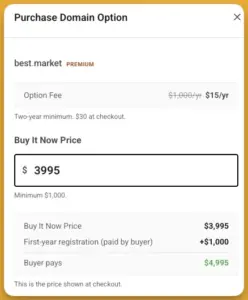
Identity Digital launches “domain options” for domain investors
The first partner to facilitate these options is Deqo, a newly developed...
 Web Hosting & Domain Management
The Evolution of Brand Protection: Will the 2026 TLD Round Produce the Next .Sucks?
The global domain name landscape is once again on the precipice of...
 Web Hosting & Domain Management
WIPO Panel Declares Neta Foundation Guilty of Reverse Domain Name Hijacking Over neta.org Dispute
In a decision that serves as a stark warning to organizations attempting...







