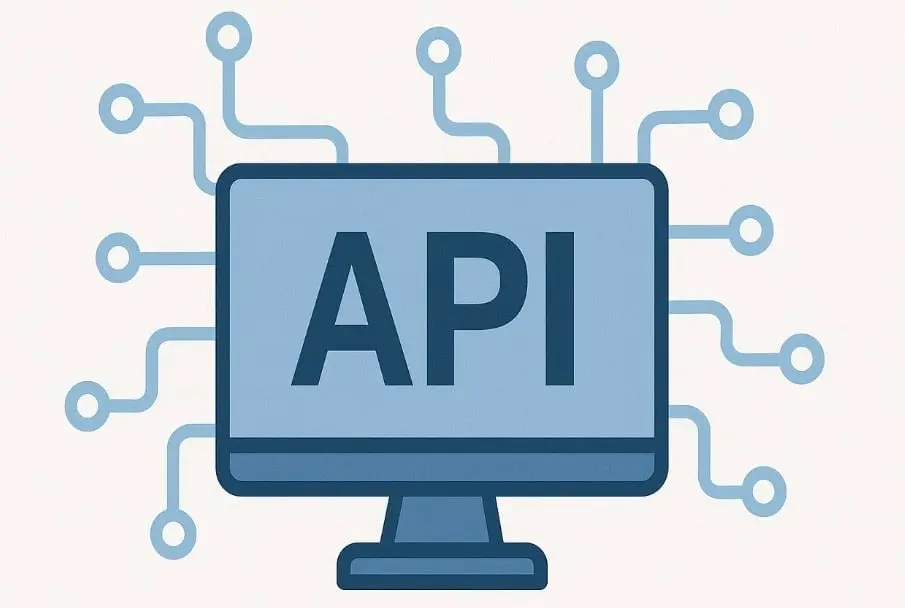
In a significant move aimed at modernizing the infrastructure of the domain secondary market, Afternic has officially announced the wide-scale release of its Portfolio API. The rollout, which follows a period of limited access and internal testing, opens up a suite of programmatic tools to all sellers on the platform. By providing a direct gateway to its backend systems, Afternic is enabling domain investors to move beyond manual dashboard management, offering a path toward the kind of high-level automation typically reserved for large-scale registrars and institutional-grade portfolio managers.
The release of the Portfolio API is part of a broader evolution within Afternic, a GoDaddy-owned entity that has long served as a primary hub for the global domain aftermarket. For years, the industry has operated on a spectrum ranging from manual "point-and-click" management to sophisticated, custom-built internal systems. This new API bridges that gap, allowing individual investors and mid-sized firms to integrate their Afternic portfolios directly with third-party software, custom-built internal dashboards, and automated management scripts.
The core value proposition of the Portfolio API lies in its ability to facilitate the automation of repetitive tasks and the optimization of large-scale domain holdings. While the platform has recently introduced user-friendly tools such as the Afternic Portfolio Agent—a rule-based system designed to automate pricing and listing updates within the Afternic interface—the API serves a different segment of the market. While the Portfolio Agent is a robust solution for many sellers who prefer to work within a guided environment, the API is tailored for those who require bespoke integrations and the ability to manipulate data outside of the standard Afternic ecosystem.
One of the primary applications for the new API is the creation of custom management environments. For investors who manage portfolios across multiple platforms, the ability to pull real-time data from Afternic into a centralized proprietary dashboard is a significant advantage. This allows for a unified view of a seller’s inventory, sales performance, and pricing strategies without the need to toggle between various tabs and login portals. By leveraging the API, a seller can programmatically update listing details, adjust asking prices based on external market signals, and monitor the status of their domains with a level of precision and speed that manual entry cannot match.
Beyond simple inventory management, the Portfolio API unlocks new possibilities for data-driven decision-making. By integrating with other facets of the GoDaddy technical ecosystem, such as the Auctions API and the Domains API, investors can build a comprehensive "tech stack" for their domain business. This interconnectedness allows for a seamless flow of information from the point of registration and auction acquisition to the final listing and sale on the Afternic network. For instance, an investor could develop a system that automatically lists a newly acquired domain from a GoDaddy auction onto Afternic with pre-calculated "Buy It Now" prices based on historical data pulled through the API.
The potential for automation also extends to market intelligence. The API provides access to critical data points that can inform an investor’s broader strategy. One such application involves the tracking of search trends. By setting up automated applications that query the API for trending search data related to specific domains, investors can receive regular, scheduled updates on which segments of their portfolio are garnering the most interest from potential buyers. This type of granular insight allows for more agile pricing adjustments; if a particular niche or keyword begins to trend upward in search volume, an investor can proactively adjust their portfolio to capture the increased value.
The timing of the API’s release coincides with the rapid rise of Artificial Intelligence and Large Language Models (LLMs) in the professional sector. Domain investing, which relies heavily on linguistic analysis, market trends, and data synthesis, is particularly well-suited for AI integration. Afternic has acknowledged this trend by encouraging developers and investors to utilize LLMs to interact with the API’s documentation. By feeding the Portfolio API’s technical specifications into an AI model, investors can brainstorm and develop custom scripts or optimization strategies tailored to their specific investment style.
This intersection of API accessibility and AI capability represents a shift in how domain portfolios are optimized. An investor might use an LLM to analyze their current holdings alongside the API documentation to identify inefficiencies in their current processes. For example, an AI could suggest ways to automate the identification of underperforming assets or recommend specific API calls to streamline the bulk updating of "Lease-to-Own" (LTO) settings across thousands of names.
However, the move toward increased automation and API integration brings with it a new set of responsibilities regarding digital security. Industry experts and Afternic itself have emphasized the importance of safeguarding API keys. Because these keys act as a master passkey to a user’s portfolio, allowing for the modification of prices and listing statuses, their compromise could lead to significant financial loss. The convenience of using LLMs to write code or analyze API structures introduces a specific risk: the accidental disclosure of sensitive credentials. Best practices in the industry dictate that API keys should never be shared within a chat interface or posted in public repositories. Instead, developers are urged to use environment variables and secure secret management systems to ensure that their automation efforts do not become a security liability.
The broader implications for the domain industry are significant. Historically, the secondary market has often been characterized by information asymmetry and manual friction. By democratizing access to its Portfolio API, Afternic is contributing to a more efficient marketplace where liquidity can be realized more quickly. When sellers can update their inventory in real-time and respond to market demands through automated systems, the overall health of the aftermarket improves.
This release also signals a commitment to the "Afternic 2.0" vision, a multi-year effort to modernize the platform’s technology and user experience. As the domain landscape becomes increasingly competitive, the platforms that offer the most robust technical tools are likely to attract the highest-volume sellers. For Afternic, providing a public API is a way to ensure its infrastructure remains the foundation upon which professional domainers build their businesses.
For the individual seller, the decision to move from the standard dashboard or the Portfolio Agent to the full API depends largely on the scale of their operations and their technical proficiency. For those with a handful of high-value names, the existing web-based tools remain more than sufficient. However, for the modern "domainer-developer" or the professional investment firm, the Portfolio API represents an essential tool for scaling operations. It moves the needle from reactive management—responding to inquiries as they arrive—to proactive optimization, where data dictates the strategy.
As the industry digests this new level of access, the focus will likely shift toward the innovative applications developed by the community. From automated email alerts based on search spikes to complex pricing algorithms that sync across multiple platforms, the Portfolio API provides the raw materials for a more sophisticated era of domain investing. By removing the barriers to programmatic access, Afternic has effectively invited its user base to help build the future of the domain aftermarket.
 Web Hosting & Domain Management
Verisign Reports Record-Breaking Q3 Growth as .com Registrations Surge and .web Launch Timeline is Confirmed
Verisign, the global provider of domain name registry services and internet infrastructure,...
 Web Hosting & Domain Management
Berlin-Based INWX Domains GmbH Announces Application for .crew Top-Level Domain
In a significant move within the evolving landscape of the global Domain...
 Web Hosting & Domain Management
Atom Enhances Domain Marketplace Accessibility with New Dedicated Seller App for iPhone
The domain name industry has long been characterized by its fast-paced nature,...