

Apple has reached an agreement to recruit key personnel from Huxe, an artificial intelligence audio startup, while simultaneously securing a non-exclusive license to the company’s underlying intellectual property, according to official regulatory documentation published in a European Commission filing.
The agreement, revealed through public disclosures made under European regulatory oversight, establishes a structured arrangement that grants Apple the right to extend formal employment offers to select members of the Huxe workforce. Alongside these talent acquisition rights, Apple has negotiated access to Huxe’s proprietary technology catalog through a non-exclusive licensing arrangement. The regulatory submission clarifies that the transaction does not constitute a full, traditional buyout or corporate acquisition of Huxe as an entire corporate entity. Instead, the agreement is designed as a targeted transfer of specialized engineering talent and intellectual property rights, allowing Huxe’s foundational assets and technical capabilities to be integrated into Apple’s broader software and services operations.
Huxe was established by a team of prominent artificial intelligence researchers and engineers, including Raiza Martin, Jason Spielman, and Stephen Hughes. Before launching the startup, the founding trio played central roles on the development team behind Google’s NotebookLM project. Originally introduced as an experimental AI-powered research assistant capable of analyzing complex text documents, NotebookLM gained widespread industry attention for its ability to convert uploaded notes, research papers, and static source material into highly convincing, multi-voice, podcast-style audio conversations. The underlying technology was later integrated more broadly into Google’s flagship artificial intelligence portfolio and subsequently rebranded under the Gemini product line as Gemini Notebook.
Building upon their foundational experience with generative audio and natural language synthesis at Google, the founders established Huxe to further evolve personalized audio experiences for everyday consumers. Rather than limiting the technology to analyzing static, user-uploaded research documents, Huxe expanded the scope of automated audio generation into a real-time, personalized ambient information system. The startup’s proprietary application was designed to serve as a dynamic personal briefing tool, capable of scanning and synthesizing a user’s disparate digital information streams, including personal calendars, inbox messages, daily schedules, and individual preference profiles.
By processing these inputs, Huxe generated customized, daily audio digests tailored to the specific needs and interests of individual listeners. Beyond routine administrative updates and daily planning overviews, the platform was capable of generating full-length, topic-specific synthetic podcasts on virtually any subject a user expressed interest in exploring. A key technical differentiator for Huxe was its real-time conversational interactivity. Unlike static, pre-rendered audio files or traditional podcasts, Huxe allowed listeners to actively engage with the synthetic AI hosts during playback. Users could verbally interrupt the broadcast to ask clarifying questions, request deeper dives into specific points, or demand alternative explanations delivered in a different tone or level of detail, effectively turning passive listening into a two-way conversational learning experience.
 macOS & Apple IT Support
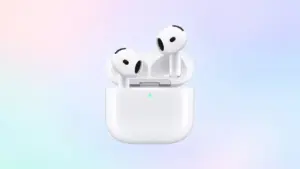
Amazon Trims Base AirPods 5 Price Ahead of Official Launch Alongside Broader Autumn Apple Hardware Discounts
As Apple prepares to officially launch its latest generation of personal audio...
 macOS & Apple IT Support
Apple Shell Company Filings Point to ‘HomeView’ and ‘homeOS’ Ahead of October ‘Welcome Home’ Launch
As Apple prepares for an upcoming hardware launch event, recent trademark discoveries...
 macOS & Apple IT Support
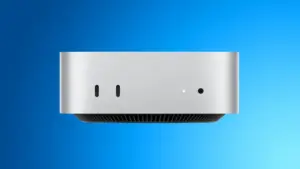
Apple Reverts to Soldered Storage on M6 and M5 Pro Mac Mini Models, Halving Base SSD Speeds via Single NAND Setup
Apple’s latest update to the Mac mini line brings a significant architectural...







