
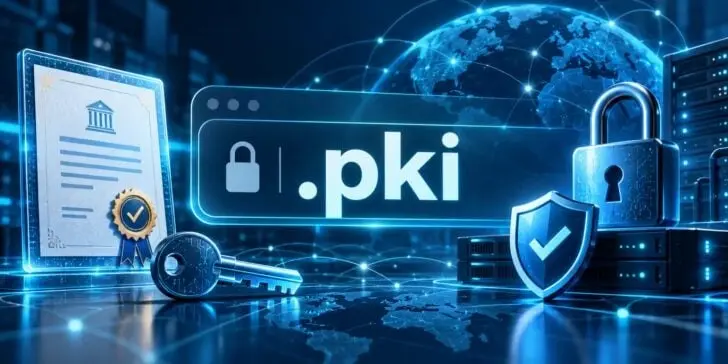
Verisign, the global leader in domain name registry services and internet infrastructure, has officially pulled back the curtain on a significant new addition to its security portfolio. The company, which operates as the backbone for some of the internet’s most critical infrastructure, announced the introduction of Verisign Informed, a product designed to modernize how systems validate the status of digital certificates. Alongside this technological debut, the company confirmed it has submitted an application for the .pki top-level domain (TLD), signaling a strategic move to integrate its naming expertise with specialized security applications.
The dual announcement marks a pivotal moment for the Reston, Virginia-based corporation as it seeks to address a growing vulnerability in the digital trust ecosystem: the problem of "stale trust." In an era where cyber threats are increasingly automated and accelerated by artificial intelligence, the gap between the revocation of a security certificate and the recognition of that revocation by end-user systems has become a critical window of risk. Verisign Informed is engineered specifically to close that window, ensuring that security decisions are made based on real-time, high-fidelity data rather than outdated, cached information.
At the core of the Verisign Informed service is a robust certificate status mechanism. Digital certificates serve as the fundamental building blocks of trust on the internet, verifying the identity of websites, servers, and users. However, these certificates are not static. When a certificate is compromised, or when the underlying private key is no longer secure, the issuing authority must revoke it. Traditionally, systems have relied on Certificate Revocation Lists (CRLs) or the Online Certificate Status Protocol (OCSP) to check if a certificate is still valid. The challenge, as Verisign points out, is that many systems rely on old or cached data, leading to a state of "stale trust" where a system might continue to accept a revoked certificate because it has not yet received the updated status.
Verisign Informed functions as a high-performance certificate status service that provides immediate, authoritative information regarding whether a certificate has been revoked. By acting as a centralized, high-availability source for this data, the service allows systems to query the current status of a certificate before deciding whether to trust it. When a query is made, Verisign Informed returns a cryptographically signed OCSP response. This signature ensures the integrity of the status report, preventing third parties from tampering with the revocation data and providing the querying system with a verifiable proof of the certificate’s current standing.
The necessity for such a service is underscored by the shifting landscape of cyber defense. Verisign has highlighted the role of artificial intelligence in shrinking the "time to exploitation." In the past, attackers might have taken days or weeks to leverage a compromised certificate. Today, AI-driven tools can identify and exploit such vulnerabilities in a matter of hours or even minutes. In this high-velocity environment, relying on validity data that is even slightly out of date can be catastrophic. Verisign’s service is explicitly designed to minimize the temporal window in which a compromised or revoked certificate might still be erroneously trusted by various network nodes and applications.
 Web Hosting & Domain Management
Norton antivirus software maker in talks to acquire GoDaddy
The discussions are currently in their early stages, and while there is...
 Web Hosting & Domain Management
XYZ.com LLC Emerges as Major Contender in 2026 Domain Expansion with 139 New Applications
The landscape of the internet’s naming system is on the verge of...
 Web Hosting & Domain Management
Virginia Department of Health Files Federal Lawsuit to Reclaim Expired Domain Redirecting to Adult Content
The Virginia Department of Health has initiated a federal legal battle to...







