
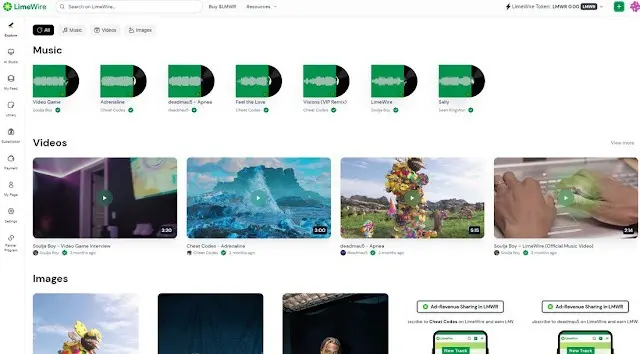
In the early 2000s, the name LimeWire was synonymous with the frontier of the digital revolution, though it was a landscape fraught with controversy. As one of the most prominent peer-to-peer file-sharing platforms of its era, it defined a generation’s relationship with digital media. Today, however, the brand has been completely reimagined. No longer a tool for illicit file sharing, the new LimeWire has emerged as a sophisticated, legal, and highly innovative player in the rapidly advancing landscape of artificial intelligence and Web3 technology. This transformation marks a significant pivot from its origins, repositioning the platform as a cutting-edge AI content publishing hub designed to empower a new generation of digital creators.
The modern LimeWire is more than just a tool for generating media; it is a comprehensive ecosystem that bridges the gap between sophisticated generative AI and the burgeoning creator economy. By integrating AI-driven content creation with blockchain-based monetization, LimeWire is carving out a unique niche in a crowded market. The platform not only allows users to generate high-quality visual content but also provides them with the infrastructure to share, protect, and profit from their work. This shift represents a broader trend in the tech industry where legacy brands are being resurrected to serve the needs of the decentralized web, offering tools that were once the province of professional studios to the general public.
The Evolution of LimeWire Studio
The transition from a file-sharing application to an AI content publishing platform was not merely a rebranding exercise but a total foundational overhaul. The LimeWire of the present invites users to register and immediately begin crafting original AI-generated content. Central to this experience is the LimeWire Studio, a creative hub where users can showcase their portfolios. This evolution has caught the attention of the mainstream entertainment industry, drawing in acclaimed artists and musicians who see the potential for a more direct relationship with their fans. High-profile figures such as Deadmau5, Soulja Boy, and Sean Kingston have already utilized the platform to publish exclusive content, ranging from NFT-backed music and videos to high-fidelity digital images.
What distinguishes LimeWire Studio from other AI generation tools is its focus on ownership and the "tradability" of digital assets. In this environment, every piece of content is treated as a unique asset. Fans do not just consume content; they have the opportunity to subscribe to a creator’s page and gain ownership of digital collectibles. These assets hold tradeable value within the LimeWire community, creating a secondary market where creators continue to benefit long after the initial publication. Specifically, LimeWire has implemented a royalty system where creators earn a 2.5% fee every time their content is traded between users, ensuring a continuous stream of revenue that traditional social media platforms rarely offer.
The platform also provides creators with significant flexibility regarding how they distribute their work. In an era where the "freemium" model dominates, LimeWire allows artists to choose between making their work available to the general public or locking it behind a premium subscription. This tiered access allows creators to build a public brand while simultaneously rewarding their most dedicated followers with exclusive, high-value content.
A Multi-Model Approach to AI Image Generation
At the heart of the current LimeWire experience is its robust AI Image Generation tool. While many platforms rely on a single proprietary model, LimeWire has opted for a more versatile approach by supporting a spectrum of industry-leading models. Currently, users can leverage the power of Stable Diffusion 2.1, Stable Diffusion XL, and DALL-E 2. By offering these diverse engines, LimeWire ensures that its users have access to a wide variety of artistic "logic" and output styles, ranging from hyper-realistic photography to abstract digital art.
The user interface of the LimeWire AI Studio is designed to cater to both novices and seasoned prompt engineers. Users can initiate the creative process with simple text prompts, or they can delve into more intricate settings to fine-tune the output. The platform’s seamless integration of different AI models allows for effortless switching between design styles. Whether a creator is looking for a cinematic aesthetic, pixel art, anime-inspired visuals, or the nostalgic look of analog film, the platform provides the necessary tools to achieve that vision.
 Tech News & Digital Trends
The AI Revolution: Ten Essential Tools Redefining Productivity and Innovation in 2023
The technological landscape of 2023 has been characterized by a seismic shift...
 Tech News & Digital Trends
The Generative Shift: How AI Integration is Redefining Content Creation Standards for 2025
As the digital landscape enters the midpoint of the decade, the barrier...
 Tech News & Digital Trends
Beyond the Blue Links: The Emergence of AI Optimization as the New Frontier for Digital Visibility
The landscape of organic traffic underwent a quiet but seismic shift recently...







