
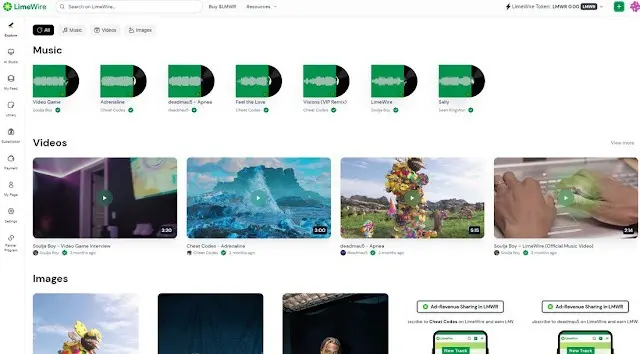
In the early 2000s, the name LimeWire was synonymous with the frontier of the digital revolution, though it was a landscape fraught with controversy. As one of the most prominent peer-to-peer file-sharing platforms of its era, it defined a generation’s relationship with digital media. Today, however, the brand has been completely reimagined. No longer a tool for illicit file sharing, the new LimeWire has emerged as a sophisticated, legal, and highly innovative player in the rapidly advancing landscape of artificial intelligence and Web3 technology. This transformation marks a significant pivot from its origins, repositioning the platform as a cutting-edge AI content publishing hub designed to empower a new generation of digital creators.
The modern LimeWire is more than just a tool for generating media; it is a comprehensive ecosystem that bridges the gap between sophisticated generative AI and the burgeoning creator economy. By integrating AI-driven content creation with blockchain-based monetization, LimeWire is carving out a unique niche in a crowded market. The platform not only allows users to generate high-quality visual content but also provides them with the infrastructure to share, protect, and profit from their work. This shift represents a broader trend in the tech industry where legacy brands are being resurrected to serve the needs of the decentralized web, offering tools that were once the province of professional studios to the general public.
The Evolution of LimeWire Studio
The transition from a file-sharing application to an AI content publishing platform was not merely a rebranding exercise but a total foundational overhaul. The LimeWire of the present invites users to register and immediately begin crafting original AI-generated content. Central to this experience is the LimeWire Studio, a creative hub where users can showcase their portfolios. This evolution has caught the attention of the mainstream entertainment industry, drawing in acclaimed artists and musicians who see the potential for a more direct relationship with their fans. High-profile figures such as Deadmau5, Soulja Boy, and Sean Kingston have already utilized the platform to publish exclusive content, ranging from NFT-backed music and videos to high-fidelity digital images.
What distinguishes LimeWire Studio from other AI generation tools is its focus on ownership and the "tradability" of digital assets. In this environment, every piece of content is treated as a unique asset. Fans do not just consume content; they have the opportunity to subscribe to a creator’s page and gain ownership of digital collectibles. These assets hold tradeable value within the LimeWire community, creating a secondary market where creators continue to benefit long after the initial publication. Specifically, LimeWire has implemented a royalty system where creators earn a 2.5% fee every time their content is traded between users, ensuring a continuous stream of revenue that traditional social media platforms rarely offer.
The platform also provides creators with significant flexibility regarding how they distribute their work. In an era where the "freemium" model dominates, LimeWire allows artists to choose between making their work available to the general public or locking it behind a premium subscription. This tiered access allows creators to build a public brand while simultaneously rewarding their most dedicated followers with exclusive, high-value content.
A Multi-Model Approach to AI Image Generation
At the heart of the current LimeWire experience is its robust AI Image Generation tool. While many platforms rely on a single proprietary model, LimeWire has opted for a more versatile approach by supporting a spectrum of industry-leading models. Currently, users can leverage the power of Stable Diffusion 2.1, Stable Diffusion XL, and DALL-E 2. By offering these diverse engines, LimeWire ensures that its users have access to a wide variety of artistic "logic" and output styles, ranging from hyper-realistic photography to abstract digital art.
The user interface of the LimeWire AI Studio is designed to cater to both novices and seasoned prompt engineers. Users can initiate the creative process with simple text prompts, or they can delve into more intricate settings to fine-tune the output. The platform’s seamless integration of different AI models allows for effortless switching between design styles. Whether a creator is looking for a cinematic aesthetic, pixel art, anime-inspired visuals, or the nostalgic look of analog film, the platform provides the necessary tools to achieve that vision.
Beyond simple generation, LimeWire includes advanced features such as samplers and quality adjustment settings. These allow users to control the level of detail and the computational intensity of the generation process. Furthermore, the platform is not standing still; LimeWire is actively developing its own proprietary AI model. This move toward a first-party engine suggests an ambition to move beyond being a mere aggregator of existing technologies and becoming a primary innovator in the generative AI space. This upcoming model is expected to further expand the creative horizons for users, offering unique capabilities that may not be available on competing platforms.
Bridging AI and Blockchain Through Automated NFT Minting
One of the most technically significant features of LimeWire is its integration with blockchain technology, which happens almost invisibly in the background. Once a creator is satisfied with an image or a piece of content, the platform offers the option to publish it directly. Upon publication, LimeWire automates the process of minting the creation as a Non-Fungible Token (NFT). By utilizing the Polygon and Algorand blockchains—both known for their efficiency and low environmental impact—LimeWire provides each piece of content with a unique digital signature.
This automated minting process is a game-changer for creators who may be interested in the benefits of Web3 but are intimidated by the technical complexities of crypto wallets and gas fees. By securing the content on a decentralized ledger, LimeWire ensures the authenticity and ownership of the work. This digital provenance is crucial in an age where AI-generated content can be easily replicated.
The choice of distribution—public or subscriber-only—further dictates how these NFTs interact with the market. Publicly released content becomes discoverable by the entire LimeWire community, fostering engagement and allowing for immediate trading. Conversely, exclusive content shared only with premium subscribers creates a sense of scarcity and intimacy, often driving higher value for the digital assets. This dual-pathway approach empowers creators to strategize their content releases in a way that best suits their personal brand and financial goals.
Redefining Revenue in the Creator Economy
The monetization model of LimeWire is perhaps its most aggressive play to attract talent away from established social media giants. In addition to the sale and trading of NFTs, LimeWire has introduced a robust ad revenue sharing program. This model is particularly beneficial for designers and digital artists who produce high volumes of content. When a creator publishes work on LimeWire, they are eligible to receive up to 70% of all ad revenue generated from other users viewing their images, music, or videos on the platform.
This revenue-sharing percentage is significantly higher than that offered by many traditional content platforms, making LimeWire an attractive secondary—or even primary—income stream for digital creators. It encourages experimentation; a user can spend time refining AI prompts and sharing the results, knowing that even if the work isn’t sold as an NFT, it can still generate passive income through views.
Central to this financial ecosystem is the LMWR token, LimeWire’s proprietary cryptocurrency. All earnings on the platform, whether from ad revenue or NFT sales, are paid out in LMWR. This tokenization of value provides several advantages. First, it allows for monthly payouts that can be easily tracked and managed. Second, LMWR is a liquid asset that can be traded on several popular cryptocurrency exchanges, including Kraken, ByBit, and UniSwap. For those who wish to reinvest in their craft, the tokens can also be used within the LimeWire platform to pay for additional prompts and premium features, creating a circular economy that sustains the platform’s growth.
Accessibility and Subscription Tiers
To ensure that the platform remains accessible while still providing high-end features for professionals, LimeWire has implemented a tiered pricing structure. The platform offers a free entry point, allowing anyone to sign up and receive 10 credits daily, which is sufficient to generate approximately 20 AI images. Even at the free level, users are entitled to a 50% share of ad revenue, a move that democratizes the ability to earn from AI art.
For more frequent users, the premium plans offer scaled benefits. The Basic plan, priced at $9.99 per month, provides 1,000 credits and early access to new AI models. As users move up to the Advanced ($29/month), Pro ($49/month), and Pro Plus ($99/month) tiers, the credit limits and ad revenue shares increase significantly. At the highest tiers, creators can generate up to 22,500 images per month and keep 70% of the ad revenue. All premium plans remove advertisements for the user and provide a "Pro" profile badge, faster generation speeds, and a full history of their creative work, catering to the needs of serious digital entrepreneurs.
The Future: Beyond Still Images
While LimeWire’s current focus is firmly rooted in AI image generation, the platform has outlined an ambitious roadmap that seeks to return the brand to its multimedia roots. In the near future, LimeWire plans to introduce AI-powered music and video generation tools. This expansion is highly anticipated, as it would make LimeWire Studio a one-stop shop for multimedia creation.
The move into music and video is particularly poignant given the brand’s history. By enabling users to generate and monetize music through AI, LimeWire is coming full circle—moving from a platform that once struggled with the music industry’s copyright standards to one that provides the industry with new tools for creation and legal monetization. This strategic expansion promises to provide even more avenues for expression, positioning LimeWire as a central pillar in the evolving landscape of AI-driven entertainment.
As the platform continues to evolve, it remains a compelling example of how technology can be used to lower the barriers to entry in the creative arts. By combining generative AI with a fair and transparent monetization system, LimeWire is not just offering a tool; it is offering a new way for artists to exist in the digital age. For those interested in the intersection of art, technology, and finance, LimeWire represents a significant development in the ongoing story of the internet’s creative potential.
 Tech News & Digital Trends
The Rise of AIO: Why the Search Engine Optimization Playbook is Being Rewritten for the AI Era
For two decades, the formula for digital visibility was settled. Success was...
 Tech News & Digital Trends
The 2025 AI Revolution: How Artificial Intelligence is Redefining the Content Creation Landscape
As the digital landscape enters 2025, the barrier between professional-grade production and...
 Tech News & Digital Trends
The Digital Vanguard: How Ten AI Innovations are Redefining Content Creation in 2025
The digital landscape of 2025 has reached a pivotal turning point, where...







