

Network contention is another potential drawback. Because LAN and SAN traffic share the same physical "pipe," a massive spike in general data traffic could, in theory, impact storage performance if Quality of Service (QoS) and DCB parameters are not strictly enforced. For organizations with extremely sensitive, mission-critical workloads, the total isolation provided by a traditional, air-gapped FC SAN remains a compelling reason to avoid convergence.
There is also the matter of the hardware ecosystem. To run FCoE effectively, every component in the data path—from the server’s CNA to the top-of-rack switch and the storage array—must support the FCoE protocol and the associated DCB standards. This "all-in" requirement can make it difficult for organizations to transition incrementally if their existing Ethernet switches are older models that lack the necessary enhancements.
Bottom Line
For organizations currently running a modern, high-performance Fibre Channel SAN, there is often little immediate pressure to migrate to FCoE. The reliability and speed of native FC remain the gold standard for enterprise storage. However, as infrastructure ages and the time for a hardware refresh approaches, FCoE becomes a highly attractive option.
The technology acts as a bridge, allowing for a gradual transition. By introducing hybrid switches that support both native FC and FCoE, businesses can protect their existing investments while slowly moving toward a more converged, Ethernet-centric future. This hybrid approach allows for the best of both worlds: the extreme performance of FC where it is needed most, and the cost savings of Ethernet for less demanding workloads.
In the current era of artificial intelligence (AI), real-time data analytics, and high-performance computing (HPC), the demand for high-speed data transfer has never been higher. FCoE has proven itself capable of handling these demanding workloads, offering a significant performance step up from traditional iSCSI architectures. While iSCSI can run on standard commodity hardware and is often the cheapest route, FCoE provides a more robust, enterprise-grade alternative that balances the cost of Ethernet with the legendary reliability of Fibre Channel.
Ultimately, the decision to implement FCoE should be based on a thorough evaluation of an organization’s performance requirements, budget constraints, and existing staff expertise. For those looking to bridge the gap between the high costs of specialized storage networking and the efficiency of modern Ethernet, FCoE remains a powerful and relevant solution in the enterprise toolkit.
 Enterprise Tech & Infrastructure
Navigating the Complexity of Amazon S3: A Strategic Approach to Enterprise Storage Cost Management
The most significant driver of overspending within Amazon S3 environments is a...
 Enterprise Tech & Infrastructure
Navigating the Shift to Software-Defined Storage: Essential Strategies for Modern Enterprise Data Management
The landscape of enterprise data management is undergoing a fundamental transformation as...
 Enterprise Tech & Infrastructure
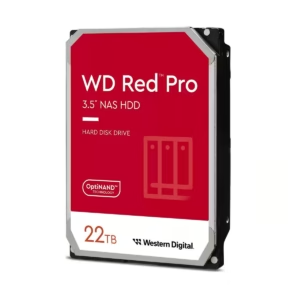
The Pillars of Data Infrastructure: A Comprehensive Evaluation of the Top Enterprise Hard Drives for 2023
In the modern landscape of digital infrastructure, the demand for robust, high-capacity...







